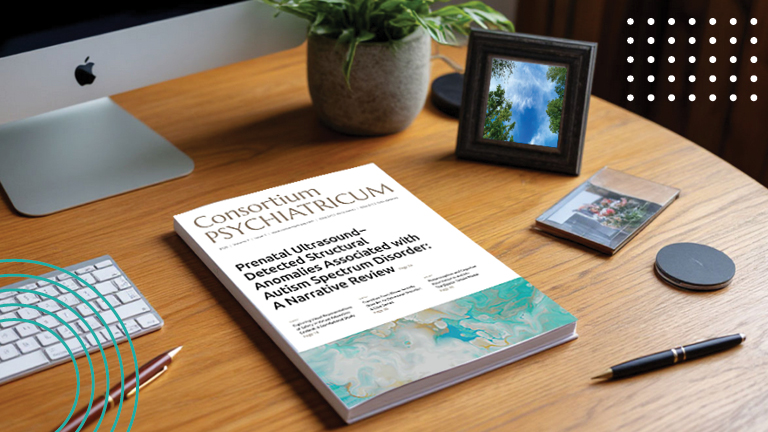
The first 2026 issue of Consortium PSYCHIATRICUM has been released (Vol. 7, № 1). It features original research, reviews, and case reports made by scientists from Russia, India, Mexico, Italy and Portugal.
Highlights of the issue:
News for VR-based Therapy
Researchers from Moscow explored mental imagery associated with a “safe place” among people of different ages. Their findings will allow the personalization of VR-content in the treatment of anxiety disorders.
Psychiatry and Dermatology
Indian researchers demonstrated that pathological levels of anxiety are connected with chronic fungal infection of the skin, or dermatophytosis (CDR). The research suggests the need for psychiatric consultation in treating patients with this condition.
Can Autism be Detected in Prenatal Ultrasound?
Russian colleagues have analyzed 18 years of literature about the effectiveness of prenatal ultrasounds in autism identification. The scientists discovered that certain structural anomalies of a fetus may point at risks of developing autism. However, only genetic testing can confirm a final diagnosis.
When Hypochondriasis Becomes Psychosis
Clinicians from India presented a series of case reports of protracted hypochondria evolving into somatic delusional disorder. The series emphasizes the importance of considering a predisposition to psychosis and the critical role of treatment adherence in preventing such transition.
When Hormones are Fine but Symptoms Tell Otherwise
Doctors from Mexico described a case of secondary psychotic disorder due to hypothyroidism, which called for an atypically long antipsychotic treatment. The case report illustrates the necessity of prolonged clinical follow-up even after hormonal levels have stabilized.
New Hypothesis on Autism
Italian researcher Marco Sanna proposed the “bipolar tensile” model, according to which autism is the result of interhemispheric disconnection. The hypothesis advocates for rehabilitation through sensorimotor integration, not just behavioral adaptation.
First Time in our Journal: scientific discussion in Q&A format
Vol. 6, № 3 contained a unique case report of digital folie à trois (shared psychosis). Not only the media became interested in the material: Portuguese scientist João Gama-Marques wrote to the editor. He sent the author of the article several questions. Moreover, he rightly pointed out that in the age of digital communications it is necessary to perform the strictest differential diagnosis between delusional and psychotic states, even when the situation looks “classic”. Dr. Debanjan, the author of the original report, prepared a detailed response, where he agreed with the importance of nosological precision while defending the phenomenological value of digital interaction as a substitute for physical proximity. This professional dialogue offers a deep dive into the evolving challenges of digital psychiatry.
The issue is now available on the journal’s website and Psychological Publications Portal PsyJournals.ru
Enjoy the reading!