15 December marks the 100th anniversary of the birth of Vladimir Ivanovich Lubovsky, an outstanding Russian psychologist and defectologist, one of the founders of special psychology, Doctor in Psychology, Professor, Academician of the Russian Academy of Education.
V.I. Lubovsky’s entire scientific biography was connected with the cultural-historical and activity-based scientific school in Russian psychology. As a third-year student, he came to Aleksandr Romanovich Luria’s laboratory at the Burdenko Institute of Neurosurgery and began his research work under his supervision. In 1952, the laboratory was closed, but the Institute of Defectology created a laboratory of clinical and psychological study of abnormal children, where the teacher was followed by his students, including A.I. Mescheryakov, E.D. Chomskaya, V.I. Lubovsky. All his life, V.I. Lubovsky was grateful to his teacher for the role that A.R. Luria played in his development as a scientist and for these years of joint work.

A.R. Luria's students, young employees of his laboratory of clinical and psychological study of abnormal children at the Institute of Defectology of the Russian Academy of Sciences (now the Institute of Special Education of the Russian Academy of Education). Seated from left to right: E.D. Chomskaya, N.N. Zislina, L.A. Novikova, E.N. Pravdina, N.P. Paramonova. Standing: A.I. Mescheryakov, V.I. Lubovsky. 1955.
We would like to emphasize the great importance of V.I. Lubovsky's works for cultural-historical psychology and, firstly, for that area of it, in which L.S. Vygotsky saw most of the regularities of child development, which later became the principles of the theory he created. In 1971, V.I. Lubovsky first published his article "General and Specific Regularities of the Development of Abnormal Children's Psyche" [Lubovskii, 1971], in which he not only brought to a new level G.Y. Troshin's and L.S. Vygotsky's ideas about the commonality of regularities of normal and abnormal development, but also made a huge step for the creation of special psychology as a holistic science. V.I. Lubovsky valued nothing he did during his long life in science as highly as the concept of general and specific regularities of impaired development. His many years of research, summarized in his doctoral dissertation monograph [Lubovskii, 1978], provide an opportunity to take a new look at the unity of word and action, noted by L. S. Vygotsky in "Thinking and Speech".
From the standpoint of cultural-historical theory, V.I. Lubovsky analyses M. Donaldson's views [Donaldson, 1985]; in an article published in the journal " Cultural-Historical Psychology" on the 110th anniversary of L.S. Vygotsky's birth [Lubovsky, 2006], he traces the development of ideas about the diagnosis of child development, including impaired development, about ways of "growing into culture" of children with developmental disorders and ways of compensating for limitations. In his recent works, he brings to a new height L. S. Vygotsky's ideas, which he formulated in "Diagnosis of Development and Pedological Clinic of Difficult Childhood", about the need to identify the structural aspect of symptom-complexes of abnormal development [Lubovskii, 2018] and about the possibilities of their diagnostic study [Lubovsky, 2016].
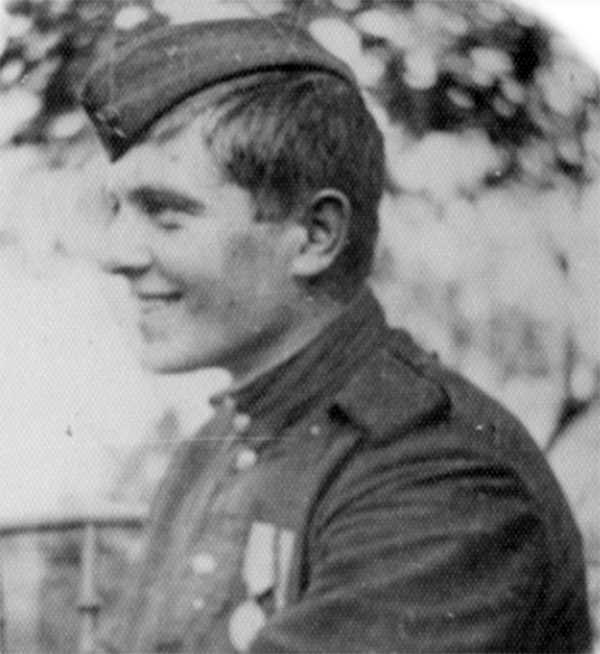
Vladimir Ivanovich Lubovsky, winner of the Great Patriotic War, telephonist of the engineer-sapper brigade, wounded twice severely, finished the war in Prague, awarded the Order of the Patriotic War of II degree and the Medal "For Combat Merits". Closing in the line of our teachers who defended the country and defended science to the end.
He passed away shortly before his ninety-fourth birthday, but he had many other research plans and ideas for new articles. V.I. Lubovsky's scientific heritage and his importance for cultural-historical psychology is waiting to be comprehended.