Introduction
Family and marital relationships are important contexts for psychological, social, and emotional development. Divorce, however, requires simultaneous legal, relational, economic, parental, and social reorganization and may therefore constitute a major life transition. Women and mothers may encounter emotional loss, financial strain, increased parenting responsibilities, changes in social identity, reduced social support, stigma, and difficulties accessing adequate services after separation [4, 21, 22, 33, 35]. Recent longitudinal evidence also indicates that psychological distress after divorce is not static: depressive symptoms may change over time and may be shaped by socioeconomic and living conditions [19].
Hopelessness is particularly relevant within this risk context because it concerns negative expectations about the future and a perceived inability to influence future outcomes [6]. Following divorce, disruption of anticipated life plans, partnership, economic security, family routines, and social networks may contribute to pessimistic future expectations. Hopelessness should therefore be considered alongside other post-divorce risk factors such as depression, anxiety, loneliness, financial hardship, parenting stress, reduced social support, unresolved grief, anger, and identity disruption [2, 19, 37, 38]. Research with divorced women has linked hopelessness to inadequate social support [38], while work on resilience and coping suggests that adaptive coping resources may be associated with lower hopelessness [39].
Psychological resilience is a dynamic process of positive adaptation in the context of adversity rather than a fixed personal trait [8, 24, 29]. It emerges through interactions between personal resources and environmental conditions. Relevant protective resources include cognitive flexibility, self-efficacy, adaptive coping, problem solving, positive future orientation, social support, family cohesion, and community resources [11, 13, 18, 30]. Recent evidence also supports the modifiability of resilience. A 2024 meta-analysis found that cognitive-behavioral interventions can enhance resilience in adults [14], while a large systematic review and meta-analysis of digital resilience interventions reported beneficial effects on resilience factors and mental health outcomes [28]. An umbrella review similarly concluded that support, positive self-perception, self-regulation, and resilience-promoting interventions contribute to resilience following adversity [1].
These protective processes are particularly relevant to divorced mothers, who often have to manage their own adjustment while maintaining parenting responsibilities. Recent research in Türkiye found that psychological flexibility is associated with parenting stress among divorced parents and that flexibility differs according to age and time since divorce [18]. This is important because post-divorce resources and risks may vary considerably across developmental stages. A younger mother ending a short marriage and an older mother divorcing after decades of marriage may differ in economic resources, parenting demands, social networks, health conditions, and expectations for future relationships.
Recent intervention research provides a stronger empirical basis for structured post-divorce programs. In Türkiye, post-divorce programs have been associated with improved divorce adjustment, life satisfaction, and psychological symptoms [36], and an online rebuilding-after-divorce program produced significant improvement in divorce adjustment [3]. A two-year follow-up of women who had completed a cognitive-behavioral group intervention identified sustained cognitive, emotional, behavioral, and relational changes [32]. A 2024 intervention with divorced women found that psychological-capital training improved resilience and social adaptation [17]. More broadly, a 2024 meta-analysis of educational programs for separated and divorcing parents found small but significant overall post-program benefits while also emphasizing substantial heterogeneity across program formats, duration, outcomes, and comparison conditions [27].
The Turkish evidence base nevertheless remains limited. A 2026 systematic scoping review identified only six psychosocial intervention studies conducted with divorced women in Türkiye and concluded that interventions vary considerably in theoretical approach, sample characteristics, content, delivery, and outcomes [37]. The review also showed that existing studies have examined a wide range of outcomes, including divorce adjustment, emotional awareness, psychological well-being, resilience, family life satisfaction, depression, anxiety, loneliness, parenting stress, parental acceptance, and empathy [37]. This limited and heterogeneous literature supports the need for theoretically explicit programs and clearer evaluation of the psychological mechanisms they are intended to influence.
The present program was designed to address this gap by integrating divorce-specific psychoeducation with modifiable resilience resources. The sessions address the divorce and grief processes, effects of divorce on children, cognitive restructuring, problem solving, relaxation, communication, social support, and meaning-oriented reflection. The program therefore differs from general divorce education by explicitly targeting psychological resilience while simultaneously evaluating hopelessness as a future-oriented risk indicator. Examining both outcomes makes it possible to assess whether the program is associated not only with stronger protective resources but also with reduced negative expectations about the future.
Accordingly, the primary aim of this study was to investigate the effect of a psychological resilience psychoeducation program on resilience and hopelessness among divorced mothers. It was hypothesized that participants receiving the resilience intervention would demonstrate a significantly greater increase in psychological resilience and a significantly greater decrease in hopelessness from pre- to post-intervention than participants in either the active comparison condition or the no-intervention control condition.
Method
Research model
A 3 × 2 mixed experimental design was employed. Study condition (psychological resilience intervention, active comparison, and no-intervention control) was the between-subjects factor, and assessment time (pre-intervention and post-intervention) was the within-subjects factor. Psychological resilience and hopelessness were the dependent variables.
Participants
Eligibility criteria were residing in Türkiye, being literate, being legally divorced and not remarried, having been divorced for no more than two years, being between 18 and 65 years of age, and having at least one child. Criterion sampling was used because the study focused on a predefined population of divorced mothers [10]. An online informational brochure describing the program and participation criteria was advertised on Instagram. Sixty-seven women applied within one week. After individual telephone interviews, 12 applicants were excluded because they did not meet the criteria and 10 eligible applicants reported that they could not allocate sufficient time to the study. The remaining 45 volunteers were randomly assigned to the psychological resilience intervention (n = 15), active comparison (n = 15), or no-intervention control (n = 15) condition. During the study, two participants from the resilience intervention group, three from the active comparison group, and one from the control group withdrew because of scheduling conflicts or relocation. One additional participant completed the resilience program but did not provide post-intervention data. The final sample therefore consisted of 38 participants: 12 in the resilience intervention group, 12 in the active comparison group, and 14 in the no-intervention control group.
Regarding employment, 79.1% of participants were employed and 20.9% were not employed. In terms of education, 53.5% were university graduates, 25.6% held postgraduate degrees, 11.6% held associate degrees, and 9.3% were high-school graduates. With respect to marriage duration, 41.9% had been married for 12 years or more, 18.6% for 7–9 years, 14.0% for 9–12 years, 11.6% for 3–5 years, 11.6% for 5–7 years, and 2.3% for 1–3 years. Most participants (90.7%) had custody of their child; 2.3% reported that custody was held by the former spouse and 7.0% reported joint custody. Most participants (72.1%) lived with their children, 20.9% with their family, and 7.0% with someone else. Overall, 67.4% reported receiving alimony.
Development of the Psychological Resilience Program
All phases of the study were conducted online via Zoom in 2024. Participants in the resilience intervention attended 12 weekly sessions, each lasting 90 minutes. WhatsApp groups were used to facilitate scheduling and communication. The first session focused on introductions, rapport, and group rules. The second addressed the divorce process and Bohannan’s stations of divorce [7]. The third focused on grief. The fourth examined the effects of divorce on children. The fifth introduced psychological resilience. The sixth and seventh sessions addressed automatic thoughts and cognitive restructuring within a cognitive-behavioral framework [5, 15]. Sessions eight through ten addressed problem solving, breathing and relaxation, imagery, and communication skills. The eleventh session focused on interpersonal relationships and communication, and the final session consolidated learning and closure.
The handicraft condition was designed as an active comparison condition rather than a psychological treatment or resilience intervention. Its methodological purpose was to partially control for nonspecific influences associated with scheduled online group participation, facilitator attention, interpersonal contact, and expectancy related to taking part in an organized study activity. Participants attended ten 90-minute handicraft sessions but received no structured content targeting resilience, hopelessness, cognitive restructuring, coping, problem solving, grief, or post-divorce adjustment. The no-intervention control condition received neither structured group sessions nor psychoeducational content. Thus, the two comparison conditions served different functions: the active comparison condition controlled partially for group participation and attention, whereas the no-intervention control condition represented change in the absence of organized study sessions. Because the active comparison condition included 10 sessions and the resilience intervention included 12 sessions, the conditions were not fully dose-matched; this limitation is considered in the Discussion.
Data Collection Tools
Psychological Resilience Scale for Adults (RSA). The Psychological Resilience Scale for Adults, developed by Friborg et al. (2003) and adapted into Turkish by Basım and Çetin (2011), was used to measure participants’ resilience levels. The 33-item scale is rated on a 5-point Likert scale (1 = “Not at all appropriate,” 5 = “Completely appropriate”), yielding scores between 33 and 165, with higher scores indicating higher resilience. The scale includes six subdimensions: Self-Perception, Future Perception, Structural Style, Social Competence, Family Cohesion, and Social Resources. Confirmatory factor analyses support its six-factor structure. The internal consistency coefficient for the total scale is .86, and subscale reliability coefficients range from .66 to .81, demonstrating its validity and reliability.
Beck Hopelessness Scale (BHS). The Beck Hopelessness Scale, developed by Beck et al. (1974) and adapted into Turkish by Seber et al., (1993) and Durak and Palabıyıkoğlu (1994), was used to assess hopelessness levels. The 20-item scale evaluates negative expectations regarding the future and is answered in a true/false format. Each hopelessness-reflecting response is scored as 1 point, producing total scores between 0 and 20, with higher scores indicating greater hopelessness. The scale consists of three subdimensions: Feelings About the Future, Loss of Motivation, and Future Expectations. The Turkish version has a Cronbach’s alpha of .86, item-total correlations ranging from .07 to .72, and a test-retest reliability of .74 among university students.
Informed Consent Form. Participants were asked to complete the online informed consent form via Google Forms. The form included information about the purpose of the study, details of the psychological resilience program, confidentiality and its limits, participant rights and responsibilities, the measurement tools, and descriptions of how resilience training, placebo training, and control groups were formed.
Data Collection
Psychological Resilience Scale for Adults (RSA). The RSA was developed by Friborg et al. [16] and adapted into Turkish by Basım and Çetin [5]. The 33-item scale is rated on a five-point Likert scale and assesses six dimensions: self-perception, future perception, structural style, social competence, family cohesion, and social resources. Higher scores indicate higher resilience.
Beck Hopelessness Scale (BHS). The BHS was developed by Beck et al. [6] and adapted into Turkish by Seber et al. [29] and Durak and Palabıyıkoğlu [13]. The 20-item true/false measure assesses negative expectations regarding the future; higher scores indicate greater hopelessness.
Informed Consent. Participants completed an online informed consent form describing the purpose of the study, confidentiality and its limits, participant rights, the assessment instruments, and the three study conditions.
Data Collection and Ethics
Ethical approval was obtained from the Ethics Committee of the Graduate School of Educational Sciences at Dokuz Eylül University (E-67493393-302.08.01-103265). All procedures were conducted online by the first author. Measures were administered through Google Forms immediately before the intervention period and again after completion of the programs. Participants were reminded that participation was voluntary and that they could withdraw at any time.
Results
A mixed MANOVA was conducted to investigate the effects of study condition and assessment time on psychological resilience (RSA) and hopelessness (BHS). Study condition was included as a between-subjects factor and assessment time as a within-participant factor. Before the main analyses, MANOVA assumptions were examined. No multivariate outliers were detected using Mahalanobis distances (ps > .01). Linearity was examined through scatterplots, and Pearson correlations indicated no problematic multicollinearity (rs < .80). Covariance matrices were equal, F(20, 4202.91) = 1.32, p > .05, Box’s M = 31.69. Univariate normality was examined with Shapiro-Wilk tests. BHS scores in the resilience intervention group were not normally distributed, W = .56, p < .05, whereas the remaining scores did not significantly deviate from normality. Pillai’s Trace was therefore reported. Alpha was set at .05, and significant effects were followed by simple-effect analyses with Bonferroni correction.
MANOVA results showed a significant main effect of study condition, F(4, 70) = 6,30, p < 0,05, ηp² =0,27, Pillai’s Trace = 0,53; a significant main effect of assessment time, F(2, 34) = 8,97, p < 0,05, ηp² = 0,36, Pillai’s Trace =0,36; and a significant condition × time interaction, F(4, 70) = 7,70, p < 0,05, ηp² = .31, Pillai’s Trace = 0,61. (Table 1).
Table 1. MANOVA test results
|
Effect |
|
|
Value |
F |
Hypothesis df |
Error df |
p |
ηp2 |
|
Between subjects
|
Intercept |
Pillai’s Trace |
1.00 |
3601.63 |
2 |
34 |
.00 |
1.00 |
|
Wilk’s Lambda |
.01 |
3601.63 |
2 |
34 |
.00 |
1.00 |
||
|
Hotelling’s Trace |
211.86 |
3601.63 |
2 |
34 |
.00 |
1.00 |
||
|
Roy’s Largest Root |
211.86 |
3601.63 |
2 |
34 |
.00 |
1.00 |
||
|
Treatment |
Pillai’s Trace |
.53 |
6.30 |
4 |
70 |
.00 |
.27 |
|
|
Wilk’s Lambda |
.47 |
7.68 |
4 |
68 |
.00 |
.31 |
||
|
Hotelling’s Trace |
1.10 |
9.08 |
4 |
66 |
.00 |
.36 |
||
|
Roy’s Largest Root |
1.09 |
19.13 |
2 |
35 |
.00 |
.52 |
||
|
Within subjects |
Test time |
Pillai’s Trace |
.35 |
8.97 |
2 |
34 |
.00 |
.35 |
|
Wilk’s Lambda |
.66 |
8.97 |
2 |
34 |
.00 |
.35 |
||
|
Hotelling’s Trace |
.53 |
8.97 |
2 |
34 |
.00 |
.35 |
||
|
Roy’s Largest Root |
.53 |
8.97 |
2 |
34 |
.00 |
.35 |
||
|
Test time * Treatment |
Pillai’s Trace |
.61 |
7.70 |
4 |
70 |
.00 |
.38 |
|
|
Wilk’s Lambda |
.39 |
10.27 |
4 |
68 |
.00 |
.38 |
||
|
Hotelling’s Trace |
1.57 |
12.97 |
4 |
66 |
.00 |
.44 |
||
|
Roy’s Largest Root |
1.57 |
27.51 |
2 |
35 |
.00 |
.61 |
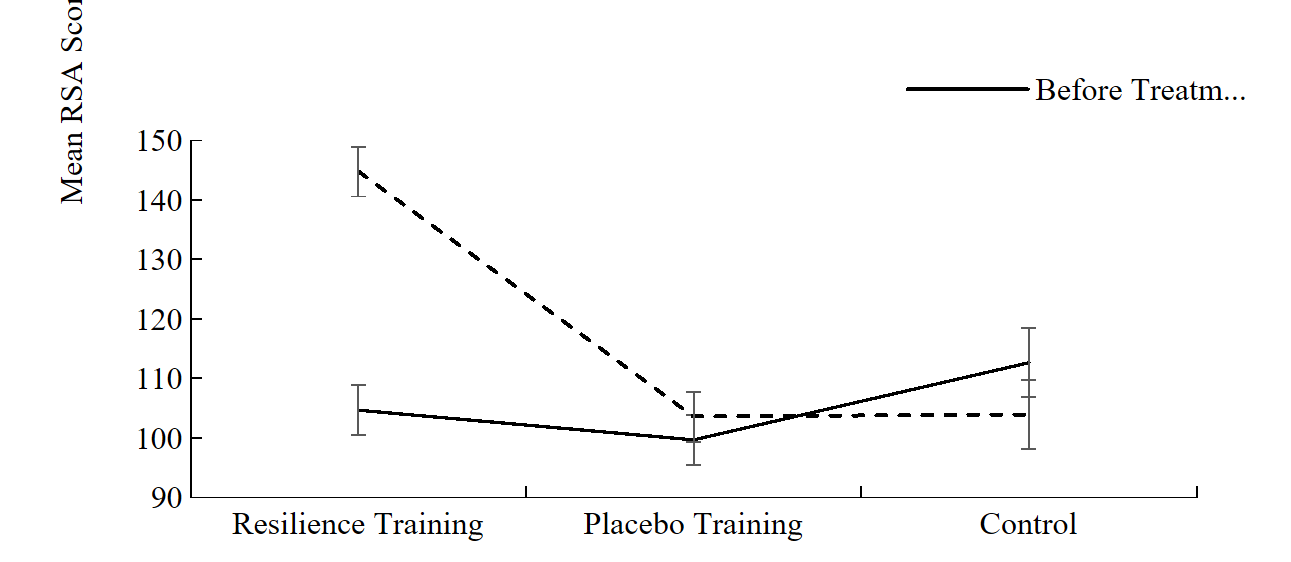
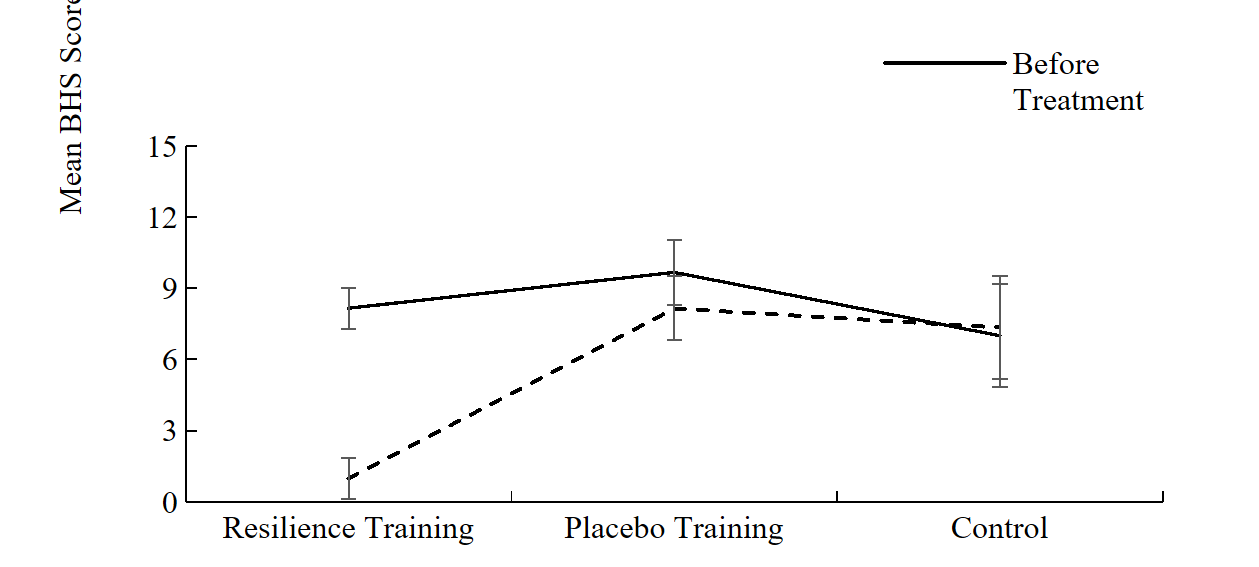
Univariate analyses showed significant effects of condition for both RSA, F(2, 35) = 18.60, p < 0,05, ηp² = 0,52, and BHS, F(2, 35) = 6.08, p < 0,05, ηp² = 0,26. The main effect of time was also significant for RSA, F(1, 35) = 17,73, p < 0,05, ηp² = 0,34, and BHS, F(1, 35) = 9,28, p < .05, ηp² = 0,21. The condition × time interaction was significant for RSA, F(2, 35) = 27,27, p < 0,05, ηp² = 0,61, and BHS, F(2, 35) = 6,18, p < 0,05, ηp² = 0,26. (Table 2).
Table 2. Univariate test results
|
Source |
|
Type III SS |
df |
Mean Square |
F |
p |
ηp2 |
|
Intercept |
RSA |
940748.00 |
1 |
940748.00 |
5139.74 |
.00 |
.99 |
|
BHS |
3593.32 |
1 |
3593.32 |
190.70 |
.00 |
.84 |
|
|
Treatment |
RSA |
6809.24 |
2 |
3404.62 |
18.60 |
.00 |
.52 |
|
BHS |
228.98 |
2 |
114.49 |
6.08 |
.01 |
.26 |
|
|
Error (Treatment) |
RSA |
6406.19 |
35 |
183.03 |
|
|
|
|
BHS |
659.50 |
35 |
18.84 |
|
|
|
|
|
Test time |
RSA |
2625.27 |
1 |
2625.27 |
17.73 |
.00 |
.34 |
|
BHS |
145.29 |
1 |
145.29 |
9.28 |
.00 |
.21 |
|
|
Test time * Treatment |
RSA |
8075.38 |
2 |
4037.69 |
27.27 |
.00 |
.61 |
|
BHS |
193.49 |
2 |
96.74 |
6.18 |
.01 |
.26 |
|
|
Error (Test time) |
RSA |
5181.52 |
35 |
148.04 |
|
|
|
|
BHS |
548.00 |
35 |
15.66 |
|
|
|
Simple-effect analyses showed that RSA scores significantly increased in the resilience intervention group from pre- to post-intervention (MD = 40.08, p < .05), whereas BHS scores significantly decreased (MD = -7.17, p < .05). In the active comparison group, neither RSA (MD = 3.92, p > .05) nor BHS (MD = -1.51, p > .05) changed significantly. Likewise, in the no-intervention control group, neither RSA (MD = -8.64, p > .05) nor BHS (MD = .36, p > .05) changed significantly (Table 3).
Table 3. Mean differences between before and after treatments scores
|
Scale |
Treatment |
Mean Difference* |
p |
|
RSA |
Resilience training |
40.08 |
.00 |
|
Placebo training |
3.92 |
.44 |
|
|
Control |
-8.64 |
.07 |
|
|
BHS |
Resilience training |
-7.17 |
.00 |
|
Placebo training |
-1.51 |
.36 |
|
|
Control |
.36 |
.81 |
Note.*Difference scores were calculated by subtracting before treatment scores from after treatment scores
Discussion
The present study examined whether a resilience-focused psychoeducation program could increase psychological resilience and reduce hopelessness among divorced mothers. Significant condition-by-time effects were found for both outcomes, and significant pre–post improvement occurred only in the resilience intervention group. This pattern is important because the outcomes are conceptually complementary: resilience represents adaptive resources for responding to adversity, whereas hopelessness reflects negative expectations about the future. The findings therefore suggest that the program may have strengthened protective resources while simultaneously reducing a future-oriented cognitive risk indicator.
The results are consistent with recent post-divorce intervention research. Çelik and Nazlı [36] found that a structured post-divorce adjustment program improved adjustment and life satisfaction while reducing depression, anxiety, and stress. Altunkeser [3] reported significant improvement following an online rebuilding-after-divorce group program in Türkiye. Uyar [32] found evidence of maintained cognitive, emotional, behavioral, and relational gains two years after a cognitive-behavioral group intervention. Ghazalsaflou et al. [17] likewise reported improvements in resilience and social adaptation following psychological-capital training with divorced women. These studies collectively support the usefulness of structured interventions while also showing that post-divorce programs vary substantially in theory, target outcomes, intensity, and delivery format.
The present program contributes to this literature in three main ways. First, it focuses specifically on divorced mothers rather than divorced adults as an undifferentiated group. Second, it integrates divorce-specific themes—grief, effects on children, relational reorganization—with resilience-related skills such as cognitive restructuring, problem solving, relaxation, communication, and use of social support. Third, it evaluates hopelessness alongside resilience. This dual-outcome approach is relevant because recent Turkish evidence shows that psychosocial intervention studies have addressed a wide range of post-divorce outcomes but remain limited in number [37]. The present study therefore adds evidence concerning the simultaneous strengthening of a protective process and reduction of a future-oriented risk process.
The significant improvement in resilience is also consistent with the broader resilience-intervention literature. Recent systematic evidence indicates that cognitive-behavioral interventions can enhance resilience in adults [14], and digital resilience interventions have shown favorable effects on resilience factors, positive mental health, and distress [28]. An umbrella review further identified social support, positive self-perception, self-regulation, and structured resilience-promoting interventions as relevant protective processes after adversity [1]. The content of the present program—particularly cognitive restructuring, problem solving, relaxation, communication, and social support—is therefore broadly consistent with mechanisms emphasized in contemporary resilience research.
The active comparison condition provides useful but not definitive evidence regarding intervention specificity. Participants in the handicraft group received scheduled online group participation and interpersonal contact but did not receive resilience- or divorce-focused psychoeducation, and they showed no significant change in resilience or hopelessness. The no-intervention control group likewise showed no significant change. This pattern makes a simple explanation based solely on participation in any group less plausible. Nevertheless, active comparison groups do not automatically eliminate expectancy and contextual effects [9], and the present conditions were not fully equivalent. The resilience intervention involved 12 sessions, whereas the active comparison condition involved 10 sessions, and the conditions may also have differed in perceived relevance, facilitator behavior, emotional engagement, and expectations of benefit. Consequently, the findings should not be interpreted as proving that intervention content alone caused the observed changes.
The decrease in hopelessness should be interpreted within a broader post-divorce risk framework. Hopelessness is not the only adverse outcome after divorce. Recent research has documented depression trajectories among divorced women and identified socioeconomic and living conditions as relevant influences [19]. Turkish research has also described depression, anxiety, stress, emotional loneliness, social anxiety, parenting stress, social-service needs, and other psychosocial challenges following divorce [18, 22, 37]. The present findings therefore do not imply that resilience training addresses all dimensions of post-divorce distress. Rather, they suggest that resilience-oriented work may be one useful component within broader psychosocial support.
Age heterogeneity is an important limitation and a substantive issue for interpretation. Participants were eligible between 18 and 65 years of age. Developmental stage may be associated with marriage duration, employment and economic security, age of children, caregiving burden, social networks, health, and expectations regarding future intimate relationships. Recent Turkish findings show age-related differences in psychological flexibility among divorced parents [18]. Thus, a young mother leaving a short marriage and an older mother divorcing after several decades may enter an intervention with different risk and protective profiles. The present sample was too small to test age as a moderator reliably.
The online format is another relevant feature. It may increase accessibility for working mothers and women with childcare, mobility, or transportation constraints. Contemporary evidence suggests that digital resilience interventions can produce beneficial psychological effects [28], and recent divorce programs in Türkiye have also been delivered online [3]. At the same time, online delivery may influence privacy, therapeutic alliance, emotional engagement, and group cohesion. Future studies should directly compare online, face-to-face, and hybrid formats.
Finally, the findings should be interpreted in light of the small sample. The final sample consisted of 38 participants, with 12–14 participants per condition. Small samples reduce precision, limit moderator analyses, and increase the possibility that effect estimates are unstable or sample-specific. This issue is particularly important given the broad age range and heterogeneity in marriage duration and socioeconomic circumstances. Replication in larger randomized samples is therefore necessary before strong conclusions regarding general effectiveness can be made.
Conclusions
- The resilience-focused psychoeducation program was associated with a significant increase in psychological resilience and a significant decrease in hopelessness among divorced mothers.
- No significant pre–post changes were observed in either the active comparison group or the no-intervention control group, providing preliminary support for the relevance of the program’s resilience- and divorce-focused content.
- The results support continued development of accessible post-divorce programs that address both protective resources and psychological risk processes, but the present findings should be interpreted cautiously because of the small and heterogeneous sample and the lack of follow-up.
- Future randomized studies should use larger samples, fully time-matched active comparison conditions, follow-up assessments, and analyses of moderators such as age, marriage duration, socioeconomic status, custody arrangements, and time since divorce.
Implications and Future Research
Future programs should extend beyond resilience and hopelessness to examine potentially modifiable personal and social-psychological characteristics including self-compassion, emotion regulation, loneliness, perceived social support, parenting stress, co-parenting conflict, self-efficacy, life satisfaction, grief, anger, and post-divorce identity reconstruction. Comparative trials should investigate whether different program components are differentially effective for younger versus older mothers and for women with different marriage durations, socioeconomic resources, custody arrangements, and time since divorce. Given the limited number and heterogeneity of psychosocial intervention studies with divorced women in Türkiye [37], multicenter randomized trials and longer-term follow-up studies are particularly needed.
Limitations
- The final sample was small (N = 38), with only 12–14 participants per condition. This limits statistical power and precision and increases uncertainty regarding the stability and generalizability of the observed effects.
- The eligible age range was broad (18–65 years), and the sample was insufficient for age-stratified or moderator analyses. Developmental stage, marriage duration, age of children, socioeconomic resources, and time since divorce may influence both risk and response to intervention.
- The active comparison condition included 10 sessions, whereas the resilience intervention included 12 sessions. The conditions were therefore not fully matched for exposure time or facilitator contact.
- No follow-up assessment was conducted, so the durability of the observed changes in resilience and hopelessness is unknown.
- Participants were volunteers recruited online and were mothers residing in Türkiye who had divorced within the previous two years and had not remarried. Generalization to fathers, remarried individuals, those divorced for longer periods, non-volunteers, and other cultural settings is limited.
- The study measured resilience and hopelessness but did not test whether increased resilience statistically mediated decreased hopelessness, and it did not assess several other relevant outcomes such as depression, anxiety, loneliness, parenting stress, co-parenting conflict, or perceived social support.