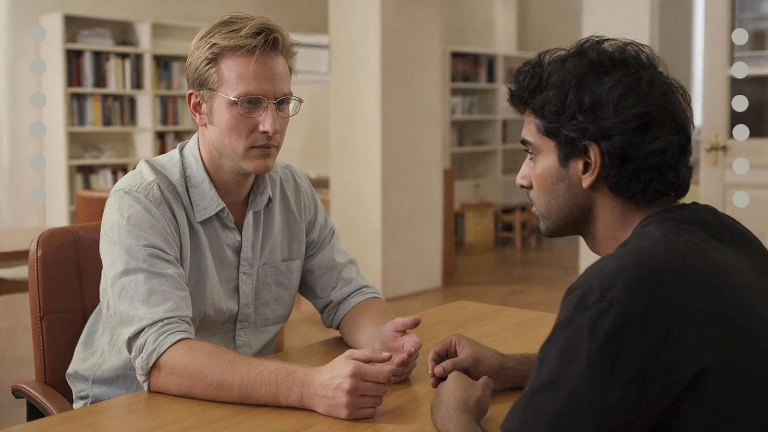
On March 26, a webinar titled “The Role of Sociocultural Values in Psychological Support of Students” was held at the platform “Science in Publications: From Idea to Practice” with the support of the MSUPE Boiling Point.
The speakers shared their knowledge and practical experience of cross-cultural counseling in the context of university education.
Olga S. Pavlova focused on the ideas of the multicultural approach in counseling, where work with a client is carried out with consideration of their cultural background. International students often represent cultures that are very different from those typical for Russia, which increases the need for intercultural competence among specialists who support the educational process, help address everyday challenges, and facilitate students’ adaptation. Among the key competencies highlighted were awareness, sensitivity to cultural differences, openness to diverse perspectives, and others. At the end of her presentation, Olga S. Pavlova described the system developed by the MSUPE Department of Ethnopsychology for training practicing cross-cultural psychologists.
A graduate of the master’s program of the Department of Ethnopsychology and currently an educational psychologist at the Psychological Center of NRU MGSU, Yulia Yu. Dzhuad shared her views on interaction with international students. Based on materials developed by MSUPE specialists, she designed a student adaptation program that begins with assessment and is followed by individual and group work in the form of an art-therapy-based training.
Anastasia A. Kudinova, an educational psychologist at MSUPE, addressed the issue of practitioner involvement in counseling. She noted that involvement is “a flexible tool that must be adjusted to the context of each client”. The discussion also highlighted key differences in approaches to working with international and Russian students: counseling international students involves more active participation on the part of the psychologist — it is first necessary to establish interaction at an everyday level and only then proceed to psychological work.
Narrative practitioner Andrey S. Nekrasov spoke about less obvious aspects of interaction with international students. He emphasized that different approaches may or may not take into account cultural and religious characteristics. However, each client has their own “personal story”, and therefore in narrative practice, alongside involvement and intercultural competence, “sensitivity to personal narratives” is essential, as these may be hidden beneath layers of cultural features.
“People do not need to be ‘treated’ for their culture; rather, one should engage in dialogue with it, incorporate it into the space of psychological counseling, and not be afraid of it”, Olga S. Pavlova concluded.
Video recording of the webinar
Materials:
-
Psychological Support in the Dialogue of Cultures. A methodological guide for supporting students in a multicultural educational environment / Ed. by T.N. Banshchikova, D.S. Prikhodko. — Moscow: Znanie-M, 2025. — 156 p.
Calendar of webinars and meetings of the project “Science in Publications” for 2026.