Introduction
According to medical literature Autism Spectrum Disorder (ASD) appears as a neurodevelopmental challenge which presents deficits in multiple domains that include social abilities, repetitive patterns, and verbal communication and nonverbal interaction (Shah et al., 2014). The nomenclature “spectrum” within ASD is indicative of the vast diversity in the typology and severity of symptoms that individuals may encounter.
Each identified case with autism spectrum disorder has a distinct combination of symptoms, which results in apparent heterogeneity throughout the disorder (Shah et al., 2014). The early investigation of ASD symptoms becomes possible at eighteen months of age, according to research (Rutherford et al., 2020). According to the Centers for Disease Control and Prevention data, the current diagnosis rate of ASD equals 1 in 54 children, thus emphasizing the comprehensive social consequences of this complex disorder (Cuccovia, 2024).
All adolescents with ASD must deal with significant social and communication challenges as part of their condition. Affected adolescents face remarkable difficulties with understanding others’ thoughts and emotions because this hinders their ability to build and sustain connections with close individuals. These adolescents face significant barriers when attempting to practice effective communication through conversations, observation of non-verbal messages, and maintaining direct eye contact. People with ASD show typical patterns of restrictive, repetitive patterns, which include both their behavioral expressions and their unique interests and activities. The behavioral patterns associated with autism spectrum disorder include maintaining excessive rules about rituals and routines and intense focus on select subjects or unusual reactions to sensory stimuli that involve hearing, touching, and vision.
The degree of these difficulties exists in a broad spectrum across adolescents who have ASD. The degree of daily assistance requirement varies among individuals with ASD, from those needing extensive help to those who need less support or yet others who have the ability to live independently. Near Field Communication (NFC) represents a powerful tool that enhances the functional capabilities of adolescents with ASD to achieve autonomous world navigation. The research investigates whether near-field communication functions well as an assistive technology system for adolescents with autism spectrum disorder.
The main objective of this research work is to analyze Near Field Communication technology as a key assistive technology that provides specialized support for (ASD) diagnosed adolescents (Garcia-Garcia et al., 2022). The study investigates how NFC enables ASD youth to use their smartphones to obtain environmental information, which boosts their autonomy and environmental understanding (Cuccovia, 2024). Smartphones have become essential devices in modern life because people use them for education, communication, and entertainment (Boucher et al., 2021). Advanced smartphone interfaces create substantial barriers that prevent autistic adolescents from entirely using their devices because of their complexity. The analysis seeks to validate the use of NFC-enabled visual aids such as stickers and cards to make smartphone interfacing simpler for adolescents, which promotes digital inclusivity (Ennis-Cole, 2015).
Beyond the sphere of enhancing smartphone functionality, this research attempts to explore the potential of NFC technology to furnish contextual information about a child’s immediate environment (Ekundayo, Baker, Zhou, 2020). The concept utilizes NFC tags placed in routine objects or locations to deliver real-time contextually suitable information when adolescents place their NFC-equipped devices in close proximity to the tags. This system offers informative knowledge ranging from family item descriptions to schedule alerts and locationbased direction services that allows users to explore their environment differently (Ennis-Cole, 2015; McNicholl et al., 2021).
The primary research topic is Near Field Communication technology, which developers use to enhance smartphone use and autism-related awareness in young individuals with Autism Spectrum Disorder (ASD) for better independence requirements. The research explores four main aspects to understand how NFC simplifies smartphone operations while developing environmental navigation tools through NFC technology and establishing customized NFC solutions and their related effects on independence and life quality measures. The study addresses these needs to develop innovative NFC applications and build knowledge about assistive technology for ASD in new application fields.
The prospective dividends of this research hold deep implications for adolescents with ASD, caregivers, and educators. Adolescents with ASD will enhance their smartphone usage and effectiveness for communication alongside learning and recreational purposes, which can develop both their digital literacy and independence (Bechara, Dolan, Hindes, 2002). Real-time surrounding data delivered through NFC technology has the potential to expand adolescents’ environmental understanding, which leads to improved spatial perception and better decision-making abilities while enabling greater independence (Setiawan, 2024).
The main goal of this research paper is to examine how NFC technology enables better smartphone use with improved environmental sensitivity, specifically for adolescent ASD patients. The study bases its exploration on ASD characteristics, which are challenges in this research. The research evaluates NFC technology applications to challenge existing issues within ASD assistive technology and intervention models for developing knowledge.
Literature Review
According to medical literature, autism spectrum disorder (ASD) appears as a neurodevelopmental challenge that presents deficits in multiple domains that include social abilities along with, repetitive patterns along with verbal communication and nonverbal interaction. The nomenclature “spectrum” within ASD is indicative of the vast diversity in the typology and severity of symptoms that individuals may encounter.
Each identified case with autism spectrum disorder has a distinct combination of symptoms, which results in apparent heterogeneity throughout the disorder. The early investigation of ASD symptoms becomes possible at eighteen months of age, according to research (Babb et al., 2019). According to the Centers for Disease Control and Prevention data, the current diagnosis rate of ASD equals 1 in 54 children, thus emphasizing the comprehensive social consequences of this complex disorder (Palomaa et al., 2023).
All adolescents with ASD must deal with major social and communication challenges as part of their condition. Affected adolescents face remarkable difficulties understanding others’ thoughts and emotions, which hinders their ability to build and sustain connections with close individuals (Kanner, 1968). These adolescents face significant barriers when attempting to practice effective communication through conversations, observing
People with ASD show typical patterns of restrictive repetitive patterns, which include both their behavioral expressions and their unique interests and activities. The behavioral patterns associated with autism spectrum disorder include maintaining excessive rules about rituals and routines and intense focus on select subjects or unusual reactions to sensory stimuli that involve hearing, touching, and vision.
The degree of these difficulties exists in a wide spectrum across adolescents who have ASD. The degree of daily assistance requirement varies among individuals with ASD, from those needing extensive help to those who need less support or yet others who have the ability to live independently. Near Field Communication (NFC) represents a powerful tool that enhances the functional capabilities of adolescents with ASD to achieve autonomous world navigation. The research investigates whether near-field communication functions well as an assistive technology system for adolescents with autism spectrum disorder (Ennis-Cole, 2015).
The main objective of this research work is to analyzes Near Field Communication technology as a key assistive technology that provides specialized support for (ASD) diagnosed adolescents (Ardelean et al., 2023). The study investigates how NFC enables ASD youth to use their smartphones to obtain environmental information, which boosts their autonomy and environmental understanding (Babb et al., 2019). Smartphones have become essential devices in modern life because people use them for education, communication, and entertainment (Palomaa et al., 2023). Advanced smartphone interfaces create substantial barriers that prevent autistic adolescents from fully using their devices because of their complexity. The analysis seeks to validate the use of NFC-enabled visual aids such as stickers and cards to make smartphone interfacing simpler for adolescents, which promotes digital inclusivity (Ekundayo, Baker, Zhou, 2020).
Beyond the sphere of enhancing smartphone functionality, this research attempts to explore the potential of NFC technology to furnish contextual information about a child’s immediate environment. The concept utilizes NFC tags placed in routine objects or locations to deliver real-time contextually suitable information when adolescents place their NFC-equipped devices in close proximity to the tags. This system offers informative knowledge ranging from family item descriptions to schedule alerts and location-based direction services that allow users to explore their environment differently (Ekundayo, Baker, Zhou, 2020; Jo, Kim, 2019).
The primary research topic is near-field communication technology, which developers use to enhance smartphone use and autism-related awareness in young individuals with autism spectrum disorder (ASD) to achieve better independence requirements. The research explores four main aspects to understand how NFC simplifies smartphone operations while developing environmental navigation tools through NFC technology and establishing customized NFC solutions and their related effects on independence and life quality measures. The study addresses these needs to develop innovative NFC applications and build knowledge about assistive technology for ASD in new application fields.
The prospective dividends of this research hold deep implications for adolescents with ASD, caregivers, and educators. Adolescents with ASD will enhance their smartphone usage and effectiveness for communication alongside learning and recreational purposes, which can develop both their digital literacy and independence (Bechara et al., 2002). Real-time surrounding data delivered through NFC technology has the potential to expand adolescents’ environmental understanding, which leads to improved spatial perception and better decision-making abilities while enabling greater independence.
The main goal of this research paper is to examine how NFC technology enables better smartphone use with improved environmental sensitivity specifically for adolescent ASD patients. The study bases its exploration on ASD characteristics, which are challenges in this research. The research evaluates NFC technology applications to challenge existing issues within ASD assistive technology and intervention models for developing knowledge.
Methodology
Research Method
This research applies a mixed-methods case study methodology for its execution. The research depended on three main data categories that combined usage data with observational data and feedback data, following Figure 1. NFC technology gained assessment through these three different data types, which demonstrated its effectiveness as an assistive tool for autistic adolescents. Research Design Several methods of data collection, including usage tracking, observational analysis, and feedback assessment, merged into one complete body of data, which enabled researchers to assess all dimensions of NFC technology’s suitability as an assistive tool for adolescents with ASD. A complete assessment of technology’s effects on participants’ everyday life and their experiences emerged from analyzing objective data combined with observational and subjective feedback results. The rationale of the chosen methodology by bringing together these methods, researchers achieved a thorough evaluation of the assistive capabilities of NFC technology for ASD teens. The research investigated NFC technology through both quantitative measurements and individual encounters to create an allencompassing approach to studying their applications. Data Collection The research acquired data from three different sources: usage data, observational data, and feedback data.
Usage Data
The NFC application, which operates on participant smartphones, automatically generates data that makes up this category. The collected usage data revealed participant interactions with NFC tags by measuring their usage frequency and duration per task and which tasks they executed most. The systematic analysis of participant NFC technology usage became possible because of the quantitative data from smartphone extraction. Two teenagers with autism spectrum disorder validated the potential of Near Field Communication (NFC) technology to act as an assistive tool in their daily routines through their data collection process. Sample The research studied ASD diagnosis in two adolescent subjects. Two adolescent participants, ages 13 and 14 Years, were interviewed because they had already had experience using smartphones before the study began. The participants’ past understanding of NFC technology created the perfect starting point for assessing this tool as a potential assistive solution (Howard et al., 2022). The ASD spectrum positions of the teenagers who participated in the study varied between each other. A near-mild level of diagnosis was identified in the first boy, while the second boy presented with moderate ASD.
The study analyzed how NFC technology would help users with different ASD severity ranges because the participants displayed moderate difficulty levels. The educational centers in Qatar enrolled the teenagers into programs using individualized education plans alongside extra educational specialists who specialized in their unique learning requirements. Education centers designed for ASD students can be frequently found throughout the state of Qatar. The participants had their ASD diagnosis verified through official medical records. The subjects have restricted fluency when speaking either English or Arabic. Equipment The fundamental technology used in the study depended on Near Field Communication (NFC) protocols that activated electronic device communication for short distances of less than 4 centimeters. The participants’ NFC-compatible smartphones used an accompanying application to tag different NFC devices with programmed functions that would be executed after smartphone detection. Different everyday operations were programmed into the NFC tags for execution. For example, an NFC tag at the entrance of theparticipants’ home was programmed to send a text message to a parent upon the teenager’s arrival, enhancing communication and safety. A physical schedule tag, when scanned by the smartphone, enabled users to receive detailed visual and textual day activity descriptions from a linked digital schedule (Jo, Kim, 2019). Using this method, scientists understand how essential visual schedules are for ASD patients to monitor their daily tasks. During the study period, the teenagers used NFC tags to access smartphone functions and environmental information collection tasks. The evaluations of these tests helped researchers determine if NFC technology would prove useful as an assistive tool for teenage ASD patients. Procedure The study team first established communication with the guardians of the chosen teenagers. The researchers provided complete information about the study goals combined with a detailed examination of the potential effects of the research. The study introduction followed the parents’ approval of the study protocol, so the teenagers gained access to the research. The researcher explained the research project to participants in an approachable and easy-to-understand manner. Contextual training followed each session specifically aimed at instructing participants about NFC tags and their operations. The participants received hands-on training on smartphone tag scanning and practiced this process under supervision. Each participant interacted with the NFC tags through their routine activities for four weeks. Participants had to use their NFC tag to notify parents at their home entrance about arrival and obtain schedule information from their schedule tag throughout each day. The research team conducted scheduled meetings with participants and parents every week during the four-week investigation period to observe progress while resolving technology problems and offering assistance. The check-ins functioned to obtain client feedback and execute any required setup modifications. The collected data focused on both participant NFC tag utilization frequency and effectiveness ratings in assisting their daily tasks.
The research data included electronic tag usage monitoring alongside participantcreated and guardians-made reports. Each participant went through a debriefing procedure with their parent at the conclusion of the study duration. Overall, the session served to understand participant experiences, receive feedback, and express appreciation for their participation. The research team distributed results from the study investigation to both participants and their guardians after completing the study. Users received information about future research initiatives using NFC technology as an ASD support tool. The research design provided complete assessment of NFC technology’s potential value for ASD assistance to teenage users through these steps. Statistical methods were used to analyze the usage data, which produced patterns and established trends. Researchers investigated how much participants used their NFC tags alongside their daily scheduling data to find patterns showing how NFC assisted their activities.
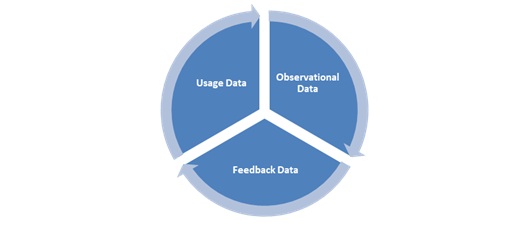
Observational data
The parents of our participants acted as key observers to obtain useful information during the research. The participants maintained records through journals showing how their teenagers interacted with NFC tags. The parents in the journals specified all the problems their teenagers encountered during their time with the proposed solution. Parents monitored two events regarding the teenagers’ regular activities: any new positive practice patterns that emerged after NFC tag deployment and any difficulties teenagers experienced during tag usage. Qualitative information from the study delivered extensive background knowledge that deepened my comprehension of teenage experiences. The researcher conducted individual interviews with participants and their guardians after the trial. According to the structured interview format, participants shared their feedback about NFC technology usage. The research participants, together with their parents, received invitations to express opinions about NFC tags while discussing the advantages and deficiencies encountered.
Feedback Data
The feedback information provided the researcher with meaningful insights about the subjective feedback from the people who actively participated in this study. Thematic analysis served as the method for studying observational data together with feedback obtained from participants. The researcher used data coding to uncover the main developmental characteristics and designable patterns while making sense of the research questions for the study.
Results and Analysis
The study generated valuable observations regarding NFC assistive technology utilization and its effects and benefits when utilized by teenagers diagnosed with ASD. The study results incorporate statistical and personal information that researchers gathered during the entire research period.
Data Usage Analysis
The investigators tracked the interaction patterns of the teenage participants who had ASD throughout the research period. During the day, these participants clicked NFC tags 8 to 10 times on average. The regular use of NFC tags demonstrates their complete integration into daily activities, which highlights their value as assistance tools. The NFC tag, which is connected directly to the digital schedule, emerged as the ultimate highlight during this observation period. Both participants chose the digital schedule NFC tag for the most number of interactions. The study data shows how vital visual scheduling proves to be for adolescents who have ASD. Participants utilized the digital schedule tag successfully because it let them obtain detailed daily information through basic scanning operations. Based on study findings, participants spent only 1-2 minutes carrying out tasks after scanning an NFC tag. The simple tasks connected to NFC tags required only a short span of time for completion. The collected data demonstrates how NFC technology serves adolescent ASD patients through their regular daily routines. The digital schedule NFC tag demonstrates how important visual scheduling remains while fast task completion after scanning, showing the simplicity of NFC technology usage (Rutherford et al., 2020). There is evidence from these results reveals how NFC technology serves as an assistive solution to help adolescents with ASD achieve greater independence while reducing their anxiety.
Thematic Analysis of Observational and Feedback Data
The NFC tags received positive assessments from both families because they found them easy to handle during daily operations. The visual cues helped both parents minimize the confusion and anxiety that occurred when their teenagers executed tasks. The participants showed enhanced self-determination and confidence, which resulted in decreased instances of task forgetfulness. On the other hand, parents reported some challenges, such as the occasional need to re-scan a tag or difficulties in scanning.
User-Friendliness and Ease of Integration
The information gathered from both families indicates that users obtain NFC tags easily, and they do not take a long time to familiarize themselves with them and incorporate them into their everyday use. This theme emphasizes that NFC technology is easy to use and, therefore, manageable by adolescents with ASD. It resulted in the participants being able to adopt NFC technology with ease, implying that members of the ASD community can embrace NFC technology easily (Kanner, 1968). The effortlessness of use is especially prominent since this element reduces the dependence on training and additional support that would eventually increase the chances of the tool’s consistent usage in the future.
Impact on Task Completion and Autonomy
NFC tags improved the outcome of the tasks assigned by both families, especially the ones that were time-bound with the schedule. This can be seen by the enhanced confidence observed by Family 1 regarding task completion as well as the reduction in the frequency of reminders by Family 2, thus emphasizing the role of NFC technology in enhancing autopsy in adolescents with ASD. This theme shows how NFC reminds people of daily routines, which are especially important for those with ASD, as such structure helps them cope with challenges (Lorah et al., 2022). Thus, the increased task completion rate indicates that NFC tags can also minimize the level of caregiver interference and contribute to the adolescents’ independence even more.
Behavioral and Emotional Benefits
The changes observed in the behavior of the teenagers were the same in both families; that is, the teenagers had become more independent and less anxious. This theme relates to the ways in which NFC technology can help increase positive effects amongst adolescents with ASD. Researchers have shown that NFC tags can give a sense of control, which is a trace element in managing ASD (Pandey et al., 2019). The decrease in anxiety levels, along with the increase in self-confidence exhibited by ‘Family 2’, suggests that NFC tags indeed can enhance the quality of life of people with ASD (McNicholl et al., 2021). These behavioral advantages do not merely highlight the practical tasks’ accomplishment but also point to NFC technology’s capacity to support a stable emotional state that will enhance the well-being of adolescents with ASD (Garcia-Garcia et al., 2022).
Challenges in NFC Tag Scanning
Nonetheless, the overall perception of the families was positive. However, both families noted that one of the concerns that they experienced was difficulty in scanning NFC tags, especially in weakly ignited rooms. This theme reflects on the hardware aspects of NFC technology, where people complained about low-quality tags or incompatible smartphones. These two could pose challenges in scanning the tags as noted by both families and this might deter the constant use of the NFC technology (Norrie et al., 2024), thus reducing the efficiency of the tool. Mitigating these factors is crucial to ensure that NFC technology stands as a safety feature and an efficiency aid to people with ASD.
Engagement and Routine Consistency
It was noted that high engagement levels existed with the NFC tags, especially during morning activities. They also noted that the tags blended with the routines of both families, suggesting that NFC technology enhances routine use. This theme stresses the use of routine among people with ASD while stressing how NFC tags may assist in maintaining one. The constant use of NFC tags implies that these tags can help provide order and structure, which is very important and beneficial for people with ASD (Palomaa et al., 2023).
Technical Issues and Compatibility
Some minor inconveniences were reported by the families, including smartphone problems, NFC connectivity, and intermittent disconnection incidents. This theme pays attention to the guidelines needed for sound technical support and compatibility checks to sustain the efficiency of the application of NFC technology. These are relatively minor problems but may nevertheless affect the usability and perceived value of the technology. Making certain that NFC tags are compatible with as many devices as possible and that they respond appropriately will prove to be of critical importance to the market success of this technology (Pohjolainen, 2020).
Overall Satisfaction and Caregiver Relief
Both families reported moderate satisfaction when using NFC technology, where they mentioned that it has brought a change in their daily activities and relieved the caregiver’s burden. This theme emphasizes the possibility of using NFC technology not only to support people with ASD but also to partly share the load of their careers (Cuccovia, 2024). They both expressed satisfaction with the NFC use, which has furthered the need to pursue the development of the technology as a potential aid for adolescents with ASD. The decline in caregiver burden is of great importance; it showed that NFC technology could play a role in helping caregivers not to be overwhelmed by their tasks (Cuccovia, 2024; McNicholl et al., 2021)
Comparative Analysis
A comparative analysis was performed between the two participants to understand the impact of NFC technology across different levels of ASD severity. This helped determine how NFC could be customized for individual needs. The research revealed that NFC technology helped both subjects, but each participant relied on it to a different extent. The participants who had mild ASD chose tags for specific purposes. The participants with moderate ASD exhibited increased dependence by employing NFC tags in multiple situations while doing tasks a greater number of times when compared to those with mild ASD cases. Results established NFC technology as an efficient tool to support people with ASD during their teenage years. The NFC technology helped diverse ASD patients, yet the magnitude of assistance depended upon individual requirements due to distinct symptom intensities.
Discussion
NFC technology as an assistive tool for teenagers with autism spectrum disorder (ASD) served as the main focus of this research investigation. The acquired data allows for the complete fulfillment of the research objective. The participants frequently interacted with the NFC tags during the day with the digital schedule tag receiving most usage. Research shows that ASD individuals need structured settings as well as visual clues when working with others (Boucher et al., 2021; Henderson-Faranda, Newbury, Sutherland, 2022). The optical scheduling system using NFC tags delivered adaptable visual planning solutions that enabled participants to optimize their daily management. Observational and feedback data gave extra details to help us understand these research results better. Both participants reported a positive user experience, finding the tags easy to use and beneficial in carrying out daily tasks. Such outcome aligns with earlier work demonstrating how mobile self-management tools can successfully support adolescents with autism (Skillen et al., 2016). The parents’ observations suggested an increase in the participants’ autonomy and confidence, aligning with research indicating that assistive technologies can foster independence in individuals with ASD (Bechara et al., 2002). By comparison, previous research has considered numerous technologies in connection with ASD. Also, (Howard et al., 2022) synthesized, via a meta-synthesis review, barriers to the utilization of assistive technology by persons living with chronic health conditions; these include persons with ASD. They only affirm the important roles of usability and accessibility in the uptake of such technologies. Some of the barriers pointed out include, despite these barriers, NFC technology, which is easy to use and could help improve communication in adolescents with (Babb et al., 2019) showed in another study how AAC, including VSDs, facilitates the engagement of adolescents with ASD in vocation with the view of making them independent. Although there has been scientific evidence attesting to the effectiveness of AAC tools, NFC technology can be used to further enhance the use of these tools by giving instructions, communicating information, or sending reminders without necessarily requiring elaborate inputs from the user. Such integration could result in more enhanced and self-manned interactions, which would also benefit the process of independent upbringing of adolescents with ASD. The challenges and limitations noted were minimal and often related to technical aspects, such as needing to rescan a tag or difficulties when the smartphone battery was low (Garcia-Garcia et al., 2022). These are areas that could be addressed with further technological advancements and user training. However, when analyzing NFC technology in smart environments, its potential increases even further (Jo, Kim, 2019) examined the use of augmented reality (AR) in conjunction with the Internet of Things (IoT), which enables the creation of interactive and responsive environments. NFC technology serves as a crucial element in smartening the environment by providing a budget-friendly method to activate certain functions, which include video playback of calming videos or device activation for children with ASD entering specific areas (Vishwakarma et al., 2024). Research using the comparative analysis method showed how different autistic spectrum disorder patients use NFC technology to different degrees. The study indicated that NFC technology shows usefulness across various levels of autism spectrum disorder, but the utilization patterns will follow personal requirements and individual obstacles.
NFC technology demonstrates strong promise in acting as a helpful instrument for assisting teenagers who have ASD. The technology helps ASD users perform their daily operations while diminishing caregiver dependency and developing self-assurance along with independence. In juxtaposing the study’s outcomes with the existing body of research, we observe both points of congruence and divergence, as well as fresh perspectives. In harmony with the research (Polo-Rodr guez et al., 2021), this study reaffirms the transformative role of assistive technology in fostering independence among individuals with ASD, particularly in enhancing their aptitude in executing daily tasks. The integration of NFC technology into the participants’ daily routines substantiated similar growth in autonomy.
Augmented and adapted communication aids have emerged as essential for individuals with ASD and where NFC can be used to create dynamic and contextaware visual queueing. For example, contacting an NFC-enabled gadget on a certain item might provide additional visual prompts or directions, thus helping with teaching and assisting interaction and decreasing apprehension with changes and other challenges (Pandey et al., 2019). Correspondingly, in line with the study (Quan et al., 2024), this study confirmed that electronic aids can substantially enhance the life quality and self-efficacy of those with ASD. In this study, NFC tags served as physical prompts, significantly easing the cognitive load associated with remembering and carrying out tasks. This study offered a contrasting viewpoint to the findings of, who reported mixed responses to technology-based interventions. In contrast, this research showed a primarily positive reception to the NFC technology among both participants. This could be due to the inherently flexible and personalized nature of NFC tags, allowing for adjustments that meet individual needs and preferences.
Interestingly, this study surfaced insights that extend beyond the existing research and indicated that visual aids provided significant benefits to individuals with severe ASD. However, this study suggested that NFC technology could be beneficial across a wider spectrum of ASD severity, albeit with different application methods tailored to individual needs and ASD severity.. The study’s findings validate research previously done while expanding our knowledge about how technology aids such as NFC promote positive results for ASD individuals (Babb et al., 2019). The study enriches the current understanding of the NFC technology introduction because it provides an adaptable tool that supports individuals across ASD severity levels (Shah et al., 2014). NFC technology stands out due to its adaptable interface, which makes it suitable for helping adolescents with ASD develop social abilities and control repetitive behaviors (Skillen et al., 2016). This research explores an innovative approach to developing advanced technological systems that can benefit ASD patients while enhancing their social skills, life quality, and interaction independence (Vishwakarma et al., 2024; Wang, Jeon, 2024). The research discusses the implementation of NFC technology in ASD adolescent daily life while analyzing its possible advantages and obstacles together with its consequences for this population. The researchers investigate to develop knowledge that both improves the quality of autistic people’s lives and helps them better connect with their external environment.
Conclusion
Scientists have established an innovative viewpoint about how Near Field Communication (NFC) technology can benefit people who have autism spectrum disorder (ASD). The findings demonstrate that NFC demonstrates practical utility as an assistive smartphone technology for ASD teenagers because it enables smartphone controls and delivers environment-specific information to them. A detailed study featuring two teenage participants with ASD shows how NFC technology transforms the living quality of autistic individuals during everyday interactions. NFC tags were designed to deliver personalized experiences that satisfied individual participants’ requirements, thus making environments more accessible and less stressful for those users. Research findings from this study create fundamental changes for practice and policy implementation. It encourages a broader adoption of NFC technology in ASD support plans, serving as an essential tool for therapists, caregivers, and educators. Given its promise, policymakers may consider promoting the integration of such technology into the support systems for individuals with ASD, advancing the field of assistive technology and its applicability to ASD.
Concisely, culturally, traditional assistive technologies have provided a great deal of help to people with ASD, while NFC technology brings a new type of help and can do more to improve communication, independence, and social interactions. Based on the benefits of NFC such as simplicity, context-awareness, and compatibility with existing assistive technologies, it is possible to alleviate some of the issues that have been highlighted in the literature about adolescents with ASD to enhance their well-being (Babi et al., 2020). In terms of future research, this study provides a foundation to further explore NFC technology’s potential with a larger, more diverse participant group. More robust quantitative studies could further elucidate the benefits and limitations of this technology, helping to adapt and refine the application of NFC tags for individuals with ASD. The potential for NFC technology to improve the lives of those with ASD is immense, and this research provides a valuable steppingstone towards unlocking its full potential. NFC technological solutions validate their use as beneficial assistive tools for teenagers who have autism spectrum disorders. The validation of NFC technology as an assistive tool for ASD supports both new viewpoints concerning assistive technologies and promising research direction.