Introduction
A meaningful life consists of close interpersonal relationships, and understanding emotions is pivotal as they govern our actions, thoughts, and relationships. The word “emotion” originated in the Rasa theory of ancient Indian literature. Rasa means ‘juice’ or ‘flavour’, which refers to the different feelings aroused by the ancient Indian arts. Some Sanskrit texts such as bhāva (feeling) and in particular rāga (love, attraction), dveṣa (hatred, aversion), harṣa (joy), bhaya (fear) and śoka (sorrow) elucidated the term “emotion”. Cognition (jñāna) and emotions are interrelated, and their relationship affects an individual’s behavioral aspects. The interrelationship among Affect (emotion), Cognition and Behaviour may be represented by the well-known ABC model in psychology shown in Figure 1.
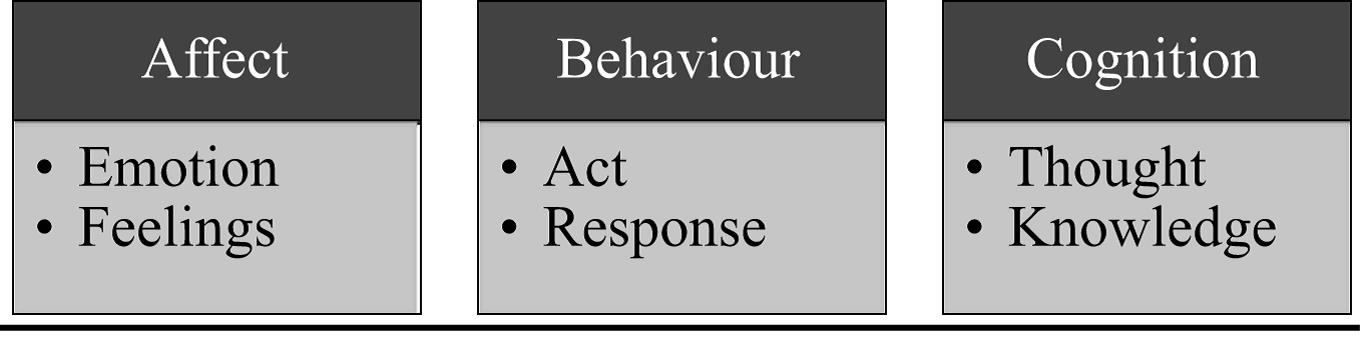
Figure 1. ABC model (Triad) in psychology, Ostrom [Piepiora, 2021].
Emotion regulation is crucial to maintaining a healthy mental equilibrium, as inefficient regulation can be detrimental to our mental health. Emotion regulation as the ability to regulate one’s own emotions and to express emotional responses effectively. Successful emotion regulation plays a vital role in maintaining mental health [Aldao], while ineffective emotion regulation may lead to affective disorders [Rottenberg, 2005], anxiety [Mennin, 2007] and long-term substance use[Fox, 2007]. The current study focuses on two emotion regulation strategies, namely cognitive reappraisal and suppression. Cognitive reappraisal, or adaptive emotion regulation, or antecedent focused strategy uses cognitive resources to modify the thought process and thereby change emotional impact. It helps to perceive emotion provoking situations as more positive and non-threatening, which is beneficial to mental health and thereby promotes sustainability in the long term. On the other hand, suppression or maladaptive emotion regulation or a focus on reactivity (suppressing the behavioral expression of emotions) may hamper mental health and thus reduce the likelihood of resilience. Therefore, cognitive reappraisal can effectively regulate negative emotional reactions compared to suppression [5, 9].
Research evidence on Emotion Regulation
Behavioral studies [6, 10, 14, 15, 17, 19] have found that reappraisal is more effective than suppression. This provides indirect evidence that antecedent-oriented strategies are generally more effective in regulating emotions than response-focused strategies [37, 38]. Reappraisal decreases the emotional experience and reduces negative expressive behaviour [Richards, 2000]. Emotion regulation is a skill which shifts over time and these changes are more visible in adulthood because adulthood is a life stage full of challenges and hardships. Emotion regulation goals are closely related to situational factors and vary across different events within the same individual. For achieving pre-hedonic goals, emotion regulation strategies that are effective in altering emotional experience are crucial. However, expressive suppression can be useful for attaining social goals [Wilms]. Emotion regulation also varies with respect to the nature of the situation. During competition, athletes experience high level of positive and negative emotions that are generated by spectators and situational demands, so emotional regulation has become crucial in the field of sport [18, 21]. Furthermore, it has been observed that athletes perceive cognitive reappraisal as an adaptive strategy in terms of well-being and efficacy in regulating stressful situations during competition, as this strategy helps them better adapt to the situation by enhancing positive emotions [29, 40], while the opposite effect is observed in case of emotional suppression [30, 40]. Martinent et al. [Martinent, 2015] suggested that high perceived efficacy leads to automaticity in emotion regulation. Automatic strategies corresponded to several specific emotions, such as anger, joy and relief. They stated that positive emotions are well controlled in most circumstances, compared to negative emotions such as anxiety, discouragement and disgust, as there is greater variability in the effectiveness of these emotions.
Personality is another important factor in explaining human behaviour. In ancient Indian literature personality (prakriti) is considered from two different perspectives — biological and psychological. The biological perspective is viewed in Ayurveda, an ancient medical scripture, and psychological perspective is considered in Tri-gunas such as Sattva, Rajas and Tamas. The meaning of being sattvic is associated with strength of character, firmness, courage and generosity. Sattva is characterized by idealism, analyticism, intelligence, prudence, lack of selfishness, self-control, extrovertedness, malleability and conscientiousness. Rajasic guna seems to be related to emotion-driven, self-oriented traits such as openness to experience and emotional stability. The meaning of tamas is exhaustion, depression, rigidity, mental imbalance and neuroticism. Although the origin of Triguna can be found in Bhagavad Gita, it still explains the understanding of individuals’ psyche. Moreover, Personality plays an important role in goal setting and an athlete needs to set goal/s before performance and then work out a certain strategy to reach the goal/s. Hence the study of personality is also important in sports research.
Research evidence on Personality
Research indicate that athletes do not differ from non-athletes with regard to the extraversion personality trait [Auweele, 2001]. Butt [Butt], Cox [Cox, 1994], Saint-Phard [Saint-Phard, 1999] reported that the competitive athlete presents some psychological characteristics that distinguish him from other populations. Among these differences, the authors consider that athletes have higher emotional stability, extroversion, self-confidence and higher mental stability compared to non-athletes. Maresh et al. [Maresh, 1991] compared a group of runners with a group of non-athletes and noted that these athletes were more withdrawn, thoughtful and presented lower anger levels than non-athletes. Weinberg and Gould [Weinberg, 1995] and Hernández Ardieta et al. [Hernández-Ardieta, 2002] demonstrated that the athletes are more aggressive, independent, emotionally more stable and more work-focused than non-athletes. Weinberg and Gould [Weinberg, 1995] reported that team athletes are more extroverted. Piepiora [Piepiora, 2021] reported that team sport champions are characterized by a lower level of neuroticism, a higher level of extraversion and openness to experience than other sportsmen. Morgan and Costill [Morgan] reported that players who succeed in team sports tend to show a higher level of extraversion, openness to experiences and a lower level of neuroticismcompared to other sportsmen. Nia and Besharat [Nia] suggested that athletes who played individual sports have higher scores on conscientiousness and autonomy compared to those who played team sports. However, athletes who played team sports scored significantly higher on sociotropy and agreeableness. They reported no significant differences between two groups on domains such as neuroticism, extraversion and openness. Wang, Shi and Li [Wang, 2009] found that there is a relationship between extraversion, neuroticism and positive and negative emotions, mediated by the contribution of reappraisal and suppression. Extraversion indicators such as warm-heartedness, assertiveness, vigor, positive emotions have relationship with emotion regulation [Livingstone, 2014]. Lane et al. [Lane, 2011] suggested that players often use strategies to reinforce unpleasant emotions, yet an increased state of anger frequently improves performance, while an elevated state of anxiety interferes.
Research evidence on Personality and Emotional Regulation
Tao et al. [Tao Y, Liu, 2022] conducted a study on male professional firefighters in China and revealed that conscientiousness through cognitive reappraisal can reduce anxiety and depression symptoms among Chinese firefighters. Alcaraz-Ibáñez et al. [Alcaraz-Ibáñez, 2020] conducted a study examining Big Five personality traits and body-related self-conscious emotions among Spanish undergraduate students, and the results showed that neuroticism, extraversion, conscientiousness and openness to experience were significant predictors of body-related self-conscious emotions. Hamzah et al. [ 36] conducted a study on Malaysian elite and non-elite tennis players, and the findings demonstrated that elite and non-elite tennis players scored the highest on the Agreeableness indicator. Moreover, the study showed that female tennis players had higher scores on Neuroticism than their male counterparts. The study also revealed that the Big Five personality traits can have a great influence on tennis sport. Brito et al. [Brito C.J, 2023] carried out a study on boxing athletes’ mental toughness and physical fitness performance using Big Five Factors. The results showed that Neuroticism was related to mental toughness, and agreeableness was related to muscular endurance capability. The study concluded that mental toughness and endurance were correlated with boxing athletes’.
Based on the studies presented above, it may be observed that there are several differences between athletes and non-athletes with respect to personality traits. However, there is a lack of researches stating the relationship between emotional regulation and personality traits among athletes and non-athletes. Studying emotion regulation is very important for athletes before and during competitions. Another uniqueness of the present study is that it was conducted during the COVID-19 outbreak, when people experience uncertainty in their daily lives and radical shift from normal to abnormal situation. This radical shift from a routine schedule to a completely new schedule has created many problems in their daily lives, as the uncertainty factor prevailed in this time frame. While dealing with these problems, people are confronting new emotional perspectives, and sometimes it becomes very difficult for them to control and regulate their emotions in a desired and socially acceptable way.
The objectives of the present study are to determine:
1. The relationship between Personality traits (neuroticism, extraversion, openness to experience, agreeableness and conscientiousness) and emotion regulation (Cognitive reappraisal and suppression).
2. Significant differences between athletes and non-athletes with respect to personality traits (neuroticism, extraversion, openness to experience, agreeableness and conscientiousness) and emotion regulation (Cognitive reappraisal and suppression).
3. Significant predictor/s (if any) of emotion regulation among athletes and non-athletes.
Method
A. Participants
The convenience sampling method was used to collect data from a sample of 180 individuals, among whom 80 were athletes (Male= 55 and Female= 25) and 100 were non-athletes (Male= 45 and Female= 55). The athletes were aged 13- 18 years (M = 15.75 years; SD = 3.45) and the non-athletes were aged 13-19 years (16.94 years, SD= 2.82). The present study included professional athletes who The sample comprised of individuals residing in West Bengal, India and belonging to the middle socio-economic status. The athlete group played collective sports such as cricket, soccer and volleyball.
B. Tools Used
-
NEO-FFI-3 form S [McCrae]: NEO-FFI-3 form S was administered for measuring the five main personality dimensions of the Big Five factor model (neuroticism, extraversion, openness to experience, agreeableness and conscientiousness). It is suitable for respondents aged 12 and over. Higher scores on each dimension indicate high scores on the respective personality dimensions. The participants were asked to answer 60 items using a 5-point Likert scale ranging from 0 (strongly disagree) to 4 (strongly agree). The internal consistency coefficients of the different NEO-FFI-3 dimensions ranged from 0.75 to 0.83 for the five scales. Neuroticism (N) is an indicator for the degree of emotional instability, lack of impulse control and anxiety. People with high N score are considered to have a higher incidence of distress, low adaptivity, irrational ideas, negative feelings and low self-esteem. Extraversion (E) is an expression of sociability and assertiveness. Extraverts tend to enjoy gathering and working in groups, have a cheerful disposition and are optimistic. Openness to experience (O) reflects a propensity for intellectual curiosity, innovation and open-mindedness. Individuals with high scores for this domain are regarded as having less conventional behavior. Agreeableness (A) is characterized by altruism, helpfulness, sympathy for others, trust in others’ intentions and respect for others’ beliefs, and high scores on this domain indicate cooperativeness. People with a high Conscientiousness (C) score are generally purposeful, organized, punctual, determined, trustworthy, and achievement-oriented.
-
Emotion Regulation Questionnaire (ERQ): Developed by Gross & John [Gross, 2003], this 10-item self-report questionnaire is based on Gross’s [Gross, 1998] model of the emotion regulation process. The ERQ is designed to measure people’s usage of two regulation strategies: an antecedent-oriented strategy called cognitive reappraisal and a response-focused strategy called suppression. Cognitive reappraisal consists of 6 items, where a person attempts to modify the way he or she thinks about a situation in order to change its emotional impact (e.g., “When I’m faced with a stressful situation, I make myself think about it in a way that helps me stay calm”). Suppression includes 4 items, where a person tries to inhibit the behavioral expression of his or her emotions (e.g., “I keep my emotions to myself”). Separate scale scores are derived for these two regulation strategies. All items are answered on a 7-point Likert scale, ranging from 1 (strongly disagree) to 7 (strongly agree), with higher scores indicating greater usage of that strategy. The Cronbach’s alphas for cognitive reappraisal and suppression are 0.78 and 0.71, respectively.
C. Procedure
The convenience sampling method was used to collect data from a sample of 180 individuals via Google form. Consent was obtained by explaining the purpose of the study to participants and assuring that they had the right to withdraw from the study anytime during the entire process. The participants were guaranteed confidentiality and were therefore requested to answer as objectively as possible. The participants were informed that there was no time limit, but it would be preferable if they answered the statements quickly and did not ponder upon each statement for a long time. Finally, each participant was thanked for his/her cooperation.
Results and Discussion
The raw data collected via Google Form (online) were validated and analyzed using SPSS 21. The means, standard deviations (SD) and Pearson’s product moment correlation of coefficients were calculated between personality traits and emotion regulation among athletes and non-athletes and are presented in Tables 1 and 2.
Table 1
Descriptive statistics and correlations between measures of Big Five Factor Traits and Emotional Regulation of Athletes (N= 80)
|
|
Mean (SD) |
1 |
2 |
3 |
4 |
5 |
6 |
7 |
|
1. Extraversion |
25.09 (2.09) |
1 |
|
|
|
|
|
|
|
2. Agreeableness |
29.52 (6.10) |
.09 |
1 |
|
|
|
|
|
|
3. Openness to experience |
30.18 (3.04) |
.11 |
.10 |
1 |
|
|
|
|
|
4. Conscientiousness |
33.76 (4.09) |
-.27* |
.30** |
.10 |
1 |
|
|
|
|
5. Neuroticism |
25.93 (3.04) |
-.10 |
-.22* |
-.25* |
-.39** |
1 |
|
|
|
6. Cognitive reappraisal |
32.54 (3.91) |
.32** |
.10 |
.41** |
.09 |
-.35** |
1 |
|
|
7. Suppression |
16.58 (9.31) |
-.26* |
.09 |
-.31** |
.10 |
.32** |
-.39** |
1 |
**p<0.01 level of significance, *p<0.05 level of significance
Table 2
Descriptive statistics and correlations between measures of Big Five Factor Traits and Emotional Regulation of Non- Athletes (N= 100)
|
|
Mean (SD) |
1 |
2 |
3 |
4 |
5 |
6 |
7 |
|
1. Extraversion |
25.80 (3.17) |
1 |
|
|
|
|
|
|
|
2. Agreeableness |
28.27 (2.99) |
.04 |
1 |
|
|
|
|
|
|
3. Openness to experience |
27.17 (4.41) |
-.15 |
.13 |
1 |
|
|
|
|
|
4. Conscientiousness |
28.26 (2.26) |
.10 |
.38** |
.11 |
1 |
|
|
|
|
5. Neuroticism |
27.62 (3.45) |
.08 |
-.19 |
-.24* |
-.36** |
1 |
|
|
|
6. Cognitive reappraisal |
28.90 (4.03) |
.08 |
.10 |
.33** |
.39** |
-.10 |
1 |
|
|
7. Suppression |
18.29 (2.91) |
.10 |
.07 |
-.11 |
.08 |
.29** |
-.27** |
1 |
**p<0.01 level of significance, *p<0.05 level of significance
Tables 1 and 2 represent that athletes’ openness to experience and extraversion are significantly and positively correlated to cognitive reappraisal, while neuroticism is significantly and negatively related to cognitive reappraisal. Openness to experience and extraversion are significantly and negatively related to suppression, while neuroticism is significantly and positively related to suppression. For athletes, extraversion is negatively related to conscientiousness, whereas a significant positive relationship is evident between agreeableness and conscientiousness. Neuroticism is found to be significantly and negatively related to agreeableness, openness to experience and conscientiousness.
For non-athletes, openness to experience and conscientiousness are significantly and positively correlated to cognitive reappraisal, while neuroticism is significantly and positively related to suppression. Agreeableness is significantly and positively correlated to conscientiousness. Openness to experience and conscientiousness are significantly and negatively correlated to neuroticism. It may be due to the fact that individuals with high conscientiousness, openness to experience and extraversion often modify situations positively, accept others’ opinions, are energetic and enthusiastic, and hence are better able to manage emotions effectively and maintain good mental health. On the other hand, Neurotic individuals are emotionally less stable, find it difficult to restructure their emotions and, as a result, are unable to regulate their emotions. An inability to regulate emotions effectively may lead to emotional suppression and worsening mental health.
Independent t-tests were calculated to determine significant differences between athletes and non-athletes with regard to personality traits and emotional regulation and are presented in Table 3.
Table 3.
Mean, Standard Deviation (SD) and t-value of Big Five Factor traits and emotional regulation among athletes and non-athletes.
|
Variables |
Athletes |
Non-athletes |
t values |
|
Mean (SD) |
Mean (SD) |
||
|
Extraversion |
25.09 (2.09) |
25.80 (3.17) |
1.73 |
|
Agreeableness |
29.52 (6.10) |
28.27 (2.99) |
1.79 |
|
Openness to experience |
30.18 (3.04) |
27.17 (4.41) |
5.20** |
|
Conscientiousness |
33.76 (4.09) |
28.26 (2.26) |
11.44** |
|
Neuroticism |
25.93 (3.04) |
27.62 (3.45) |
3.44** |
|
Cognitive reappraisal |
32.54 (3.91 |
28.90 (4.03) |
6.10** |
|
Suppression |
16.58 (9.31) |
18.29 (2.91) |
1.74 |
**p<0.01 level of significance
Table 3 represents that athletes are significantly higher on Openness to experience and Conscientiousness compared to non-athletes, whereas the opposite is true for Neuroticism. In case of emotional regulation, athletes are significantly higher on Cognitive reappraisal compared to their non-athletes counterparts. It may be due to the fact that conscientiousness, such as perseverance and diligence, as well as the ability to manage stress and emotions (emotional stability) are crucial to an athlete’s performance. In addition to conscientiousness, Openness to experience, characterized by flexibility, creativity, acceptance of other people's ideas, is also very important, especially for team sports. This finding is favored by researchers [3, 44] who suggest that a higher level of openness may play a greater role in predicting participation in non-traditional sports due to the level of receptivity to ideas and opportunities for new experiences. Regarding emotion regulation, athletes are significantly higher on Cognitive reappraisal compared to their non-athletes counterparts. The likely reason for this is that athletes need to effectively manage their emotions in order to concentrate on performance, as suppressing emotion can interfere with concentration and thereby have a detrimental effect on their performance. Athletes need to have emotional balance, effective team communication and tactical thinking skills that affect their readiness to compete [Hernández-Ardieta, 2002].
In order to determine the significant predictor/s of emotion regulation, multiple regression analyses (separately for athletes and non-athletes) were carried out and presented in the following tables:
Table 4a.
Regression analysis of dimensions of the Big Five personality traits on the athletes’ emotion regulation
|
Criterion |
Predictors |
B (Unstandardized coefficients) |
???? Standardized coefficients |
t value |
|
Model 1: Cognitive reappraisal
|
Openness to experience |
1.58 |
0.30
|
6.15** |
|
Neuroticism
|
-1.57 |
-0.26 |
5.61** |
|
|
Model 2: Suppression |
Neuroticism |
-1.45 |
-0.25 |
4.94** |
Note: Model 1. ???? 2 = 0.39, Adjusted ????2 = 0.38 ** p<0.01 level,
Model 2. ????2 = 0.18, Adjusted ????2 = 0.17
Table 4b.
Regression analysis of dimensions of the Big Five personality traits on the non-athletes’ emotion regulation
|
Criterion |
Predictors |
B (Unstandardized coefficients) |
???? Standardized coefficients |
t value |
|
Model 1: Cognitive reappraisal
|
Conscientiousness |
0.62 |
0.12 |
2.55** |
|
Openness to experience |
2.16 |
0.59 |
4.55** |
|
|
Model 2: Suppression |
Neuroticism |
-0.54 |
-0.10 |
2.10* |
Model 1. ????2 = 0.43, Adjusted ????2 = 0.42, ** p<0.01 level
Model 2. ????2 = 0.19, Adjusted ????2 = 0.18, * p<0.05 level
Table 4a shows that for athletes, openness to experience and neuroticism are the significant predictors of Cognitive reappraisal. Adjusted ????2 is found to be 0.38, indicating that openness to experience and neuroticism explain 38% of the variance in cognitive reappraisal. The second model represents that neuroticism is the most significant predictor of expressive suppression. Adjusted ????2 is found to be 0.17, suggesting that neuroticism explains 17% of the variance in expressive suppression. Table 4b reveals that for non-athletes, conscientiousness and openness to experience are the significant predictors of Cognitive reappraisal. Adjusted ????2 is found to be 0.42, indicating that conscientiousness and openness to experience explain 42% of the variance in cognitive reappraisal. The second model represents that neuroticism is the most significant predictor of expressive suppression. Adjusted ????2 is found to be 0.18, suggesting that neuroticism explains 18% of the variance in expressive suppression.
The intriguing finding of regression analysis is that people who are ready to accept new ideas, concepts and actions tend to reappraise an emotional situation by altering its meaning and emotional impact, whereas people experiencing frequent negative emotional states tend to suppress emotions and thereby are more likely to experience low self-esteem, anxiety and reduced well-being in the long run.
Conclusion
Concentration is a desideratum for athletes to perform effectively in sport. To maintain good mental health, athletes tend to use cognitive resources to modify the thought process. This study concludes that athletes are significantly higher on the Openness to experience and Conscientiousness dimension of personality compared to non-athletes, while neuroticism tends to be inverted. Interestingly, the study shows that open-minded people are flexible by nature, tend to experience new things and relationships in life, and prefer to reinterpret an emotionally arousing situation in a way that changes the emotional impact and alters its meaning. On the other hand, emotionally unstable people are not capable of cognitive re-interpretation and tend to hide, inhibit or reduce ongoing emotional expression. For non-athletes, conscientiousness is significantly and positively correlated to cognitive reappraisal and neuroticism is significantly and positively related to expressive suppression. It can therefore be concluded that people who control their impulses tend to be goal-directed and, consequently, reframe the meaning of emotion-laden situations in an effective way. Openness to experience and conscientiousness are the significant predictors of Cognitive reappraisal. The most significant predictor of expressive suppression is neuroticism.
Limitations and Implications
The present study has limitations. First, we cannot draw causal inferences from the results because of the cross-sectional design. Longitudinal and sequential research design would be helpful. The second limitation is that responses are self-reported and collected online. Future research should replicate these findings using other offline methods (e.g., observations and face-to-face interviews, etc.). The third limitation of this study is the relatively small sample size which is also location specific (West Bengal district only). Further study based on samples selected from wider regional/cultural backgrounds may also be useful. The fourth limitation could be the lack of knowledge about the extent to which the specificity of sports disciplines and training influences an athlete’s personality development. Last but not least, due to time and situational constraints, the study has not included other variables that directly influence emotion regulation, such as psychological and social capital, etc.
Despite these limitations, the present study has implications for our daily lives. Emotion regulation has proved to be a crucial strategy for maintaining a positive climate in our daily lives, especially in the current situation. The study highlights the need to introduce counselling in academic institutions to make students aware of the pros and cons of different emotion regulation strategies in real life situations. Critical evaluation of such strategies would ameliorate students’ decision to utilize them to deal with stressful situations in future, thereby promoting well-being, social connectedness, academic performance and sustainability in the long run. Educational institutions must include emotion regulation interventions (such as psychoeducation, emotional awareness and the introduction of behavioural science) as a part of the curriculum. The study is relevant in the field of team sports, as emotion regulation is generated by both players and other teammates. Sports psychologists and counsellors need to be appointed in teaching the ability to cognitively reinterpret a situation so that athletes learn strategies to reduce additional anxiety and stress during performance and refocus on the competition. Effective emotion regulation also increases athletes’ acceptance of any situation, which in turn proliferates their adaptability in life. Understanding one’s own personality traits gives insight to the individuals and also helps them comprehend others better, leading to stronger intra– and interpersonal relationships. This understanding helps an individual to evolve and shape him/herself into a better person and adopt an appropriate emotion regulation strategy to deal effectively with the hardships of life.