In the society of the future, psychology will indeed be the science of the new human being… But this science of the new human being will nevertheless remain psychology; we already hold in our hands the thread that leads to it. It does not matter that this psychology will resemble the psychology of today as little as, in Spinoza’s words, the constellation Canis resembles a dog, the barking animal (“Ethics”, Proposition 17, Scholium).
L.S. Vygotsky
What Are We Looking for in Vygotsky?
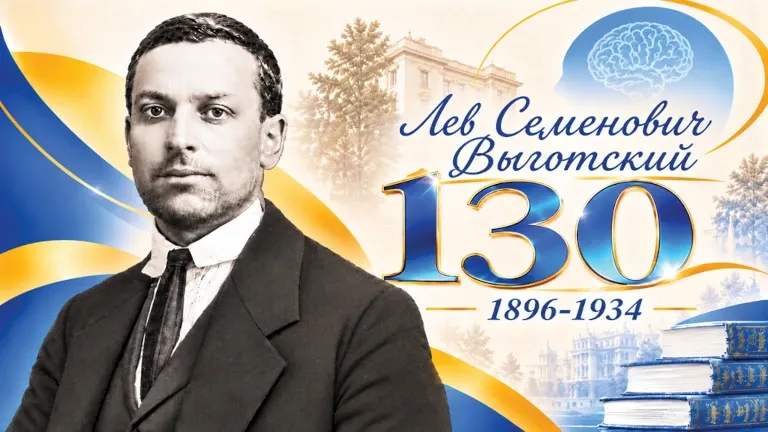
On November 17, 2026, the world of psychology celebrates the 130th anniversary of the birth of Lev S. Vygotsky. And on the same day, the interuniversity forum “Vygotsky’s Time: From Fundamental Theory to Contemporary Practice” opens in Moscow. Not on Moscow time, but on world time.
This is no exaggeration: among Russian psychologists, Vygotsky is perhaps the only figure of truly global stature, and he remains an active presence in the most recent history of psychology. A well-known prediction made by Vladimir P. Zinchenko in the 1990s held that two twentieth-century psychologists were assured a place in the twenty-first century: Lev Vygotsky and Jean Piaget (whose 130th anniversary is also celebrated this year). That prediction has come true.
Unlike their counterparts in the natural and exact sciences, Russian scholars in the humanities have been far less “fortunate” in gaining worldwide recognition. They can be counted on the fingers of one hand: literary scholar and thinker Mikhail Bakhtin, who, largely thanks to the enduring worldwide interest in Dostoevsky, rediscovered him for the thinking world through the concept of dialogue; philosopher and classical philologist Aleksei Losev, a “unique Russian sage” (as described by an Italian encyclopedia), who transformed antiquity into an “explanatory principle” of twentieth-century culture’s self-understanding; philologist and folklorist Vladimir Propp, recognized in the West as a forerunner of structuralism as early as the 1960s, who gave it a historical dimension; literary scholar, semiotician, historian, and thinker Yuri Lotman, creator of the concept of the semiosphere and its generative properties; philologist and cultural historian Yuri Knorozov, who deciphered the Maya script and reconstructed the worldview it embodied; and Lev Vygotsky. This list, of course, is not intended to be exhaustive, but it is difficult to imagine modern and contemporary thought in the humanities without these names.
Vygotsky’s name is not merely known in every country and on every continent where psychology is studied. His works are not merely republished, cited, and studied at universities; national Vygotsky societies are established (although none has yet been established in Russia), and “Vygotskyan” collaborations are formed not only in science but also in education and other areas of social practice, even within social movements. Ninety-two years after his death, Vygotsky’s legacy is seen as embodying a modern way of thinking in psychology and, increasingly, in the humanities as a whole. Different people see something of their own in him: some see a Marxist, others an heir to the culture of the “Silver Age”, a modernist, a postmodernist, a constructivist, or an advocate of activity theory. Many of these interpretations are rightly criticized, while some simply rely on meaningless, poorly understood terms. Yet the very desire to identify with Vygotsky is revealing: people seek in him something they either already possess or, conversely, lack in their own search for a place in science. Vygotsky is needed today to understand what is happening in this “today”, whatever we may call it. And what may happen to human beings and humanity tomorrow. To us, including us as psychologists.
As for interest in Vygotsky’s intellectual creation, cultural-historical psychology, it has grown considerably worldwide compared with the twentieth century, and its ideas are being applied in a wide range of fields: from education (where interest has traditionally remained strong) to social work, medicine, psychotherapy, psychological and organizational counseling, and ergonomics. Here are the documented statistics: between 2005 and 2024, the largest numbers of publications on cultural-historical psychology among BRICS+ countries were recorded in Brazil (488 publications), Russia (479), South Africa (173), China (110), and Iran (88). These were followed by Indonesia, India, and the United Arab Emirates, although their figures were considerably lower [10]. The United States leads in the number of publications among countries outside BRICS+, with 774 publications.
In Brazil alone, there are 154 research groups whose work draws on the ideas of cultural-historical psychology. Of these, 140 have been established at federal educational institutions, reflecting the government’s interest in supporting research in this field [6].
This interest, as well as the desire to further develop cultural-historical psychology, is sustained by one particular circumstance.
A Renaissance Man
Throughout its history, humanity has experienced at least two Renaissances (in fact, there have been more). And the distinction between the two is largely arbitrary.
We know about the first from our school history textbooks. Its central theme was the affirmation of human beings as universal transformers of the world. The second Renaissance took place roughly during the first third of the twentieth century. Its defining idea was the transformation of human beings themselves.
Both Renaissances unfolded at historical turning points, sometimes under extremely harsh and even brutal circumstances, and should not be romanticized. Yes, the Renaissance placed the Human Being at the center of its values, surrounded by the flourishing of science and the arts. Yet it was also the human being who was burned at the stake in Rome’s Campo de’ Fiori, in the person of Giordano Bruno (1600 — the High Renaissance!). This was the era of the Italian Wars, involving numerous European states; one of the longest civil conflicts, the thirty-year struggle between the Houses of Lancaster and York in Britain, known as the Wars of the Roses; the early colonization of the world; and much more. The tragedies of Shakespeare, himself a Renaissance figure, contain a gallery of villains that even the darkest Middle Ages might have envied. Perhaps because the medieval world saw no particular tragedy in villainy or evil, whereas Shakespeare did.
The history of the second Renaissance is closely intertwined with the First World War. Moreover, paradoxical as it may seem, the “Silver Age” of Russian culture, all forms of European modernism in art, the emergence of psychoanalysis, revolutions in physics (the development of quantum mechanics and the emergence of general relativity), and… the October Revolution were all phenomena belonging to the same historical constellation of events. “Above us is a barbarian sky, and yet we are Hellenes,” wrote Osip Mandelstam in 1918. Each Renaissance, as is often the case, had its titans. Lev S. Vygotsky was undoubtedly among the titans of the second Renaissance, having already established himself as such through his dissertation “The Psychology of Art” (1925), submitted as part of his application for the position of senior research fellow (such a procedure existed at the time; academic degrees would not be introduced until the following decade, although Vygotsky’s dissertation is sometimes mistakenly described as a doctoral dissertation).
In this Renaissance, expressiveness, self-expression, and sometimes even ostentation acquired particular value. The “creative process” was no less important (and sometimes more important) than the “finished product” — the work itself, the result of creative activity. Pavel A. Florensky offered an insightful assessment of the Russian Futurist movement: “How the Futurists made their appearance — that was what mattered most. Ideas long contemplated by linguists, psychologists, and literary scholars in the quiet of their studies were like infections sealed in glass vials. Immunized minds remained cold, even when exposed to the most potent of spiritual ferments… When the Futurists came to understand speech as the creation of language and sensed the energy of life in words, then, intoxicated by their newly discovered gift, they began to shout, mutter, and sing… By pouring boiling water and audacity onto the melting snow of public thought, they raised its temperature by several degrees. Through their fooling around and mischief, they achieved a victory, above all the most difficult one: they made people listen to them” (emphasis added by V.K.) [, pp. 171–173]. Indeed, this concerns the workings of self-consciousness and the creation of conditions for a kind of reflection beyond the reach of cold, “immunized” academic minds at a time of radical historical change, when the subject of history comes to the forefront.
Vygotsky lived in precisely this period and was one of those who helped shape it.
The second Renaissance was a search for a new human being. Some proposed creating, constructing, or molding this new human being in the image of a fighter for a “bright future”, or even “breeding” one in laboratory test tubes, as certain biologists proposed and attempted to do. Vygotsky also wrote about the new human being. But for him, this was a person living through a historical turning point, sometimes painfully reflected in their own life, independently seeking a path to freedom: “Freedom is the central problem of all psychology”. Even in behavior, this means directing one’s own actions rather than being driven by impulses or, as we might say today, reacting to challenges beyond the control of consciousness, which is woven from meanings, and to which one can only “respond” with a set of socially preferred reactions. A recurring theme in “The Historical Meaning of the Crisis in Psychology” is that objective, scientific psychology is possible only under conditions of historical upheaval, when personality emerges with freedom as its defining attribute, as Evald V. Ilyenkov would later put it. Personality, in other words, is the “new human being”. “The leap from the realm of necessity into the realm of freedom” will inevitably raise the question of gaining mastery over our own being, of bringing it under our control [2, p. 436].
But we encounter the very same phenomenon in ontogenesis, except that a historical turning point is replaced by a developmental crisis. And what if a developmental crisis coincides with a historical turning point, especially if this coincidence is not accidental? Vygotsky’s era was marked by precisely such a convergence, and we are witnessing the same phenomenon today. Hence Alexei N. Leontiev’s question: how many times is a personality born? Even in the most stable society. And does this mean that there can ever be a human being who is “not new”?
Does a new era create a new human being, or does a new human being create a new era? It is the age-old question of the chicken and the egg. The entire chicken is already present in the egg. But only as a possibility. What kind of chicken it will become once it hatches and grows, and what kind of egg it will lay, can only be roughly guessed. And what if an unpredictable mutation occurs? “Even here, Postumus, there are no rules” (Brodsky).
With human beings, everything is far more complicated. The zone of proximal development… A formalistic reading of Vygotsky suggests that what a child initially does together with an adult, the child later does independently. But the adult already knows how to do it. And so we “design” the zone of proximal development (ZPD). But what does this have to do with development, which was precisely Vygotsky’s central concern? The intrapsychological form of an action is not merely a condensed copy of its interpsychological form. Independent action, as an expression of freedom, is imbued with a particular meaning. Moreover, its outcomes continually enrich the interpsychological sphere, which cannot remain unchanged as the intrapsychological sphere develops. This is well understood by psychologists working in organizational development, thoughtful developmental and educational psychologists, and skilled teachers of the developmental education tradition. Vygotsky’s granddaughter, the distinguished child and educational psychologist Elena Kravtsova, repeatedly emphasized that the point is not simply to “remain within” the ZPD, but to seek ways for the child to change its boundaries independently, with the participation of an adult who must abandon the illusion of being an all-knowing designer! She also introduced the concept of the zone of potential development (while Alexander G. Asmolov proposed the zone of variable development). Only then can we achieve “teaching oriented toward the ZPD” in Vygotsky’s sense, rather than according to adults’ pedagogical illusions.
Psychology is concerned only with the new, the possible, the “yet-to-come” (T. Yu. Bazarov) human being.
“Sowing Eyes” — The Purpose of Culture
In her remarkable essay on Lev S. Vygotsky, perhaps one of the finest ever written about him, Olga A. Sedakova, a philologist, thinker, and poet, recalls Khlebnikov’s image of the “sower of eyes”:
And with horror
I realized that no one could see me,
That eyes must be sown,
That the sower of eyes must go forth.
Interestingly, in his notes for a lecture delivered in 1932, Vygotsky wrote: “Khlebnikov. Meanings” [4, p. 336].
“To sow eyes” is the purpose of culture. Not merely to recognize what is visible and familiar, but to foresee the invisible in the unexpected features and flashes of the visible. And the invisible consists of the very person who sees, who does not yet exist. Nor is it clear whether that person ever will. Culture creates eyes capable of foreseeing and, through foresight, of seeing. It gives everyone who lives within it a “third eye” — imagination. This is the “optics of culture”. The “field of vision” is sown with the seeds (eyes) of “meaning” and thereby “cultivated”.
The philosopher, Orientalist, and philologist Alexander M. Pyatigorsky recounted a Buddhist parable in one of his lectures. A Zen student approached his master and said: “Master, I recited the mantras exactly as you did, and even tried to synchronize my breathing with the rhythm of your inhalations and exhalations as you recited them. I fasted, fasted for a whole year, just as you instructed. Yet enlightenment still has not come”. To which the master replied: “But you did not recite them in the right way. And you did not fast in the right way”. “Then how should I have done it?” the student asked in surprise. The master answered: “When you discover that, you will no longer be the person you are now”. Yet here we are, in the fast-moving twenty-first century, discussing what competencies a worker should possess in the coming years and calling this the “competency-based approach” — a monstrous term that mangles the Russian language. Like the Zen student, the person cannot yet see who they will become, while labor market specialists, employers, and officials supposedly “see” it for them. Not on the virgin soil of culture.
Olga Sedakova writes: “In the history of the other characters’ hostility toward Hamlet (and in the bewilderment of ‘realist’ critics at his behavior), we may perhaps find the key to the eternal hostility between what is commonly called ‘life’ and what is called ‘art’. This is the hostility of what is complete, what has already come into being, what is indisputable and plainly visible to everyone, what is self-evident — toward what is possible, emerging, and invisible. Creativity is invisible, like the future. Vygotsky understands creativity not as one form of specialized human activity (the production of aesthetic objects), but as a universal anthropological alternative to the human being condemned to their own given existence, to what is ‘possible for them’. This means an inner life reduced to reflexes and reactions to various forms of aggression from the external environment and to ‘early traumas’. It means personal growth that effectively comes to an end in early childhood.
The theme of art and the theme of Vygotsky are one and the same: the human being as possibility. From a certain, almost universally accepted standpoint, this means the impossible human being” [8, p. 277].
Yet a person who has created a work of art can no longer be the same in life as they were before. Even if they are unfamiliar with “Hamlet”. In that case, too, they will recognize themselves in Hamlet as both possible and impossible.
Vygotsky distinguished between the concepts of the “visual field” and the “field of meaning”. But he emphasized that “the appearance of an object is interpreted through meaning”. Otherwise, the object remains a mere appearance.
And Hamlet was precisely the “new human being” who preoccupied Vygotsky throughout his life. For him, the psychology of art was the key to the psychology of the human being, to the birth and genesis of human emotional experience. Although in “The Psychology of Art” this experience is still called an “aesthetic reaction”, in keeping with the language of the time, this is one of those cases where we should not get hung up on words, especially the words of a genius. After all, a genius gives expression to an era, both in its soaring achievements and in its limitations, which very often reveal themselves in language.
Hamlet, however, surrendered. In attempting to fight evil, he took the path of evil himself, yielding to the old world from which he had dreamed of escaping. But it is precisely in this, rather than in the succession of murders itself, that Shakespeare sees the tragedy. The tragedy of Hamlet’s inner world, at times seeing clearly and at times blind. The eyes had been sown, but only the first shoots had emerged.
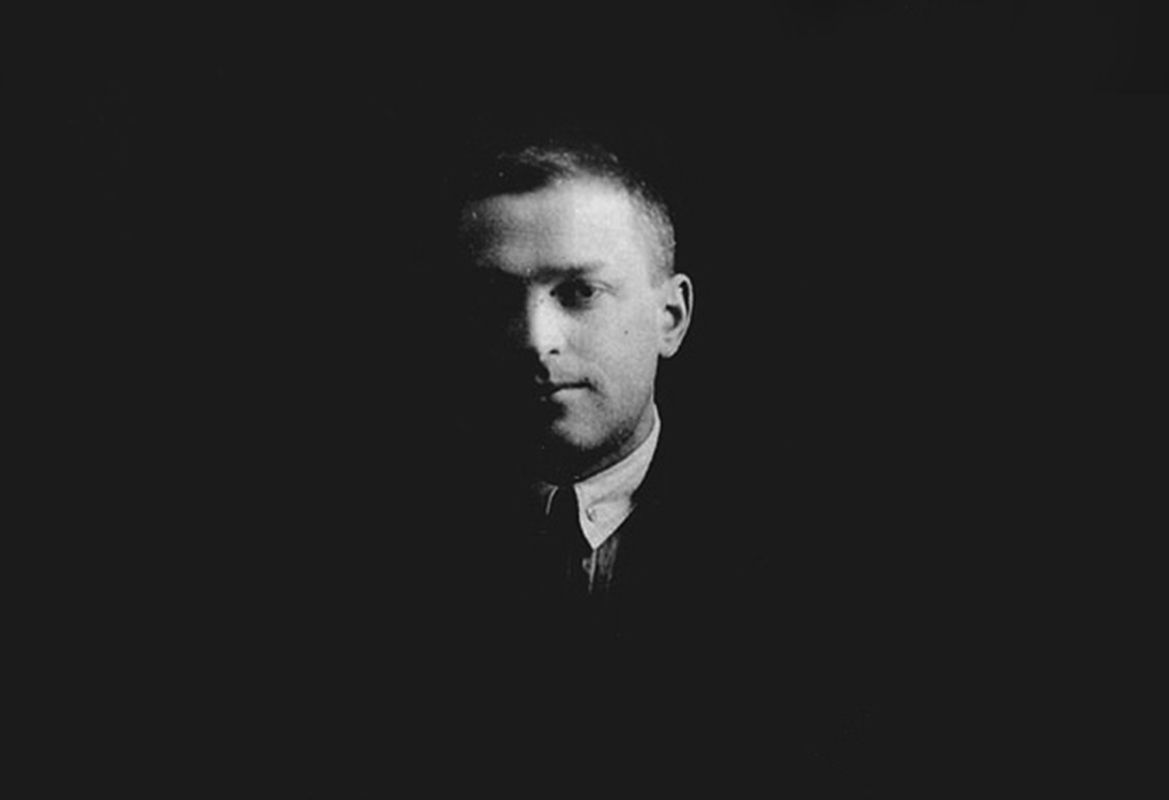
In Lyubimov’s production of “Hamlet” at the Taganka Theatre, set designer David Borovsky devised a remarkable solution in which a partially lowered curtain effectively becomes the central character. Hamlet, played by Vysotsky, stands in the center. His friends are on the right, the gravediggers on the left. Suddenly, the curtain begins to sweep furiously back and forth. I was a schoolboy at the time, but I could literally feel that wind, that storm of dramatic passion: “to be or not to be, to be or not to be”. Finally, the curtain comes to rest above the gravediggers. Not to be — though he had so wanted to be. And the question is no longer there. Symbolically enough, the curtain once fell (during a rehearsal, if I remember correctly). Fortunately, no one was hurt, and Vysotsky mentioned the incident in a song.
When Vygotsky was taken to the sanatorium-type hospital “Serebryany Bor”, from which he was never to return alive, he took only one book with him — “Hamlet”, which he had loved since his youth.
The Technology of the Time Machine
The time machine exists, and has existed for a very long time. It is art. A feeling, a passion, an emotion, an experience has not yet arisen in you — suppose you fall in love. But you have not even been born yet, let alone fallen in love. Centuries may pass before your birth. Yet your feeling has already been given meaning before you experience it; hundreds, thousands, millions of people have already lived through your experience, each as something uniquely and incommunicably their own. Thanks to a poet. And yet we marvel at the foresight of certain scientific insights and are astonished by technological inventions centuries ahead of their time.
Would you fall in love, would you love, without Shakespeare? Of course. No one can fall in love or love on your behalf. But would you realize that you love “with the love of forty thousand brothers”? No. And if you did, you would be a poet yourself, able to declare to all those brothers your love for one sister. So that each might recognize his own love — for his one and only. “Forty thousand” is not about the sheer number of people, but about the unique intensity of a feeling and the one person to whom it is directed.
The ardor of the heart torments us early,
And Chateaubriand tells us:
It is not nature that teaches us love,
But the first wretched novel —
We long to know life in advance
And discover it in a novel…
And ultimately, what we discover is ourselves.
This comes from what Pushkin called his “chatter with the reader” in the novel “Eugene Onegin”. But “Eugene Onegin” consists precisely of this “chatter”, in which meaning weaves together the action. And it is in the language of this “chatter” that an “encyclopedia of Russian life” would ultimately be written.
This is precisely the “social technique of feeling” in which Vygotsky saw the nature of art. A technique for “knowing in advance” what will become deeply personal, a technique for recognizing oneself in something that did not happen to oneself. The technology of the time machine.
Incidentally, as Martin Heidegger reminded us, the Greek word for “technical” is τεχνικός, derived from τέχνη, meaning “art”.
A notch cut into a tree — is it a sign or a symbol? As an indication of the way out of the forest, it is a sign. As a means of salvation, it is a symbol. A symbol of victory over the leshiy, the forest spirit that led the traveler astray; over a fateful combination of circumstances; over a force greater than one’s own strength. The help left by someone who had been lost became a victory for someone who had not yet lost their way, who had not even entered the forest. A symbol of assistance, of participation, offered without being asked. Not an individual rescue, but a “common salvation”, when there is seemingly no one yet to save. The notch, both symbol and sign, awaits the lost traveler even before they lose their way. Like a novel or a poem yet to be read, like music yet to be heard…
A sign has a generally accepted meaning, while a symbol is imbued with meaning shaped by the circumstances being overcome and by the assistance provided in overcoming them (cf. Aleksei F. Losev’s image of the ancient Hero). A sign belongs to everyday life; a symbol belongs to an event. A symbol is a sign of the extraordinary, something that semiotics does not recognize. And Vygotsky moves beyond the semiotic approach, which was only beginning to take shape during his lifetime.
What did Vygotsky study? In “The Psychology of Art”, exclusively symbols (as did Cassirer in “The Philosophy of Symbolic Forms”). In developmental psychology, primarily sign mediation. Symbolic mediation was later taken up by the school of Vygotsky’s student Alexander V. Zaporozhets and Leonid A. Venger (Venger’s followers studied it in particularly concrete terms).
But it was precisely because Vygotsky had earlier unraveled, through the study of artistic creation and the fate of the work of art as a source of profound emotional experience, the mystery of the symbolic “social technique of feeling” in everyday life that this phenomenon could later be explored in such depth.
And he offered a glimpse into the nature of the gift not only of artistic foresight, but of foresight in any form — into the workings of the “inner time machine”.
The Discovery of Theoretical Psychology in the Realm of Art
The supervisor of Lev S. Vygotsky’s graduation thesis, “The Tragedy of Hamlet, Prince of Denmark, by W. Shakespeare”, written and defended at the Faculty of History and Philology of the Shanyavsky Moscow City People’s University (which biographers mistakenly refer to as the Faculty of History and Philosophy), was Yuly I. Aikhenvald (1872–1928), a literary scholar and critic. Vygotsky had largely completed the text of this work in 1915 but continued revising it in Gomel in 1916 after graduating from the university. The distinguished Soviet Shakespeare scholar Alexander A. Anikst would later make his famous remark about it: “I have spent the last 60 years of my life studying Shakespeare. When I first picked up Vygotsky’s work on Hamlet, I realized that the 19-year-old young man who wrote it was a genius”. Thus, the first person to call Vygotsky a genius was not a psychologist but a literary scholar. Many years later, the thesis was included as an appendix to the second edition of “The Psychology of Art” (Moscow, 1968), accompanied by a commentary by Vyacheslav V. Ivanov.
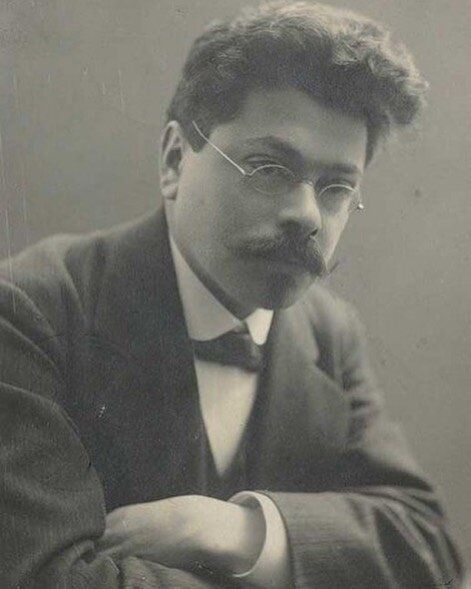
Aikhenvald’s influence remained evident throughout the entire structure of Vygotsky’s mature ideas. And if Vygotsky had a Teacher (apart from Spinoza), that teacher was not to be found among psychologists. Vygotsky discovered his theoretical psychology in the realm of art, a realm of human freedom, which, as I have already noted, he described in his notebooks as the “central problem of psychology”. He consistently maintained what Mikhail M. Bakhtin would call a position of outsideness, even when addressing specifically psychological questions: from the determinants of human psychological development to issues in defectology, pathopsychology, and psychotechnics. He worked not at the boundaries between specializations, but above them. Behind specific psychological questions, he saw Hamlet’s questions. Behind development lay human Destiny, as he wrote to his colleague Raisa E. Levina. And this belongs to the realm of philosophy and art and, ultimately, to the realm of life, which cannot be contained within the walls of a psychological laboratory. To push back those walls and let life in, one must first find a point of support, including in art. But art itself must also be understood differently.
In his introduction to the collection “Silhouettes of Russian Writers” (1910), Yuly I. Aikhenvald observes:
“The artist merely intensifies and deepens what is inherent in all human beings. We all feel ourselves to be creators, initiators of our actions, agents of our own deeds. Determinists regard this as an illusion, but the very possibility of such an illusion is itself significant, as is the fact that we remain forever in its grip. We attribute initiative to ourselves. The soul is activity. Never resting, a perpetuum mobile, never allowing itself a complete respite even during sleep, it is constantly engaged in some activity and never remains passive for a single moment. It would experience nothing; not even the most elementary sensation would reach it from the external world if it did not itself reach out to that world with all its energy. And this innate, ceaseless activity already predisposes the soul toward art. Our very psyche is aesthetic in nature. The human being is an artist by birth. And who is not talented, who is not original in their dreams? Left to itself, personality creates — why, then, should we deny independence to the artist, who is personality in its fullest expression?
But if this is so, if the prototype of aesthetic creativity is the normal psyche in general, then clearly we can establish the laws of the former only insofar as we know the laws of the latter. We find ourselves face to face with psychology. Might it not hold the key that will unlock the mystery of art, the enigmatic treasury of the word?” (emphasis added by V.K.) [1, p. 9].
If this is a manifesto of “psychologism” in art, it rests on a corresponding movement in the opposite direction — the “aestheticization” of psychology, in which the soul reaches out toward beauty even for the most elementary sensation to arise. Kant essentially said the same thing about cognition: “That imagination is a necessary ingredient of perception itself has, I suppose, never occurred to any psychologist”. This is from “Critique of Pure Reason”, although Kant unfortunately removed this striking formulation from later editions. He also used the term “aesthetics” to refer to the theory of sensibility, in which reason is connected with morality through the same faculty of imagination (see “Critique of the Power of Judgment”). This implies an entirely different view of the subject matter of psychology!
Vygotsky reversed Aikhenvald’s formula, finding in the mystery of art the key to human psychology, to understanding the nature of the human psyche, which is indeed “aesthetic”.
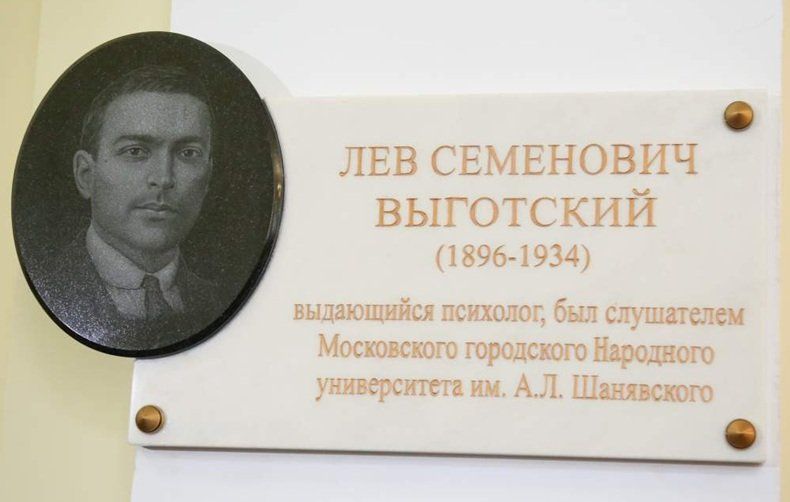
Among the non-degree students at the Faculty of History and Philology of Shanyavsky University was Sergei A. Yesenin. He attended mainly lectures on literary studies, skipping the others, and studied there for only a year and a half, although he listed his education as “higher education” in official documents. Remarkably, he and Vygotsky studied at the same faculty of the same university at the same time, although there is no evidence that they ever met (unlike Vygotsky’s later encounters with another poet of the “Silver Age”, Osip E. Mandelstam). Nevertheless, the Russian State University for the Humanities, some of whose buildings are located in the former Shanyavsky University building, has both a Yesenin Lecture Hall and a Lev S. Vygotsky Lecture Hall. A memorial plaque was also installed for Vygotsky’s 120th anniversary at the entrance to the Central Lecture Hall, where both had attended lectures.
As for the 1925 dissertation, first published as the book “The Psychology of Art” in 1965, it does not represent an early, “experimental”, or “draft” Vygotsky. Rather, it is the keystone or key to everything he went on to accomplish. Daniil B. Elkonin was the first to recognize and articulate this at the first conference devoted to Vygotsky in the early 1980s, when he declared that “The Psychology of Art” had established a model of “non-classical psychology”. More precisely, he had formulated this idea somewhat earlier, in the theses published for the conference.
And then there is Vygotsky’s fundamental methodological reference in “The Historical Meaning of the Crisis in Psychology”: “I studied neither fables nor tragedies, and still less this particular fable or this particular tragedy…” [1, p. 305]. Although the remark concerns something different, albeit related, it is revealing enough. In “The Psychology of Art”, this thought continues: “What I studied in them (fables and tragedies. — V.K.) was what constitutes the foundation of all art — the nature and mechanism of aesthetic response. I relied on the general elements of form and material inherent in every art form” [3, p. 236].
“The Psychology of Art” is connected to “The Teaching about Emotions” as if by a short circuit: a provisional beginning linked to a provisional end. Yet it contains the keys to meaning that can unlock the many mysterious combination locks in “Thinking and Speech” (itself a tangled knot at the heart of Vygotsky’s entire body of work). The same is true of everything that is no secret to anyone and has even become textbook knowledge: his series of works on developmental psychology, defectology, pathopsychology, and psychotechnics. These works still need to be reread and reconsidered from the perspective of “The Psychology of Art” and its methodology, from which cultural-historical theory as a whole emerged.
Human feelings, emotions, experiences, passions, and affects (we need not distinguish between these phenomena here, although such distinctions are necessary from a specialized psychological perspective) have their own history. As does everything “human in the human being”. For Vygotsky, art is a historically developing “technique of feeling”. This does not simply mean preserving and transmitting examples of these feelings from generation to generation in the form of books, paintings, sculptures, and music. Otherwise, it would be merely an exhibition, a “museum” of experiences. Pierre Janet, whose ideas were close to Vygotsky’s in several respects, described culture in precisely these terms: as a system of “psychological fossils”. It is no coincidence that he preferred to study memory. Janet was an “archaeologist” of psychology, looking into the past. Vygotsky, by contrast, looked into the future. He was a “futurologist” in psychology. Vygotsky also studied memory, but only after first exploring how art, and culture as a whole, give shape to human creative potential and its “psychological foundation” — imagination.
And imagination and creativity respond to the need to make sense of, rework, and transform emotional experience — one’s own and that of others at the same time. And to share it with others. This is precisely what an artist does, offering other people a unique emotion, transformed into a work of art. The “language of imagination”, becoming the language of art, becomes universally intelligible. Perhaps it is the language spoken by Lev S. Vygotsky’s inner speech.
Of course, the artist’s imagination is supported by thought, which helps to “put mute pain into words — the pain that, hidden from view, has long weighed upon our hearts” (A. Tvardovsky). Otherwise, the pain would remain within, perhaps eliciting sympathy only from those closest to the person experiencing it. But millions of people can receive an artist’s emotion as a gift, a hundred, two hundred, or a thousand years later. For art is a premonition of the feelings of people who may not even have been born yet. People who have yet to be born to rejoice and suffer, love and hate, become enchanted and disillusioned, feel inspired and exhausted, burn with passion and burn out (emotionally)… To live, to live through, to experience.
An artist, of course, cannot and should not do this on behalf of everyone. The artist can only bring together people separated by space and time through the power and depth of an emotional experience shaped “according to the laws of the work of art”. And this entails the purification of the soul (catharsis) from all that is petty, trivial, and local, on which it sometimes squanders itself entirely without ever coming together as a unique whole. Or it entails giving small things a meaning through which they acquire significance as part of that whole. Who can tell from the outset what is trivial and what is not? And art is no “book of moral instruction” with a list of ready-made answers at the end. Through the power of imagination, the artist merely offers people a glimpse of one another and of themselves in relation to one another, through a work of art that brings together far more lives and destinies than those belonging to its characters. Just as science offers people a glimpse of a world immeasurably greater than the one it reconstructs through its concepts and descriptions. Cultivating the capacity to think as such.
And here is a thought entirely in keeping with Vygotsky’s ideas, expressed by Alexander M. Pyatigorsky (who, to put it mildly, was not particularly fond of Vygotsky, although he would mischievously qualify this with a charming smile: “I only criticize those I love” — make of that what you will):
“Sometimes it seems to me that when we speak of love, we often forget that what we are actually talking about is not love itself, but our attitude toward love, about talking about love. This is especially true of England, a country of long, leisurely conversations about everything. People here are very fond of explaining everything. One doctor recently announced that the decline of love in England could be explained by the extremely unhealthy lifestyles of middle-class men and their excessive consumption of alcoholic beverages. Very well, let us drink less. A well-known psychosociologist explains the ‘emotional impoverishment’ of the English by their excessive dependence on modern electronic technologies and mass communication. Far more interesting is the suggestion made by a rather well-known contemporary British poet that, over the past half-century, society has experienced a fairly sharp decline in the culture of expressing feelings — love is losing its weapons, Cupid is being deprived of his arrows. ‘Love,’ he maintains, ‘is what people say, write, and sing about it. Take Robert Burns’s most wonderful poem about love: “My love is like a red, red rose”. Here, the rose is an expression of love. If Burns had not known that he loved his beloved like a “red, red rose”, he would not have loved her in the way he did’. In other words, words about love are an art without which love, as we know it, does not exist. What we call the “everyday” or the “ordinary” — down to the most elementary psychological reactions — remains what it is, sustained at its elementary level, only because of what “holds” it up from above: a culture of behavior, a culture of expressing feelings, and an intellectual culture” (emphasis added by V.K.) [7, p. 38].
This is a direct restatement of Vygotsky’s central idea — in different words!
For Vygotsky, the ideal always exists before the real, and the developed before the developing. Otherwise, human psychology, unlike animal psychology, cannot be understood.
Here is how he explains the genetic paradox: why does grammar draw a child’s first words upward from the very beginning? Surely not because grammatical forms are innate or because of simple imitation. Let us turn to his “Notebooks”:
“The significance of interaction with the ideal form in child development: (a) a distinctive feature of child development that cannot exist in any other type of development; (b) it changes our entire understanding of the role of the environment in development — not external influences, but a source of development; the child is part of the environment; (c) the driving forces of development lie in this discrepancy — these are the fundamental contradictions of child development — between the ideal and genetic (developing) forms; (d) in embryonic development, the result (the ideal form) is preformed by evolution — it is not present at all, it comes at the end; in child development, there is real interaction with it; (e) what does it mean for the ideal form to interact with the genetic form? The latter relates to the former as a part to a whole, as a cell to a tissue: cf. the child’s one-word sentence is part of a dialogue with the mother’s ideal speech, i.e., it is actually part of a whole in which grammaticalization and other features are present and with which the child’s speech comes into real contact. Thus, grammar is not introduced into the child’s speech from outside at the age of three; rather, from the very beginning, grammar draws the child’s first words upward” [4, p. 228].
It should be added that this dialogue takes place within a single polysubject — the psychological unity of “child and mother”, which Lev S. Vygotsky would call the “proto-we”. Consequently, it is an internal dialogue in which “interiorization” and “exteriorization” cannot be separated.
Grammar draws the first words upward, while art draws feelings upward. Initially, this takes the form of the mother’s song and the mother’s speech, containing elements of tonal and modal expression.
A human being is never born into a natural acoustic environment. That environment always resounds with the meaningful voices of others. Above all, the mother’s voice. Human sound production (including, first and foremost, an infant’s cry, as well as music in Paul Valéry’s understanding) is an overcoming of the entropy of noise. Language and speech are incapable of this until they become a “voice”. Voice, music, and the mother’s song as a response to an infant’s cry come before speech!
A national language remains human and humane insofar as a mother’s song sung in that language responds to a child’s crying. Only then does the language become truly native. Even before knowledge and understanding, through a translation into primordial emotions. The result of this “translation” is the emergence of vague but already fundamental meanings. Only by becoming native, profoundly personal and at the same time transcending the individual in its universality, does a language acquire a national character for the child.
The mother’s song and the mother’s speech (the latter deriving from the former, above all from the lullaby), addressed to a single human being — the child — seem to draw the child out of the overwhelming, voiceless din. And thereby give the child individuality. They protect the child’s ears and soul from the chaos of noise. That is why it is so important for mothers to sing. And for everyone else, too — so that they may learn to speak in a truly human way.
Poetry, too, follows a path from an unformed, inarticulate “hum within” to something worthy of being spoken “at the top of one’s voice”. The great poet Mayakovsky, who wrote about this, listened very attentively to that hum, usually while pacing around his room.
A Premonition of Feelings (Instead of a Conclusion)
I happened to know a teenager, almost a young adolescent, quite well. He entrusted me with telling an old story that has a direct bearing on the themes we have been exploring. And so I shall tell it.
Everyone around him was falling in love, but he wasn’t. He was the odd one out, the only one not in love. It was embarrassing in front of his friends. They, admittedly, found an easy and conventional solution, as is common at that age: they would pick a girl, the prettiest and the best, in their opinion, and fall in love with her. Having their feelings reciprocated was desirable but not essential. One-sided displays of affection were enough: little notes, silly antics… The main thing was for their friends to know that they were in love with her and no different from anyone else. But he didn’t like that. Nor did he like the idea of bestowing his affections on girls who had not attracted the love of his friends — and there were plenty of those.
And eventually he did fall in love. In the summer, of all times, after the school year had ended: there was no one to tell! He fell in love with… Juliet. With Olivia Hussey: Franco Zeffirelli’s wonderful 1968 film was being shown at the summer cinema near his family’s country house.
He fell in love not only with Juliet, but even more with Mercutio — or, more precisely, with John McEnery’s dazzling performance (Romeo, played by the very young Leonard Whiting, was clearly outshone by him). He fell in love with everything. With Shakespeare (who has held him in his grip ever since), with Nino Rota’s music, with English cinema (although the film was an Italian-British production). He emerged from the cinema overwhelmed by this newly discovered feeling, spent a couple of days under its spell, and eventually met a red-haired, freckled girl by a pond. He fell in love with her, too. And it turned out she felt the same way! They even kissed for the first time (there was plenty of kissing in the film, too). And once again, there was no one to tell: his summer friends were a different circle altogether! They spent two months in love with each other. But then he had to go to Sochi, to the sea. She didn’t want to let him go. He didn’t want to leave either, but he had been dreaming of the sea all year, whereas he had only just met her. He also loved going to the cinema there and reading books. But above all, his beloved sea was nearby. At times, it looked just like the sea in the paintings of his beloved Aivazovsky.
Later, though, he came to love other marine painters as well — Jan Porcellis (and Flemish painters in general, from the moment he first saw a work by Porcellis) and J. M. W. Turner. New seas and new girls. But he never forgot the little red-haired girl. Nor the film, which he still watches from time to time.
Leontiev’s classic formula: “The encounter of a need with its object is an extraordinary event”. As is the encounter of feeling with beauty.
Shakespeare had foreseen it! (According to Vygotsky.)
Vladimir Kudryavtsev
Doctor of Science (Psychology),
Professor, Moscow Institute of Psychoanalysis
and Moscow State University of Psychology and Education,
Deputy Editor-in-Chief of the journal “Cultural-Historical Psychology”
References
- Aikhenvald Yu.I. Introduction to the Collection “Silhouettes of Russian Writers”. In: “Silhouettes of Russian Writers”. Moscow, 1910.
- Vygotsky L.S. The Historical Meaning of the Crisis in Psychology. In: “Collected Works”: In 6 Vols. Vol. 1. Moscow: Pedagogika, 1982.
- Vygotsky L.S. “The Psychology of Art”. 3rd ed. Moscow: Pedagogika, 1987.
- “L.S. Vygotsky’s Notebooks: A Selection”. Ed. by E. Zavershneva and R. van der Veer. Moscow: Kanon+, 2018.
- Kant I. Critique of Pure Reason. In: “Collected Works”: In 6 Vols. Vol. 3. Moscow: Mysl, 1964.
- Prestes Z., Tunes E., Beck M.T. The Dissemination of L.S. Vygotsky’s Cultural-Historical Theory in Brazil. “Cultural-Historical Psychology”, 2025. Vol. 21, no. 3, pp. 166–174. DOI: 10.17759/chp.2025210315.
- Pyatigorsky A. The Invention of Love. “Rīgas Laiks”, 2002, January.
- Sedakova O. “The Sower of Eyes”: A Tribute to L.S. Vygotsky. In: “Prose”. Moscow, 2001.
- Florensky P.A. “At the Watersheds of Thought”. Vol. 2. Moscow, 1990.
- Shvedovskaya A.A., Ponomareva V.V., Korneev A.A., Samorodov N.V. The Landscape of Cultural-Historical Psychology in BRICS+ Countries: A Bibliometric Analysis. “Cultural-Historical Psychology”, 2025. Vol. 21, no. 3, pp. 39–70 DOI: 10.17759/chp.2025000004.
[i] The long-standing debate over whether Vygotsky had a concept of activity and whether he can be considered the founder of the activity approach appears, at first glance, to be easily resolved. Vygotsky did not introduce the concept of activity (here I will venture to disagree with my teacher V.V. Davydov, with whom I agreed on almost everything else). Although philosophical in origin, the concept had not yet been developed in Soviet philosophy during his lifetime (this would happen only in the 1960s). Moreover, the group of Vygotsky’s students in Kharkov studied the phenomenon of action rather than activity. A fully developed psychological theory of activity was the result of S.L. Rubinstein’s and A.N. Leontiev’s subsequent theoretical explorations. Yet it was within Vygotsky’s school that two fundamental conceptions emerged: that of human cultural development (L.S. Vygotsky himself) and that of activity (A.N. Leontiev and his followers). They share much in substance, but they also contain no fewer unresolved contradictions, which is normal in the development of science. And the apparent simplicity of the question of how they relate to each other disappears, since reintegrating these two “roots” of the contemporary Vygotskian school requires serious theoretical analysis that cannot be replaced by introducing the term “cultural-activity psychology”. For now, this term is a promissory note — and represents an undeniable prospect for the development of science.