Introduction
The continuous increase in traffic accidents in Algeria and all countries of the world, despite the efforts made by various sectors to reduce this phenomenon that causes significant material and human losses, has drawn the attention of experts and researchers in the field of traffic safety and security to the need to develop and improve safe driving skills among drivers, especially novice drivers, as they are the most exposed group to traffic accidents. This requires effective planning within a clear educational strategy capable of covering the training needs that qualify them to be safe drivers, by improving the quality of training provided to learners, optimal supervision of the post-driving license stage, and enhancing the material and human resources capable of directing the educational process to achieve the desired goals. In this context, the role of driving simulators and their various programs comes to facilitate the training process for both the trainer and the learner, as learning simulation is considered one of the latest methods used in the field of driving education and training, and is usually used to bring learners closer to the real world, which is difficult to provide due to its danger or high cost (Sætren et al., 2020). It is an educational method in which the learner faces virtual scenarios that simulate real reality.
To evaluate the effectiveness of the simulation learning method, it is important to understand how wide the range of skills a driver must acquire and direct training to deal with the various traffic situations that the driver may encounter. These skills are clearly identified in the GDE (Goals for driver education) model as the most comprehensive approach in driving education and training. The matrix hierarchy includes all the safe driving skills needed to be a safe driver, including high-level cognitive skills (risk perception, road hazard awareness, and self-assessment) (Hatakka, Keskinen, Peräaho, 2003). Compared to current driver education programs that focus on training specific maneuvers, we can say that the driving task is more than just mechanical operation, and that the real goal of driver education and training is to create drivers who have the necessary skills and awareness to ensure their own safety and the safety of other road users. Given the reality of traffic safety in Algeria and the large number of traffic accidents that novice drivers are exposed to, and the lack of studies — according to our knowledge — that attempt to propose solutions to the traffic phenomenon in general, and the absence of studies that focus on simulation learning and the effectiveness of driving simulators in achieving traffic safety in our local environment, this study comes to investigate the effect of simulation learning in developing some safe driving skills included in the (GDE) model.
Importance of simulation Learning
The driver education and training concept refers to the provision of courses aimed at providing new drivers with a set of procedural and cognitive skills related to safe driving, and developing awareness of how their personality and characteristics affect driving. Simulation learning is an educational strategy in which the learner is confronted with virtual scenarios that simulate and approximate real reality, which is difficult to provide to learners due to the high risks or costs of experimentation. The user's presence in this virtual environment usually allows him to accept it as a space in which he can act freely.
Simulation learning is one of the latest methods used in the field of driving education, and aims to teach drivers safe driving skills without exposing them to real danger (Marquez, Milleville-Pennel, 2020). This type of education relies on a simulator, which is an educational tool that simulates real reality. This type of learning uses a device that simulates a real car and contains most of its equipment.
The device provides feedback to the driver and explains the mistakes he has made (Faschina et al., 2021). Modern devices are often equipped with a voice response system that provides indications about the location and direction of the sound, to study the duration of its impact on driving behavior (Faure, 2017). Therefore, the behaviors that are formed in virtual reality must be of the same type as the behaviors that occur in reality. Integrating technology into driver education and training does not replace the role of the instructor or trainer; instead, it strengthens their effectiveness in delivering knowledge and developing driving skills (Baranshchikov, Selivanov, 2023). The subjective experience arising from the use of virtual reality technologies represents a complex phenomenon that reflects how human personality interacts with modern technological media. It contributes to reshaping patterns of perception, emotion, and communication, offering new opportunities for experience, representation, and existence in spaces that transcend the boundaries between the real and the digital (Soldatova, Rasskazova, Klishevich, 2023).
Driving is a routine task with high levels of complexity, requiring the coordination of a set of sensory, motor and cognitive tasks, as well as time constraints and continuous adjustments according to the number and variety of interactions to be managed (Papantoniou, Vlahogianni, Yannis, 2021). Its performance requires a continuous flow of different tasks that vary dynamically according to the situation; the requirements of the driving task are reflected in the skill, dexterity, problem-solving ability, and attention tests that drivers face all the time. The driving task is divided into three levels, which communicate with each other through sensory, motor and cognitive feedback, as shown below (Corneloup, 2019):
- Operational level: refers to vehicle controlling skills.
- Tactical level: an integrative level that links the elements of the environment perceived by the driver to his goals and actions.
- Strategic level: overall performance of the trip including route planning.
The use of virtual reality technologies in education enhances the effectiveness of the learning process by fostering learners’ reflective abilities. Such technologies create an interactive and engaging environment that allows learners to analyze their learning strategies and organize their cognitive experiences, thereby strengthening self-directed learning and improving the quality of knowledge and skills essential for real-life application (Pobokin, Selivanov, 2022). The main features and advantages of learning through simulation can be outlined as follows:
- Ensuring the safety of the driver and other road users: Simulators are used to study risk anticipation and perception by exposing drivers to critical situations and dangerous driving tasks, which represents an ethical challenge in real vehicles (Berthelon, Perrin, 2017).
- Using the device in the field of scientific and technological research: Simulators provide a safe environment for driving research, under dangerous driving conditions and situations that are impossible to experience in reality for security reasons (Leeuwen, de Winter, Happee, 2012).
- Data processing: provide the ability to measure, process, format, store, and organize data in a compressed form.
- Providing psychological comfort for learners: simulation learning avoids contact with inexperienced drivers and those who violate traffic regulations wich negatively affect the learner's psychology.
- Evaluating and assessing driver performance: Simulators enable us to create scenarios that match the requirements of each experiment, which enables us to evaluate the reactions of participants precisely (Hirsch, Choukou, Bellavance, 2017).
- Management and recording of the visual environment: controlling the nature and quantity of visual information available while driving (such as a billboard near or far from the road) (Rouge, 2016). Management of environmental interaction: The simulator allows the creation and control of environmental effects: foggy roads, snowy roads, slippery roads, night driving conditions (Prévost, 2014).
- Scenario replication and repetition: Virtual environments allow typical driving scenarios to be reproduced and replicated over and over again as required by each experience, especially for scenarios that rarely occur in reality (Carsten, Jamson, 2011).
Developing safe driving skills among novice drivers using a driving simulator according to the GDE model
Various strategies have been adopted to reduce the involvement of novice drivers in traffic accidents, one of the oldest strategies adopted is the “graduated licensing system” which was implemented in 1971 in both Australia and the United States of America (Da Costa, 2007). The first models focused on the “performance aspects” of the driving task (skills) and were used for several decades in training basic (procedural) driving skills, until (1980) when Mikkonen and Keskinen divided the driving task into three levels of performance: knowledge-based performance, rule-based performance, and skill-based performance (Santos, Da Silva, Meireles, 2014). Later, Michon and Van der Molen (1985) divided driving into three levels of skills: operational, tactical, and strategic level (Techer, 2017). Theeuwes later divided the driving task into three interconnected levels: control level, maneuvering, and strategic level (Sætren et al., 2020).
Based on the above-mentioned divisions and the results of previous studies related to traffic accidents, the idea of the GDE “goals for driver education” matrix first appeared in the early 1990s in Finland, where Keskinen and Hatakka designed a new theoretical conception of the driving task “Driver training objectives from a psychological perspective”. This model revealed that the studies and research conducted were insufficient to put an end to the traffic phenomenon because they focused on the procedural aspects of driving and neglected the motivational and emotional aspects (Hatakka et al., 1999).
This project was adopted in the work of the European Road Safety Organization in France in 1999 as a comprehensive concept of driving (Schulte, 2014), the objectives of this project include developing three types of skills: knowledge and skills, risk-increasing factors, and self-evaluation skills. This matrix has generated a revival of concepts and practices in Europe around two main ideas: reducing risks and making self-assessment more realistic.
To reveal the role of the “social environment” in guiding drivers’ choices, researchers in Finland in 2003 incorporated the fifth level “social level” into the context of driver education, and included it in the latest version of the GDE matrix in 2010, which combined the individual characteristics of the driver and the influences of the society in which the driving task takes place.
The goals of the fourth level “personal goals for life and skills for living” in the hierarchy are linked to models of social cognition that define behavior as an interaction with personal factors (attitudes and self-assessment) and the social environment. Thus, the model represents a link between information processing and system theoretical models on the one hand and motivational models on the other hand (Tronsmoen, 2011).
The latest hierarchical model aims to develop three types of skills: knowledge and skills, risk increasing factors, and self-assessment skills, according to five sequential levels: vehicle control & manoeuvring, mastery of traffic situations, goals and context of driving, personal goals for life and skills for living, and socio-economic pressures (Sarolta, 2016).
The GDE model suggests that simulators can be used to teach novice drivers how to perform a series of skills and procedures that become automatic with practice, as well as to develop higher cognitive skills. This type of education is based on dealing with difficult (dangerous) traffic situations and is widely conducted in Australia, Europe and the United States of America (Ashleigh et al., 2013).
The matrix represents the conceptual framework for the objectives to be achieved in driver education and constitutes a theoretical reference tool for experts working in the field of driving education (Keskinen, 2014). To achieve safe driving, it is necessary to master five levels of skill included in the GDE model, according to three axes: knowledge and skills, risk increasing factors, self-evaluation, as shown below:
Table 1
Goals for driver Education (GDE) model
|
Self-evaluation |
Risk-Increasing factors |
Knowledge and skills |
|
|
V.3 |
V.2 |
V.1 |
Socio-Economic pressures |
|
IV.3 |
IV.2 |
IV.1 |
Personal goals for life and skills for living |
|
III.3 |
III.2 |
III.1 |
Goals and context of driving |
|
II.3 |
II.2 |
II.1 |
Mastery of Traffic situations |
|
I.3 |
I.2 |
I.1 |
Vehicle control & manoeuvring |
- Level 1: Vehicle control and manoeuvring: (the operational level) includes sensorimotor and procedural skills necessary to control the vehicle automatically.
- Level 2: Mastery of traffic situations: (tactical level) coordinating driver behaviors with the rapid changes of complex road scenarios.
- Level 3: Goals and context of driving: (strategic level) includes route planning, managing the social and personal context of driving (choosing the time of travel, determining the route, means of transportation...)
- Level 4: Personal goals for life and skills for living: (general level) presents motivational factors and personal goals (motives and goals) as determinants of behavior.
- Level 5: Socio-economic pressures: assessing and managing the effects of social and economic pressures on driver behavior.
When driving simulators first came into use, driver education was limited to training procedural skills related to collision risks only. However, recent studies and research have used simulators to teach procedural and higher cognitive skills (risk perception skills). The Netherlands is among the countries that extensively use driving simulators to train novice drivers according to a standardized curriculum, comprising over 18 sessions of 20 minutes each, with clear learning objectives for each component. Both basic procedural skills (practical driving) and higher-level cognitive skills are taught. It is not the driver’s skill or the amount of safety-related knowledge that the driver possesses that matters, but rather the extent to which the driver uses this knowledge (Keskinen, Hernetkoski, 2011).
Study problematic
The traffic problem can be considered one of the most important complex contemporary issues that most countries in the world suffer from, Algeria is one of the countries that has suffered and continues to suffer from this problem, as the National Road Safety Delegation revealed in (2022) the recording of 18,949 physical traffic accidents during the year 2021, which cost the death of more than 3,061 and the injury of 29,000 others, and confirmed that about 27% of those who caused accidents have experimental driving licenses that do not exceed two years, and attributed the reason for this to the weak level of drivers training to pass driving license exams. Given these statistics, it is found that young new drivers represent the category most involved in traffic accidents (Touil, 2023).
Researchers and specialists in the field of traffic safety and security attribute the high incidence of traffic accidents to weaknesses in the driver training system in Algeria. Currently, this system focuses primarily on teaching procedural skills required to control a vehicle as a criterion for passing the driving license exam. The results of Touil’s (2026) study support this explanation, emphasizing that reconsidering the content and strategies of driving education and training, along with the practical reality of their application, is a necessary requirement, with the necessity of providing the material and human capabilities necessary for their training needs, and providing them with sufficient knowledge and skills that qualify them to be safe drivers, while creating the incentive to apply them when driving independently on the road. In this context, modern theoretical models and frameworks for driver education and training illustrate the complexity of the knowledge and skills that drivers must learn and apply in order to perform the driving task efficiently, effectively and safely.
These skills are particularly evident from the results of the EU project (GDE), whose objectives include the development of three types of skills: knowledge and skills, risk-increasing factors that may lead to behavioral deterioration, and self-assessment skills .These skills are integrated in an interactive relationship with five sequential levels (vehicle control and manoeuvring, Mastery of traffic situations, Goals and context of driving, Personal goals for life and skills for living, social and economic pressures), in a way that enables their users to assess the level of skills to drive efficiently and safely. Thus, the concept of “Driver education” has become broader than “Driver training”, as it includes driver training with the addition of other objectives, content and methods, which makes driver education move from the idea of “controlling the car” to “controlling the person” (Assailly, 2017).
Various strategies have been implemented in Algeria to reduce the phenomenon of young novice drivers being involved in traffic accidents. The most prominent of these strategies are tightening penalties on violators, organizing awareness campaigns, and increasing the number of driving hours before passing the driving license exams. However, these strategies have proven ineffective in addressing the traffic problem.
Given the alarming increase in the number of traffic accidents on our roads and the huge losses they cause, we can say that it is time to reconsider the content of the National Driver Training Program and the strategies followed in its implementation. The use of modern technologies, the adoption of educational security models and strategies that have proven effective in many leading countries in the field of traffic security and safety, and optimal planning for the post-licensing stage have become a necessary requirement.
From this standpoint, and our desire to contribute to finding solutions to the problems facing our traffic sector, this study came to propose a training program based on simulation learning that aims to develop safe driving skills included in the GDE (Goals for driver Education) model for novice drivers, using a driving simulator, while adopting simulation learning and trying to identify its effect. Accordingly, our general question came as follows: Does the proposed simulation-based training program affect the development of safe driving skills included in the GDE model among novice drivers? To answer this question, the following sub-questions were raised:
- Are there statistically significant differences of safe driving skills between the pre- and Post-Test in the control group?
- Are there statistically significant differences of safe driving skills between the pre- and Post-Test of the experimental group in favor of the Post-Test?
- Are there statistically significant differences of safe driving skills between the control and experimental groups in the Post-Test in favor of the experimental group?
- What is the size of the effect left by the training program based on simulation learning in developing safe driving skills in the experimental group?
This study derives its importance from the current circumstances and the terrifying increase in the traffic accidents number in our country and the resulting material and human losses. It aims in general to reveal the effect of the training program based on simulation learning in developing safe driving skills included in the GDE (goals for driver education) model among novice drivers, to clarify the theoretical concepts related to the study variables, as well as to reach proposals that would develop the strategies adopted in the field of driver education and training in Algeria.
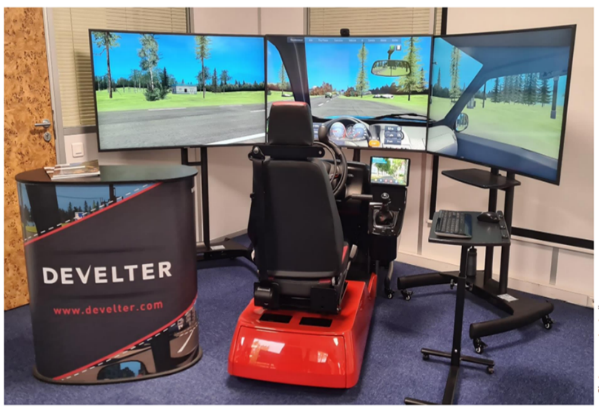
- Simulation Learning: A teaching method in which the learner faces virtual scenarios that simulate real reality and contain most of its components (driver-vehicle-environment), usually used by the trainer to teach and train drivers in a virtual space that brings the trainee closer to real reality, which is difficult to provide due to its danger or high cost. The concept of simulation learning in our study refers to developing safe driving skills among novice drivers using the DEVELTER driving simulator from the Road User Psychology Laboratory, according to specific objectives ranging from mastering simple to complex maneuvers, and performing them repeatedly until they become automatic.
- Safe Driving Skills: A sensory-motor-perceptual task that requires the driver to steer the vehicle's controls according to the various changes in his visual environment. In our current study, we mean all the safe driving skills included in the two lower levels of the GDE model (Vehicle control and manoeuvring skills and Mastery of traffic situation: starting, stopping, overtaking, etc., risk perception skills such as visual scanning, predicting other road users behavior...), which we tried to develop using a driving simulator, and are expressed procedurally by the degree obtained by the sample members, by answering the scale designed by the researcher for this purpose.
- Gde Model: A pedagogical strategy that aims to achieve safe driving by addressing the effects of lack of experience and immaturity among novice drivers, consisting of 15 columns that include the content of driver education, integrated in relation to the five hierarchical levels of safe driving skills, in a way that enables us to assess the level of necessary capabilities that qualify to be a competent driver.
Based on the questions raised, and the results of previous research and studies related to the subject of the study, the following main hypothesis was proposed: There is an effective impact of applying simulation-based training program in developing safe driving skills included in the GDE (Goals for Driver Education) model among novice drivers. The following sub-hypotheses were formulated:
- There are no statistically significant differences of safe driving skills between the Pre and Post-Test in the control group.
- There are statistically significant differences of safe driving skills between the Pre and Post-Test of the experimental group in favor of the Post-Test.
- There are statistically significant differences of safe driving skills between the control and experimental groups in the Post-Test in favor of the experimental group.
- The size of the effect left by the training program based on simulation learning in the development of safe driving skills for the experimental group is large.
Materials and methods
The survey study was conducted during the period from March 6 to February 17, 2022 in the urban area of Batna Province, on an occasional sample of novice drivers, 30 individuals (between 18 and 40 years old) due to the difficulty of relying on random field assignment.
Study tools
- Training program: It aims to develop safe driving skills among novice drivers, within ten (10) sessions, ranging from simple to complex maneuvers, designed by the researcher according to the skills included in the two lower levels of the (GDE) model shown below:
- Vehicle control and manoeuvring skills: Controlling the vehicle's devices in an automatic manner, by covering the main skills according to the degree of complexity as follows: starting, stopping, accelerating, overtaking... etc.
- Mastery of traffic situations skills: by covering the main skills according to the degree of complexity as follows: visual scanning skills, risk anticipation skills, risk management skills, appropriate speed selection skills, night driving skills... etc.
The simulation-based training was implemented using the DEVELTER driving simulator, of the Road User Psychology Laboratory — Batna 1 —– University — Algeria, the control devices included in the simulator were used to train on vehicle control skills in an automatic manner, and a set of scenarios were adopted in different traffic environments (urban, rural, highway).
- Self-Assessment scale of safe driving skills: The scale was constructed by the researcher in accordance with the content of the GDE model and comprised 34 items distributed across four dimensions: Vehicle control skills, risks awareness of the poor vehicle control, Mastery of traffic situations, road hazards awareness. The scale items are answered based on the explanation provided in the instruction, by choosing one of the five available answer alternatives according to the five-point Likert scale (always, often, sometimes, rarely, never).
Validity and reliability
- Calculating the apparent validity of the scale (Face Validity): to calculate the validity of the scale, it was distributed to a sample of ten (10) experts, and after calculating it according to expert validity equation (Lawshe’s equation), we obtained the following results: V = 0.93, i.e.: V = 93%, which is a high percentage indicating that the scale is characterized by excellent face validity, and therefore the scale is apparently acceptable for application.
- Calculating the internal consistency reliability (Construct Validity): by calculating the linear correlation coefficient of Karl Pearson (Karl Pearson's Coefficient) between the score of each item with the total score of the dimension to which it belongs, and also between each dimension and the total score of the (safe driving skills) scale, and relying on the (SPSS19) program, all the scale statements were statistically significant, as the minimum limit of the correlation coefficients was estimated at: (0.28) and the maximum limit was (0.72), except for items (27), (41) and (43) which were not significant at any level and were therefore deleted. After calculating the correlation coefficient between the total score of each dimension and the total score of the scale, all the scale dimensions were significant, as the minimum limit of the correlation coefficients was estimated at: (00.45) and the maximum limit was (0.87), which proves the validity of the hypothetical structure of the items and dimensions of the study scale.
- Discriminant validity: After calculating the discrimination coefficients of the scale items, all dimensions of the scale were significant at the statistical significance level (0.01), indicating the existence of differences between the averages of the lower and upper categories of the scale as a whole and for all its components, and therefore the scale has discriminant validity.
- Calculating reliability Using Cronbach's Alpha Coefficient: the consistency stability between the items was calculated using the Cronbach's alpha coefficient, and the value of the general stability coefficient of the study scale was (0.87), which is a high value, while the stability of its dimensions ranged between (0.70) as a minimum and (0.73) as a maximum, which are high values, indicating that the scale has a high degree of stability.
- Calculating reliability using Split-Half method (odd, even): to ensure the stability of the study tool, it was calculated using the split-half method, we obtained a stability coefficient of (0.75), and after correction using the Spearman-Brown equation, we obtained a stability coefficient (0.87). Accordingly, the scale demonstrates a high level of reliability and can therefore be considered suitable for use in the final study.
The scale in its initial form included 46 items (paragraphs) distributed over 04 axes, and after deleting the items whose consistency coefficients were weak (less than 0.30), it became composed of 43 items distributed over four dimensions, which are the same dimensions mentioned above. From this, we conclude that this scale is characterized by high degrees of validity and stability, which confirms its suitability for application.
After constructing the study tools and ensuring their validity, the training program and the study scale were produced in their final form, so that they become ready to be applied to the members of the main study sample.
Methods
Given the nature of the current study, which focuses on measuring the effect of simulation learning on developing safe driving skills among novice drivers, after introducing the independent variable (the training program based on developing safe driving skills included in the (GDE) model using a driving simulator) to the dependent variable (safe driving skills), we adopted the experimental method using two groups with Pre- and Post-Test, considering it the appropriate method for testing the hypotheses formulated in terms of their goal of tracking the effect.
Participants
The study was conducted at the Road User Psychology Laboratory, Hadj Lakhdar University — Batna 1, during the period from February 20 to March 11, 2022. The main study sample included 24 novice drivers holding a class “B” experimental driving license. The study sample included (24) novice drivers holding an experimental driving license, class “B” (students of Batna University 01), aged between 19 and 40 years, who were selected intentionally and distributed into two groups (experimental and control).
Procedures
After the exploratory experimentation of the study tools, the researcher applied them to the study sample, starting from February 20 to March 11, 2022, according to the following stages:
- The researcher divided the study sample into two groups (experimental and control group), the Pre-Test was conducted on both groups without informing them of the existence of a Post-Test to avoid artificiality of answers.
- To ensure that the study data follow the normal distribution, the researcher calculated the Shapiro-Wilk test. The results were not statistically significant because the probability values (p) are greater than the significance level of 0.05, which indicates that the data of the study variables follow the normal distribution, which allows the use of the “t” test to indicate the differences.
- To verify the equivalence of the two groups (experimental and control group), the t-test coefficient was calculated for two independent groups. The value of “t” was 0.16 and its significance level was 0.87 in the total score, which is greater than the default significance level of 0.05, which confirms the equivalence of the two groups (control and experimental) in the Pre-Test, and thus we can say that the performance of the individuals of the control group does not differ from the performance of the individuals of the experimental group on the total score of the scale and in all dimensions of safe driving skills in the Pre-Test, and that any difference that appears in the Post-Test is attributed to the training program based on simulation learning.
- After the completion of the training period of the experimental group, which lasted 20 days, the Post-Test was conducted for both groups.
After collecting the study data, the researcher processed it statistically using the Statistical Package for Statistics (SPSS), using the following statistical methods: Shapiro-Wilk test, one-sample t-test, two-independent sample t-test, two-sample t-test for related samples, Cohen's effect size equation “d”, and the effect size of Eta square “n²”. Blake's modified gain ratio equation.
Results
Presentation and discussion of the first hypothesis result “There are no statistically significant differences of safe driving skills between the pre and Post-Test in the control group”:
To calculate the difference between the means scores of the pre- and Post-Test of the control sample members, the researcher used the t-test for two related samples, and the results came as shown in the following table:
Table 2
“t” test Results for the differences between the means scores of the pre- and Post-Test of the control sample members
|
Statistical Significance |
t-Value |
Standard Deviations |
Means |
Sample Members |
Test |
Safe Driving Skills |
|
0.60 |
0.54 |
0.11 |
3.07 |
12 |
Pre-Test |
Total score |
|
0.17 |
3.01 |
12 |
Post-Test |
The results in Table (2) show that the value of t = 0.54 and its significance level is 0.60, which is greater than the default significance level of 0.05. Therefore, it can be said that there is no statistically significant difference between the Means scores of the control group members in the Pre-Test and their scores in the Post-Test on the total score of the safe driving skills scale, and that any difference that appears in the Post-Test is attributed to the variable of simulation learning. Therefore, we can say that the first hypothesis has been achieved.
Presentation and discussion of the second hypothesis result “There are statistically significant differences of safe driving skills between the pre and post test of the experimental group in favor of the Post-Test”: To calculate the difference between the Means scores of the Pre-Test and Post-Test of the experimental sample members, the researcher used the “t” test for two related samples. The results came as shown in the following table:
Table 3
“t” test Results for the differences between the means scores of the pre- and Post-Test of the experimental sample members
|
Statistical Significance |
t-Value |
Standard Deviations |
Means |
Sample Members |
Test |
Safe Driving Skills |
|
0.000 |
-11,61 |
0.16 |
3.05 |
12 |
Pre-Test |
Total score |
|
0.15 |
4.17 |
12 |
Post-Test |
The results in Table (3) show that there is a statistically significant difference between the Means scores of the experimental group members in the Pre-Test and their scores in the Post-Test in favor of the Post-Test, as the value of t = -11.61 and its significance level was 0.000, which is less than the default significance level of 0.05, in favor of the Post-Test with an arithmetic mean of: 4.17, and thus we can say that the second hypothesis has been achieved.
Presentation and discussion of the third hypothesis result “There are statistically significant differences of safe driving skills between the control and experimental groups in the Post-Test in favor of the experimental group”: To calculate the difference between the means scores of the experimental group members and the control group in the Post-Test, the researcher used the “t” test for two independent samples, and the results came as follows:
Table 4
“t” test Results for the differences between the means of the control and experimental groups in the post-measurement
|
Statistical Significance |
freedom Degree |
t-Value |
Standard Deviations |
Means |
Sample Members |
Test |
Safe Driving Skills |
|
0.000 |
22 |
-12,26 |
0.17 |
3.01 |
12 |
Pre-Test |
Total score |
|
0.15 |
4.17 |
12 |
Post-Test |
The results in Table (4) show that the performance of the experimental sample members differs from the performance of the control sample members on the total score of the safe driving skills scale in the Post-Test in favor of the experimental group, as the value of t = -12.26 and its significance level was 0.000, which is less than the default significance level of 0.05, in favor of the experimental group members with an arithmetic mean of: 4.17, and therefore we can say that the third hypothesis has been achieved.
Presentation and discussion of the fourth hypothesis result: “The size of the effect left by the training program based on simulation learning in the development of safe driving skills for the experimental group is large”: To determine the size of the impact of the training program on the dependent variable (safe driving skills), Cohen's equation “d” and Eta square “η^2” were calculated, and to ensure its effectiveness, the equation of the modified gain ratio for Blake was calculated, the obtained results can be summarized in the following table:
Table 5
Results of calculating the effect size of the training program on safe driving skills
|
modified gain ratio for Blake |
Eta square "" |
Cohen's effect size "d" |
Safe Driving Skills |
|
1.20 |
0.85 |
2,06 |
Vehicle control skills |
|
1.27 |
0.94 |
4,28 |
Risk awareness related to poor vehicle control |
|
1.21 |
0.81 |
1,96 |
Mastery of traffic situations traffic situations skills |
|
1.32 |
0.88 |
2,31 |
road hazards awareness |
|
1.23 |
0,97 |
4,75 |
Total score |
It is clear from Table (5) that Cohen's effect size “d” value reached (4.75) in the total score and ranged between (1.96) and (4.28) for the dimensions, and the value of Eta square “η^2” reached (0.97) in the total score and ranged between (0.81) and (0.94) for the dimensions, which are values that indicate a large effect size for the training program sessions on safe driving skills according to Cohen's criterion.
Black's coefficients also showed the effectiveness of the training program simulation learning, as they were all greater than 1.20, and thus we can say that the training program based on simulation learning has statistical significance and practical significance.
Discussion
The study results showed that there were statistically significant differences between the experimental group performance and the performance of the control group. It also showed that there were statistically significant differences between the pre and Post-Test of the experimental group in safe driving skills, while there were no statistically significant differences between the Pre and Post-Test of the control group. By applying Cohen's effect size equations, the value of “d” reached (4.75) in the total score and ranged between (1.96) and (4.28) for the dimensions.
The value of Eta square “η^2” reached (0.97) in the total score and ranged between (0.81) and (0.94) for the dimensions. These values indicate a large effect size for the training program sessions in safe driving skills according to Cohen's criterion. The results of the modified gain ratio equation for Blake also showed great effectiveness of the training program, as they all came greater than 1.20, except for the value of the first dimension, estimated at (1.18), which is a very close value from the specified value.
This means that the educational program has a great effectiveness in developing safe driving skills included in the GDE model for novice drivers (Vehicle control skills, risks awareness of the poor vehicle control, Mastery of traffic situations, road hazards awareness) and in their retention of these skills.
The recorded discrepancy between the performance of the control and the experimental sample demonstrates the effectiveness of the procedural objectives of the training program sessions, which progressed from mastering basic maneuvers to risk awareness, followed by a set of repeated procedural exercises on the simulator until they became automatic, which would enhance self-confidence in mastering safe driving skills and adhering to the principles of traffic safety and security. This is what was indicated by Jousse study (2016), which confirmed that the driving simulator remains an effective tool for teaching and developing drivers' skills and gradually directing their behaviors towards self-implementation of driving.
The presence of simulators in driving schools gives them a kind of modernity in education and training compared to the boring traditional methods that are limited to training basic (procedural) driving skills, in traditional training; difficult traffic situations are addressed theoretically only, due to safety concerns.
This significant impact can be explained by the importance of virtual reality in teaching procedural driving skills, developing high-level driving skills, and developing self-awareness of road hazards, which makes it possible to detect and anticipate hazards, compared to the current practical training of driving license candidates, which is limited to teaching basic skills, while the issue of training them in risk exposure skills is not addressed or limited to the theoretical aspect without actual practice.
Through field observation of the sample individuals and the experimental conditions, the researcher finds that the use of simulation learning in developing safe driving skills included in the (GDE) model increased the effectiveness of the training program sessions in developing and improving safe driving practices in terms of controlling procedural skills, and providing an effective response represented in the preventive measures explained in each session, leading to enhancing self-efficacy in mastering maneuvers and understanding the road scenario among novice drivers, and this is what came in the same context of the (GDE) model.
The results of our current study were consistent with the results of most previous studies that confirmed the importance of simulation learning in developing safe driving skills among novice drivers, which was reached by Wagner et al. (2013), who confirmed the effectiveness of a training program based on simulation learning in improving safe driving skills, risk perception and understanding of traffic rules among novice drivers. It also found indicators of the effectiveness of training in terms of improving performance in a context very similar to the actual driving environment. The study of Kopciak et al. (2016) revealed that the driving simulator is an effective tool in teaching drivers and developing their traffic awareness, and recommended the use of simulators in driving schools to help candidates learn to drive and prepare them to deal with various potential traffic situations.
However, the current study was distinguished by the application of the content of the two lower levels of the (GDE) model in the virtual environment, according to the hierarchy that came in the matrix, which was not addressed in previous studies, according to the researcher's knowledge,
The researcher attributes the great impact that the training program had on the experimental group members to three factors as follows:
- The training environment (virtual environment): Through field observation and experimental circumstances, which increased the effectiveness of the training program sessions and in developing safe driving practices in terms of controlling procedural skills, providing the appropriate response represented by the preventive measures explained in each session, leading to the acquisition of self-efficacy and self-awareness.
- The content of the training program (the hierarchy of the program content): The researcher believes that adopting the hierarchy that came with the (GDE) model in preparing the content of the training program.
- The strategies adopted in implementing the training program: which varied between strategies (discussion and dialogue, direct observation, repetition of the sequence of actions and movements, feedback, critical incidents) have contributed significantly to achieving the desired goals.
Conclusions
The terrible increase in traffic accidents, the material and human losses they cause, necessitated a reconsideration of the content of the National Driving and Training Program and the strategies adopted in its implementation. In order to enhance safe driving practices among drivers especially novice drivers, as they are the most representative and exposed group to traffic accidents. It is hoped that by providing driver education and training according to the Gde model, which contains the hierarchy of all safe driving skills that a driver needs, including high-level cognitive skills (hazard perception, road hazard awareness, and self-evaluation), young people would become more skilled and safer drivers, thus reducing their risk of accidents.
Therefore, we can say that the (GDE) model has a positive role in enhancing safe driving practices among novice drivers in Algeria, if it is adopted as a reference in the driver education and training system that have proven effective in many leading countries in the field of traffic security and safety.
Given the developments witnessed by the world and the accompanying emergence of modern technology as an option that complements the role of traditional learning without taking into account the risks and spatial and temporal restrictions imposed by the real reality, the results of our current study and the positive results achieved by the simulation learning method in many countries of the world, make it necessary to draw attention to the need to integrate modern technology in line with modern developments as called for by the GDE (goals for education) model and research related to driver education and training technology, within the pedagogical strategy followed in teaching and training drivers to obtain a driver's license or as a complementary program within the requirements for obtaining a driver's license as one of the possible solutions to address the traffic problem in Algeria.
This can be achieved through the combined efforts of all actors in the field of traffic safety and security, including: the Ministry of Transport, the National Traffic Safety Delegation, driving license inspectors, driving school directors, security services, the Public Works Directorate… provided that the process includes the following:
- Reviewing the content of driver education and training programs and the strategies and tools adopted in its implementation, with the need to employ modern technologies and adopt modern models and strategies.
- Adopting simulators in conducting studies and research related to the field of traffic safety and security.
- Expanding the scope of driver education and training on the driving simulator to address a wider range of levels of the GDE Model.
- Improving understanding of the basic mechanisms for teaching and training drivers using simulators compared to practical driving in real life.
- Employing modern technological means in the field of driver education and training at the level of driving schools and driver training and rehabilitation centers.
- Adopting the proposed educational program within the approved strategy for teaching and training candidates for a driving license, or as a supplementary program within the requirements for obtaining the license.