Introduction
The period of university education (18–25 years) represents a critically important stage of personal and professional development. During this period, the transition to adulthood is accompanied by increased academic, social, and psychological demands (Mershenova et al., 2018; Krasilo, Repesciuc, 2025; Nurhaeni, 2022). These challenges are particularly pronounced among medical students, who face a high academic workload, information overload, and stringent requirements for self-regulation (Yupanqui-Lorenzo et al., 2025). This often results in increased academic stress, emotional burnout, and decreased academic performance (Satova, Rymzhanova, 2020; Yupanqui-Lorenzo et al., 2025).
In response to the growing demands for student autonomy, academic advising, as an institutionalized form of pedagogical support, becomes particularly important. Its focus is on the unique and holistic personality of the student, who strives to realize their potential to the fullest, is open to new experiences, and is prepared to make responsible decisions in various life circumstances. This is achieved through support throughout the educational process and the promotion of students’ emotional resilience (Baubekova et al., 2019; Gluzman, Suprun, 2023; Zhuravleva, Talyshinskaya, 2022).
An academic advisor is a faculty member who supports students throughout their entire period of study. Their functions include advising on academic pathways, supporting professional self-determination, assisting in resolving organizational and personal difficulties, and developing self-regulation and self-organization skills (Gindes et al., 2023; Sokolova, 2013; Bassam, 2015). In the scientific literature, this role is often referred to as an academic advisor, mentor, or academic coach. However, the present study uses the term “academic advisor”, as it most accurately reflects the specific role of a faculty member who provides academic and psychological support to students (Goman et al., 2024; Zaher, 2024).
The present study aims to empirically examine the impact of academic advising on reducing perceived stress levels and developing resilience among medical students. The practical significance of the study lies in substantiating effective support strategies that contribute to students’ academic success and psychological well-being.
Materials and methods
The study was conducted during the fall–winter semester of the 2024–2025 academic year (September 2024–January 2025) at the NJSC “Astana Medical University” (Republic of Kazakhstan). The academic advisors were faculty members of the Faculty of Pharmacy with at least five years of experience in education who combined their teaching responsibilities with academic advising functions. The methodological framework of the advising process was based on the principles of academic mentoring, including an individualized approach, regular feedback, and assistance with students’ academic and personal adaptation.
The study included 73 students from the Faculty of Pharmacy: 34 first-year students (31 female and 3 male) and 39 second-year students (18 female and 21 male). The mean age of the participants was 19,2 ± 0,81 years. Age and gender were reported to describe the structure of the sample, as the primary objective of the study was to examine the relationships between distress, resilience, and perceived support. Empirical data were collected through an online questionnaire after obtaining informed consent. The inclusion criteria were enrollment at the beginning of the semester and voluntary agreement to participate. Participation was entirely voluntary, with the option to withdraw without consequences. The academic advisors worked with students throughout the entire semester and conducted regular individual and group meetings at least once every two weeks. A follow-up assessment was conducted three months after the beginning of the advising program, upon completion of the second interim assessment.
Data collection and measurement instruments
Data were collected in two stages using standardized scales.
The first stage was conducted in autumn (September) 2024 and was aimed at determining the baseline levels of students’ emotional state and resilience. At this stage, the participants completed the following instruments:
The Depression Anxiety Stress Scales (DASS-21) (Szabo, Lovibond, 2022) — the scale consists of 21 items grouped into three subscales of 7 items each. Responses are recorded on a 4-point Likert scale ranging from 0 (“did not apply to me at all”) to 3 (“applied to me very much, or most of the time”). Examples of the items include: “I found it hard to wind down”, “I felt that I was using a lot of nervous energy”, and “I found myself getting agitated”. Scores are calculated by summing the items within each subscale. DASS-21 has high internal consistency and is widely used in studies assessing the severity of negative emotional states. The scale was administered twice, at the first and second stages, to assess changes in students’ emotional state.
The Connor–Davidson Resilience Scale (CD-RISC-10) (Gray et al., 2024; Xiaofan et al., 2023) — this scale is a shortened version of the original resilience scale and consists of 10 items rated on a 5-point Likert scale ranging from 0 (“not true at all”) to 4 (“true nearly all of the time”). The scale measures the ability to adapt to difficulties, recover from stressful situations, and maintain psychological resilience. Examples of items include: “I am able to adapt to change” and “I can deal with whatever comes my way”. Higher total scores indicate a higher level of resilience. The CD-RISC-10 was administered once and was used to compare first- and second-year students as independent samples.
The second stage was conducted in winter (January) 2025 after completion of the examination session. The aim was to identify changes in the level of psychological distress and to assess students’ perceptions of academic and emotional support provided by their academic advisor. At this stage, students completed the DASS-21 again and also completed the following instruments:
The Perceived Academic Advisor Support Scale (PASS) (Burt et al., 2013; Svartdal et al., 2020) — the scale consists of 27 items reflecting three components of the advising relationship: academic support, emotional support, and autonomy support. Responses are recorded on a 5-point Likert scale ranging from “strongly disagree” to “strongly agree”. Examples of the items include: “My advisor is attentive to my questions”, “My advisor provides options when I make academic decisions”, and “My advisor encourages independence”. Higher scores indicate greater perceived support. The PASS was used to compare the results of first- and second-year students.
A feedback questionnaire specifically developed for this study, consisting of five statements rated on a Likert scale, was used to assess students’ subjective perceptions of the importance of academic advising support.
Statistical analysis
Data were processed using Microsoft Excel. The results are presented as means and standard deviations (M ± SD). Differences were assessed using Student’s t-test. For the DASS-21, paired measurements obtained from the same students at two time points were analyzed; therefore, a paired-samples t-test was used. The CD-RISC-10 and PASS scores were compared between students from different academic years; therefore, an independent-samples t-test was used.
Associations between variables were analyzed using the Pearson correlation coefficient. The reliability of the scales was assessed using Cronbach’s α coefficient, calculated in IBM SPSS Statistics. The normality of the data distribution was assessed using the Shapiro–Wilk test. The data were normally distributed, which allowed the use of parametric statistical methods. Differences were considered statistically significant at p < 0,05.
Results
The table presents comparative data for the DASS-21, PASS, and CD-RISC-10 scales collected from first- and second-year students at two stages of the study—the autumn stage (Stage I, 2024) and the winter stage (Stage II, 2025). For the DASS-21, the analysis was conducted using paired samples because the scores of the same group of students were compared at two time points, allowing changes in emotional state following academic advising support to be assessed. For the CD-RISC-10 and PASS, independent samples of first- and second-year students were compared, which corresponded to the objective of identifying differences in resilience and perceptions of academic advising support.
The mean DASS-21 scores decreased significantly from 38,69 ± 7,77 at Stage I to 32,37 ± 6,56 at Stage II, indicating a reduction in levels of depression, anxiety, and stress among the students (t = 5,168, p < 0,001). Thus, the DASS-21 scores reflected the dynamics of students’ emotional state and made it possible to assess changes in their psychological well-being. The reliability coefficients of the DASS-21, calculated using Cronbach’s α, were 0,81 at Stage I and 0,91 at Stage II (Cronbach’s α is a measure of the internal consistency of a scale), indicating increased measurement reliability upon repeated testing.
For the CD-RISC-10, the mean score was 22,71 ± 5,66 among first-year students and 21,54 ± 4,52 among second-year students (t = 2,921, p < 0,005, α = 0,81). This measure reflects the level of resilience as an individual psychological resource associated with the ability to cope effectively with stressful educational demands.
For the PASS, the mean scores were 34,36 ± 6,07 among first-year students and 31,43 ± 5,91 among second-year students (t = 1,945, p < 0,05, α = 0,93). The PASS assesses students’ perceptions of academic, emotional, and autonomy support provided by their academic advisor, thereby allowing the key psychological components of the advising interaction to be examined.
Correlation analysis revealed a negative correlation between academic advisor support (PASS) and psychological distress (DASS-21, Stage II), r = −0,181, p < 0,05 (Figure 1), as well as a negative correlation between resilience (CD-RISC-10, Stage I) and psychological distress (DASS-21, Stage II), r = −0,274, p < 0,05 (Figure 2).
According to the results of the feedback questionnaire (Figure 3), 53 of 73 students (72,6%) reported that academic advising had a positive impact on their psychological well-being and educational process; 68 students (93,1%) reported that advisors helped them cope with academic and personal difficulties; 47 students (64,4%) indicated that academic advising contributed to their personal growth, rather than providing academic support alone. In addition, 56 students (76,7%) reported that advisors contributed to improved group work, while 46 students (63,0%) indicated that academic advisors influenced their professional self-determination.
Table 1.
Psychological distress, academic advisor support, and students’ resilience
|
Questionnaire |
Study stage |
M ± SD |
t |
p |
Cronbach’s α |
|
DASS-21 |
Stage I |
38,69 ± 7,77 |
5,168 |
<0,001 |
0,81 |
|
Stage II |
32,37 ± 6,56 |
|
|
|
|
|
CD-RISC-10 |
Year 1 |
22,71 ± 5,66 |
2,921 |
<0,005 |
0,81 |
|
Year 2 |
21,54 ± 4,52 |
|
|
|
|
|
PASS |
Year 1 |
34,36 ± 6,07 |
1,945 |
<0,05 |
0,93 |
|
Year 2 |
31,43 ± 5,91 |
|
|
|
Note. t-test: differences in DASS-21 scores were calculated between Stages I and II; differences in CD-RISC-10 and PASS scores were calculated between first- and second-year students.
Negative correlation: r = –0,181, p < 0,05.
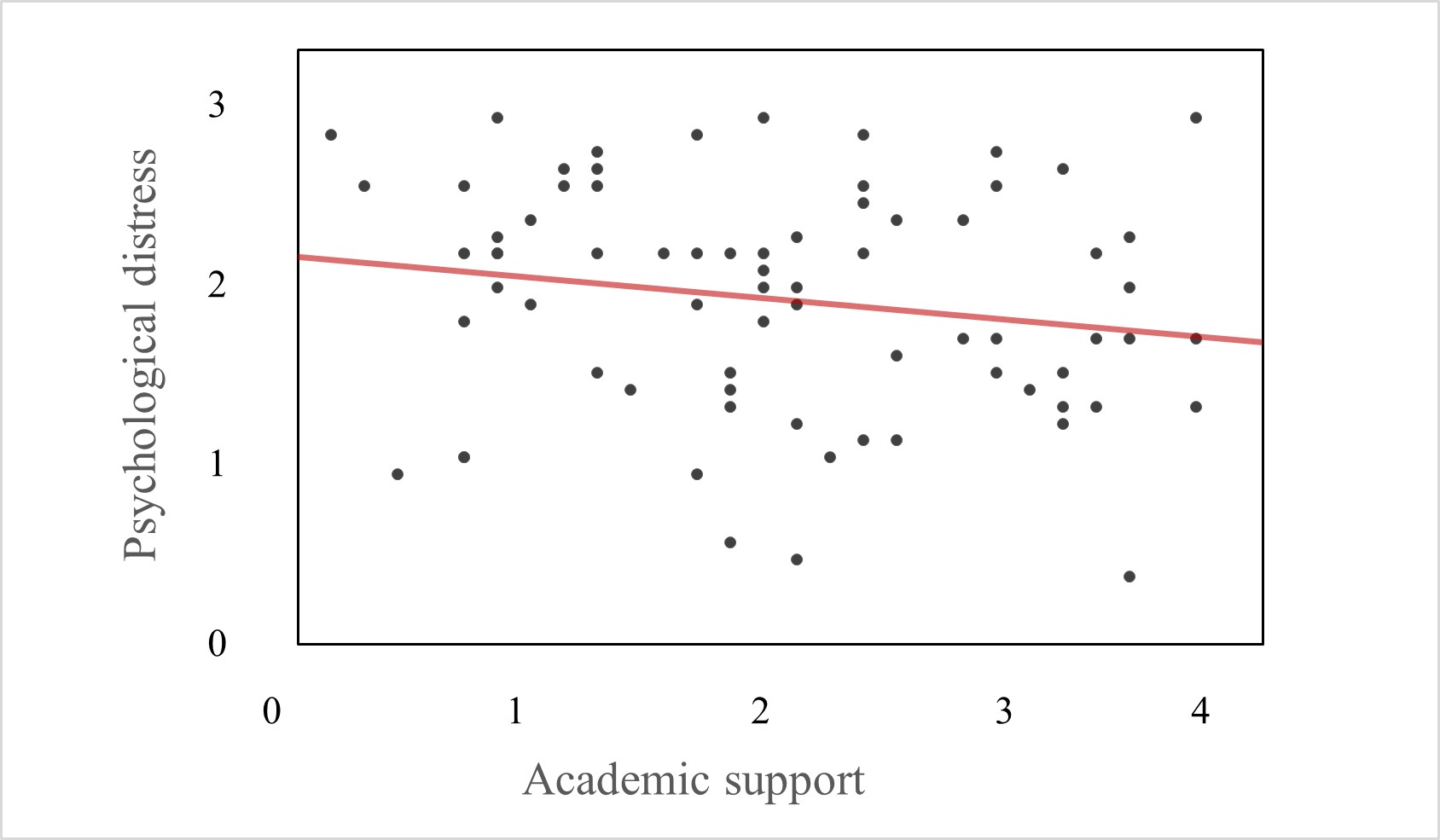
Fig. 1. Correlation between academic advisor support (PASS) and students’ psychological distress level (DASS-21, Stage II).
Negative correlation: r = –0,274, p < 0,05.
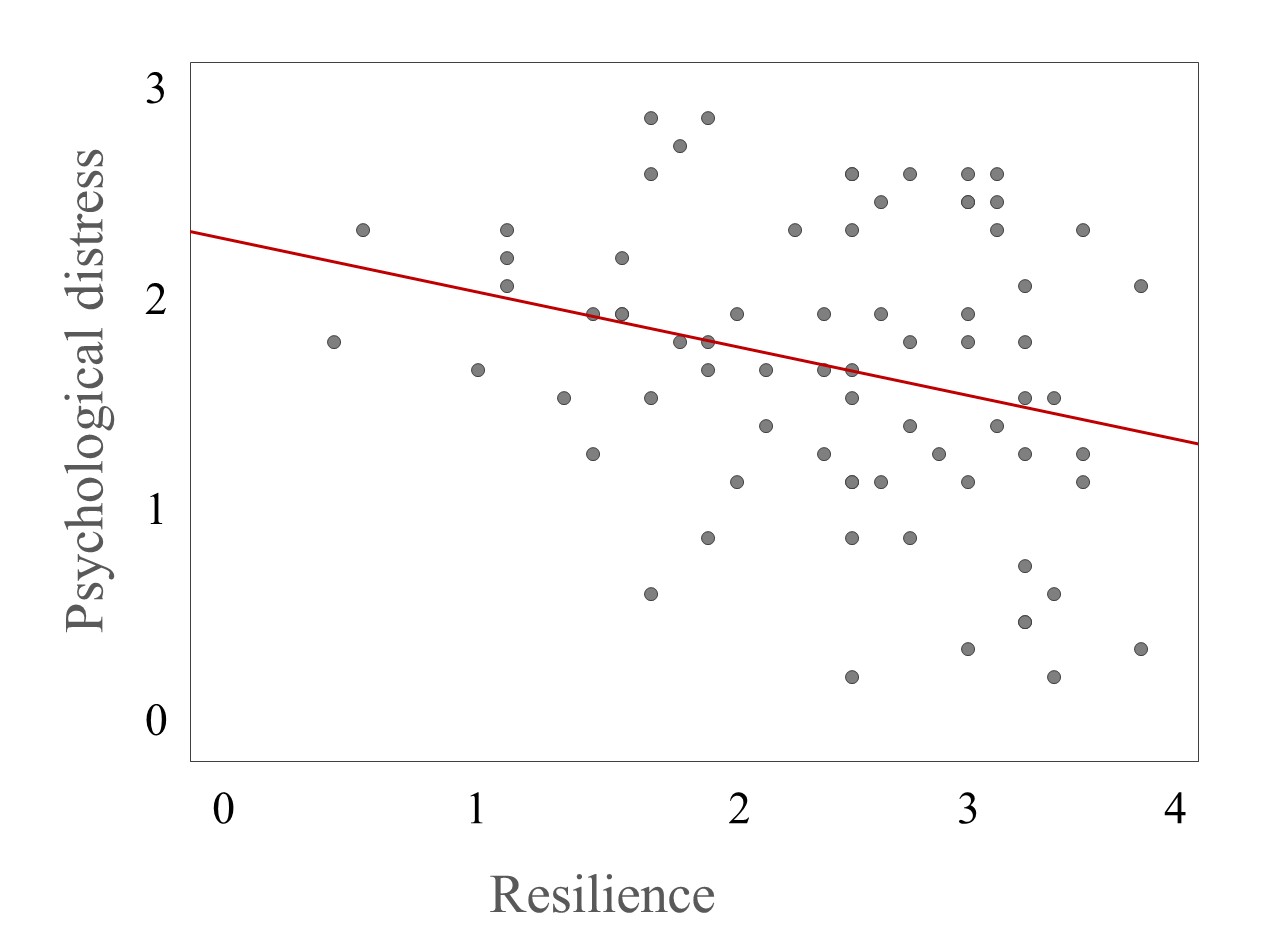

Fig. 3. Students’ assessment of the importance of academic advising.
Discussion
The present study aimed to identify the relationships between students’ psychological state and the role of academic advising. The study analyzed the emotional and behavioral characteristics of students’ engagement in the educational process, reflected in levels of anxiety, stress, and their subjective perception of the support they received. Psychological well-being was assessed using measures of distress (DASS-21) and resilience (CD-RISC-10), while the “psychological aspects of academic advising” referred to students’ perceptions of academic, emotional, and autonomy support provided by their academic advisor (PASS). The literature indicates that high levels of stress among students are negatively associated with academic engagement and may increase the risk of poorer academic performance (Ogareva et al., 2020; Connor, Davidson, 2003). These findings are consistent with studies emphasizing the importance of resilience as a protective factor against psychological distress. In our study, the use of standardized scales made it possible to analyze key components of emotional state and perceived support. Despite the limitations of the quantitative approach, the use of questionnaires made it possible to include a broad sample of students. However, the absence of a control group limits the precision of interpretation and does not allow the influence of external factors to be excluded. Therefore, the interpretation of the observed changes is correlational rather than causal. Future studies should include control groups to provide a more accurate assessment of the effects of academic advising (Vinogradov, Shatunova, 2023; Ulyanina, Nikiforova, 2024). The longitudinal design made it possible to track changes over time: by the end of the semester, reductions in anxiety and stress levels were observed according to the DASS-21, and differences were identified between first- and second-year students in terms of resilience and perceived academic advisor support. At the same time, the mean scores were higher among first-year students, which may indicate greater responsiveness to support and the importance of mentoring during the early stages of education. The CD-RISC-10 was used to assess students’ resilience, which was considered a relatively stable personal characteristic. Academic advising demonstrated effectiveness in supporting students: a negative correlation was identified between perceived support from the academic advisor (PASS) and the level of psychological distress (DASS-21, Stage II). In addition, a negative correlation was found between resilience (CD-RISC-10) and distress (DASS-21, Stage II), indicating a potential protective role of resilience (Awais et al., 2023; Gray et al., 2024). However, it should be noted that these relationships reflect associations rather than the effect of the academic advisor as an intervention; in this study, academic advising was considered a component of the natural educational process rather than an experimental intervention. Thus, this study focused on students’ perceptions of psychological and academic support from their academic advisor, which contributes to reducing anxiety and stress symptoms and creates a more comfortable and safe educational environment in which students feel heard and motivated (Shamionov, Sharov, 2025; Rotenstein et al., 2016; Yazzie-Mintz et al., 2021). The findings highlight the role of academic advising as an important resource for developing and strengthening students’ psychological resilience.
Conclusion
The results obtained demonstrate a significant relationship between academic advising, the level of psychological distress, and students’ resilience. Academic advising represents an important component of the system of psychological and pedagogical support, contributing to the reduction of emotional distress and the strengthening of students’ psychological resilience, particularly in medical education programs.
Future research should include an analysis of individual differences in students’ perceptions of advising support, the development and evaluation of an academic mentoring model aimed at fostering resilience, the use of qualitative methods to gain a deeper understanding of students’ experiences, as well as the development and evaluation of the effectiveness of student support programs.
Individualized academic advising should be regarded as a resource that contributes to students’ psychological well-being and strengthens their personal resources.