FIRST INFORMATION LETTER
Dear colleagues, We invite you to participate in the All-Russian Interuniversity Scientific and Practical Forum
with international participation. "The Time of L.S. Vygotsky: From Fundamental Theory to Contemporary Practice" November 17–20, 2026, Moscow
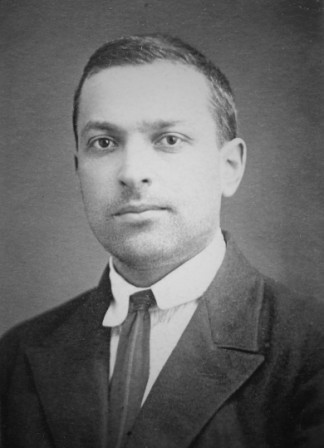
From November 17 to 20, 2026, the All-Russian Interuniversity Scientific and Practical Forum with international participation titled "The Time of L.S. Vygotsky: From Fundamental Theory to Contemporary Practice" will take place in Moscow. The event is dedicated to the 130th anniversary of the outstanding scholar, thinker, educator, and founder of the cultural-historical scientific school, Lev Semyonovich Vygotsky. The forum aims to foster a wide discussion on the contribution of L.S. Vygotsky’s ideas to Russian and global pedagogy and psychology, current trends in the development of the cultural-historical scientific school, and the possibilities for the practical application of its fundamental principles to address pressing challenges in the social sphere and education.
Forum organizers:
- FSBEI HE “Moscow State Pedagogical University”
- FSBEI HE “Moscow State University of Psychology and Education”
- FFSEI HE “Russian State University for the Humanities”
Organizing presidium of the forum:
- A.V. Lubkov, Doctor of Historical Sciences, Professor, Academician of the Russian Academy of Education, Rector of Moscow State Pedagogical University
- A.A. Margolis, Candidate of Psychological Sciences, Professor, Rector of Moscow State University of Psychology and Education
- A.V. Loginov, Doctor of Political Sciences, Professor, Rector of Russian State University for the Humanities
Forum partners:
FSBI Russian Academy of Education
Sirius Science and Technology University
FSBEI HE Saint Petersburg State University
FSBEI HE Herzen Russian State Pedagogical University
Institute of Education, National Research University Higher School of Economics
FSBSI Institute of Correctional Pedagogy
Charitable Foundation "Investment in the Future"
All-Russian Public Organization "Federation of Educational Psychologists of Russia"
Union "The Union for Mental Health"
Project Office of the Hospital Schools Project "UchimZnaem"
SBHI "Scientific and Practical Center for Mental Health of Children and Adolescents named after G.E. Sukhareva"
Regional Charitable Public Fund for Helping Seriously Ill and Disadvantaged Children "Deti.msk.ru"
FSBEI "International Children's Center 'Artek'"
Chess Club "Vertikal" named after 10-time World Champion B.V. Spassky (Satka, Chelyabinsk Region)
Maksim Tank Belarusian State Pedagogical University (Belarus)
JSC "Mahambet Utemisov West Kazakhstan University " (Kazakhstan)
Federal University of Rio de Janeiro (Brazil)
University of Cape Town (South Africa)
Conference topics:
-
Theoretical and methodological foundations and methods of the cultural-historical scientific school
-
L.S. Vygotsky and contemporary educational psychology
-
Cultural-historical psychology and modern childhood
-
Teaching and development of children with special educational needs
-
The issue of mental health from the perspective of cultural-historical psychology
-
Psychology of art and creativity
-
Development of higher mental functions in the digital age
-
Training specialists using methods of the cultural-historical scientific school
-
Practices based on the ideas of the cultural-historical scientific school
-
Interdisciplinary research within the cultural-historical paradigm
Conference formats:
-
Plenary presentations
-
Participant reports and speeches
-
Open discussions
-
Round tables
-
Workshops
Format: hybrid (in-person and remote participation, online streaming).
Possible forms of participation:
-
Speaker with publication of abstracts in the forum proceedings.
-
Participant (listener) with publication of abstracts in the forum proceedings.
-
Participant (listener) without publication.
Conditions of participation in the conference
To participate in the Conference, it is necessary to complete a preliminary registration: https://forms.yandex.ru/u/69b01bdd90fa7bedf1176cd1
When registering, please indicate the conference topic area under which you plan to participate.
Applications for participation with a report and publication of abstracts in the conference proceedings are accepted until September 17, 2026 (inclusive).
Applications for participation as a listener without publication are accepted until November 10, 2026 (inclusive).
Requirements for abstract submission
Abstracts should be sent to the email address provided in the contact information. The subject line of the email must include the full name of the author (the corresponding author, if there are multiple authors) and the conference topic area under which the participation is planned. Example: "Ivanov I.I._L.S. Vygotsky and Contemporary Educational Psychology".
Only one abstract per author is accepted. The decision to include abstracts in the forum proceedings is made by the forum program committee. Abstracts must not have been previously published or submitted for publication in other outlets. The program committee reserves the right to reject abstracts that do not correspond to the conference topics, or that do not meet the requirements outlined in this informational letter and the standards for scientific publications.
Compilative and purely descriptive summaries will not be considered. Literature reviews should be analytical in nature, aimed at comparing different authors' viewpoints on the studied problem, identifying unexplored aspects, and justifying the possibilities and directions for future research.
By submitting your abstracts, you confirm your consent to their publication in the forum proceedings and inclusion in the Russian Science Citation Index (RSCI) / Science Index database.
All participants will receive certificates.
No organizational fee is charged from conference participants.
The publication of abstracts is free of charge.
Reimbursement of travel, accommodation, and meal expenses during the forum is the responsibility of the sending organization.
Contacts of the Organizing Committee
Scientific Secretary: Andrey Vladimirovich Konokotin, Email: vremyavygotskogo@yandex.ru
Requirements for abstract formatting
-
Font: Times New Roman, size 12, line spacing 1.0. Margins: top and bottom — 20 mm; left and right — 24 mm.
-
Figures and graphs must be clear and of high quality.
-
Formulas should be created using the built-in MS Equation Editor. Manual hyphenation should be avoided.
-
Abstracts must contain the following header information:
-
-
Title of the paper (on a new line, centered, bold font, no more than 100 characters);
-
On the next line, right-aligned, authors' last names and initials separated by commas, italicized (last name first for each author);
-
On the next line, right-aligned, current academic degree and position, italicized;
-
On the next line, right-aligned, abbreviation of university/institute/center/etc., city, country, italicized;
-
On the next line, right-aligned — email address (if the author agrees).
-
-
The length of the abstract should not exceed 3 A4 pages, including header and bibliography.
-
References must be formatted according to bibliographic citation rules and scientific publication requirements (https://psyjournals.ru/manuscript_submission/homestyle_guide/requirements#refs).
-
Any abbreviations, except units of measurement, may be used only after the full term has been mentioned.
Example of conference abstract formatting:
Social situation of adolescent development in the digital age
Ivanov S.P., Associate Professor, Faculty of Educational Psychology
Moscow State University of Psychology and Education, Moscow, Russia
ivanov-sp@mail.ru
In the process of broad informatization of modern society, the use of computer technology as a carrier of software and information systems becomes increasingly important for organizing educational processes at various levels.
References
- Elkonin, D.B., Dragunova, T.V. (1967). Age and individual characteristics of early adolescents. Moscow: Prosveshchenie. (In Russ.)