Introduction
Pedagogical activity places considerable demands on the teacher's personality and is classified as a profession with an elevated risk of burnout and emotional exhaustion [9, 18, 20]. Concurrently, there is an active development of the psychological safety discourse within educational environments with a growing focus on the psychological component, particularly concerning the well-being of participants in the educational process [Baeva, 2019]. While research on student well-being has been more extensively explored quantitatively, the psychological characteristics of teaching activity, especially at the college and higher school levels, remain largely underdeveloped [7, 25, 30]. Nevertheless, the significance and potential impact of teachers in the educational process cannot be overstated. Numerous studies have demonstrated that the quality of education is significantly influenced by the competence of teachers and educators, and students' motivation and performance are correlated with the psychological characteristics and well-being of teachers [1, 28, 30, 21, 22, 23].
Currently, we are experiencing a unique situation marked by continuous and profound socio-economic and political transformations in our country, which act as both stressors and catalysts for personal transformation. Since the onset of the COVID-19 pandemic, the format of the educational process has undergone significant changes. Distance or hybrid learning is coupled with complete or partial absence from the workplace, alterations in forms of knowledge assessment, and challenges in emotional communication. These changes often introduce additional problems in solving routine tasks, potentially leading to a decline in educational motivation and student performance, thereby negatively impacting their well-being [Baeva, 2019; Lifshic, 2020; Cao, 2020]. For teachers, a notable consequence of this format shift has been the challenges in communication and the blurring of boundaries in contact with students [Lifshic, 2020; Petrakova, 2021; Cener, 2020]. The heightened overall anxiety levels among students make them more insistent on prompt feedback from teachers, such as quickly obtaining clarifications, discussing challenges, certification issues, and gaining points. This increased demand for swift communication may serve as an additional source of stress, contributing to emotional exhaustion [Manina, 2023; Rawat, 2020].
Contemporary scientific consensus affirms that the subjective well-being of teachers is intricately linked to their professional endeavors. The efficacy, motivation, and ability of teachers to foster optimal learning conditions hinge on their emotional state and satisfaction levels [Rean, 2022; Harmsen, 2018; Zhang, 2021]. Furthermore, recent literature extensively explores the correlation between well-being and "positive" personality traits within the affective sphere. It has been established that well-being is reliably connected to successful adaptation in the workplace, stress levels, coping mechanisms, emotional regulation, and the effectiveness of teachers' professional activities [Manina, 2023; Petrakova, 2021; Rean, 2022; Zhang, 2021]. The well-being of teachers exhibits significant variation based on gender, with a noted association between women's well-being and the intensity of the conflict arising from balancing household responsibilities and work in education [Akram, 2020]. Prominent negative factors, often leading to attrition from the profession, encompass high social responsibility, elevated stress and emotional involvement, instantaneous feedback, a competitive team environment, rigorous demands across various teaching activities, and standardization of performance metrics [Ryan, 2017]. Skills related to self-organization, "meta-resources," and personal traits like awareness, hard work, curiosity, energy, and optimism are increasingly recognized as supportive factors for well-being [Rean, 2022; Klusmann, 2008; Tarrasch, 2020; Viac, 2020]. In the work of I.V. Morosanova, "meta-resource" pertains to conscious self-regulation and the rational utilization of individual resources, facilitating effective planning, organization, and goal achievement in personal development and self-realization across diverse domains [Morosanova, 2021].
In the broader context, metacognitive skills, encompassing the ability to define goals, plan, analyze processes, and evaluate the outcomes of one's cognitive activities, play a pivotal role in preventing and correcting emotional burnout among teachers [Molchanova, 2019]. Moreover, a high level of metacognitive skills development is reliably linked to the formation of constructive coping mechanisms in navigating challenging life situations, as well as overcoming dysfunctional and addictive behavior [Ağaç, 2022; Casale, 2021; Hansmeier, 2021].
Therefore, the relevance of studying the subjective well-being of teachers arises from the imperative to ensure psychological safety within educational institutions. This issue is especially pressing in the aftermath of the changes wrought by the COVID-19 pandemic, acting as stressors for all participants in the educational process, which could adversely impact the overall quality of education. Existing studies on the well-being of teachers primarily focus on examining connections with various personality traits or individual psychological facets of professional activity, either neglecting the influence of metacognitive skills and the emotional sphere or considering them exclusively as independent variables. This limitation impedes a comprehensive understanding of the mechanisms governing the formation and maintenance of a high level of well-being. Subjective well-being is regarded as a multifaceted and multidimensional construct that integrates an affective component, an individual's assessment, and their attitude toward their own life and personality [Denisova, 2022a; Zhang, 2021]. Drawing on the aforementioned research results and theoretical generalizations, we conclude that an individual's subjective well-being is intricately entwined with their personal characteristics, emotional sphere, and the development of metacognitive skills. We hypothesize that these characteristics can be deemed significant predictors of the level of well-being.
The aim of this study was to identify a complex of emotional, personal, and metacognitive predictors of teachers' subjective well-being.
Methods
The study involved 106 participants (68% women) aged between 20 and 75 years, with an average age of 45.85. Participants included teachers, lecturers, and heads of departments from higher educational institutions and colleges in the Southern Federal District of the Russian Federation. Approximately 67% of the sample had a background in higher education, with professional experience spanning 3 to 39 years, and 74% having over a decade of experience in the field of education. Data collection occurred through electronic testing from March 15 to April 18, 2022. All participants provided informed consent, were apprised of the study's objectives, and were informed about the subsequent use and publication of results.
To elucidate socio-psychological characteristics and assess metacognitive skills, we used a survey method. Participants reported gender, age, education level, position, work experience in education, and rated the severity of professional stress and coping success on a 10-point scale.
Psychological testing encompassed personal characteristics, emotional sphere traits, and metacognitive behavior, utilizing various methods: Short Portrait Questionnaire of the Big Five (B5-10, M.S. Egorova and O.V. Parshikova, 2016; 10 statements (answers were scored on 6- point scale, where 1 is not at all like me, and 6 is very similar to me), 5 scales by factors, for each scale the sum of points on direct and reverse questions was assessed, min 2 points, max 12 points; Cronbach's α >0.5); Methodology Scale of Differential Emotions (DSE, adaptation by A.V. Leonova and M.S. Kapitsa, 2003; 30 adjectives describing emotional experiences, answers were rated on a 5-point scale, where 1 - no experience at all, and 5 - experience expressed to the maximum extent), 10 scales of enlarged emotions, for each scale the sum of points was assessed, min. 3 points, max. 15 points); method for diagnosing the subjective well-being of an individual (R.M. Shamionov, T.V. Beskova, 2018; 34 statements (answers were assessed on a 5-point scale, where 1 - completely disagree, and 5 - completely agree), 5 scales by type of well-being , for each scale, not the sum of points was assessed, but the average value, min 1 point, max 5 points; Cronbach's α>0.75); questionnaire of metacognitive involvement in activity (G. Schrow, R. Dennison, adaptation by A.V. Karpov, 1994; 52 statements (answers were assessed on a 5-point scale, where 1 - completely disagree, and 5 - completely agree), the overall total points, min 52 points, max 260 points); Self-assessment scale of metacognitive behavior (D. LaCosta, adapted by A.V. Karpov, 1998; 12 strategies (answers were assessed on a 5-point scale, where 1 is very rarely, and 5 is very often), the total score was assessed, min. 12 points, max 60 points); test Differential type of reflection (D.A. Leontyev, E.M. Lapteva, E.N. Osin, A.Zh. Salikhova, 2009; 30 statements (answers were assessed on a 4-point scale, where 1 – no, and 4 – yes), 3 scales by types of reflection, for each scale the sum of points was assessed according to the key, on the Systemic Reflection scale min. 12 points, max. 48 points, on the Introspection and Quasi-reflection scales min. 9 points, max 36 points, Cronbach's α from 0.78 to 0.85); questionnaire “Cognitive regulation of emotions” by N. Garnefsky and V. Craig (adapted by O.L. Pisareva, 2007; 36 statements (answers were assessed on a 5-point scale, where 1 is never, and 5 is always), 9 scales in accordance with the main ways of cognitive regulation of emotions, for each scale the sum of points was assessed according to the key, min 4 points, max 20 points; Cronbach's α from 0.7 to 0.87).
Additionally, to investigate metacognitive characteristics, we employed the author’s self-assessment questionnaire of metacognitive behavior Metacognitive Skills in the Structure of Educational and Professional Activities. This questionnaire consisted of 9 questions designed to evaluate the utilization and awareness of key forms of metacognitive behavior, including metaplanning, procedural skills, and metacognitive control [Denisova, 2022].
The statistical methods employed for processing the acquired results included the Shapiro-Wilk test, analysis of covariance (ANCOVA), one-way analysis of variance (ANOVA), and post hoc analysis utilizing Dunn's method, along with Student's t-test. The statistical analysis of the results was performed using the freely available JASP Computer software package (Version 0.16, 2021).
The data analysis procedure unfolded across several stages:
In the initial stage, questionnaire data and the outcomes of descriptive statistics calculations were scrutinized to provide an overarching characterization of the studied sample.
Subsequently, as a preliminary analysis and to determine a fixed factor for covariance analysis, differences in the subjective well-being of respondents were assessed based on metacognitive acceleration skills, metacognitive involvement, and systemic reflection. This involved one-way analysis of variance (ANOVA), Dunn’s post-hoc test, and Student’s t-test.
In the third stage, an analysis of covariance (ANCOVA) was conducted to explore predictors of teachers' subjective well-being. The level of metacognitive involvement served as a factor, while the awareness of metacognitive skills and emotional and personal characteristics were considered as covariates.
The choice of ANCOVA over regression analysis was motivated by the study's aim, which involved examining a substantial number of factors presumed to influence well-being. The emotions, personality traits and metacognitions according to previous studies, including our own data, are significantly and closely correlated. Additionally, since metacognitive involvement had five levels of expression, regression analysis could potentially complicate result interpretation and necessitate additional analytical steps to control for covariates. In ANCOVA, we utilized a third type of sums of squares, enabling the consideration of both the interaction between the factor and covariates and the relationships among the covariates.
Results
The majority of respondents perceive a significant number of stressful situations at work, with a sample average of 5.30 out of 10 points. Remarkably, they generally handle the workload well, rating it at 7.87 out of 10 points. Interestingly, there appears to be an inverse linear relationship between self-assessed professional stress and subjective perceptions of academic success, as illustrated in Figure 1. Respondents who report low levels of professional stress tend to provide higher ratings for coping with the workload, while those who rate their professional stress higher are more likely to indicate lower coping ratings.
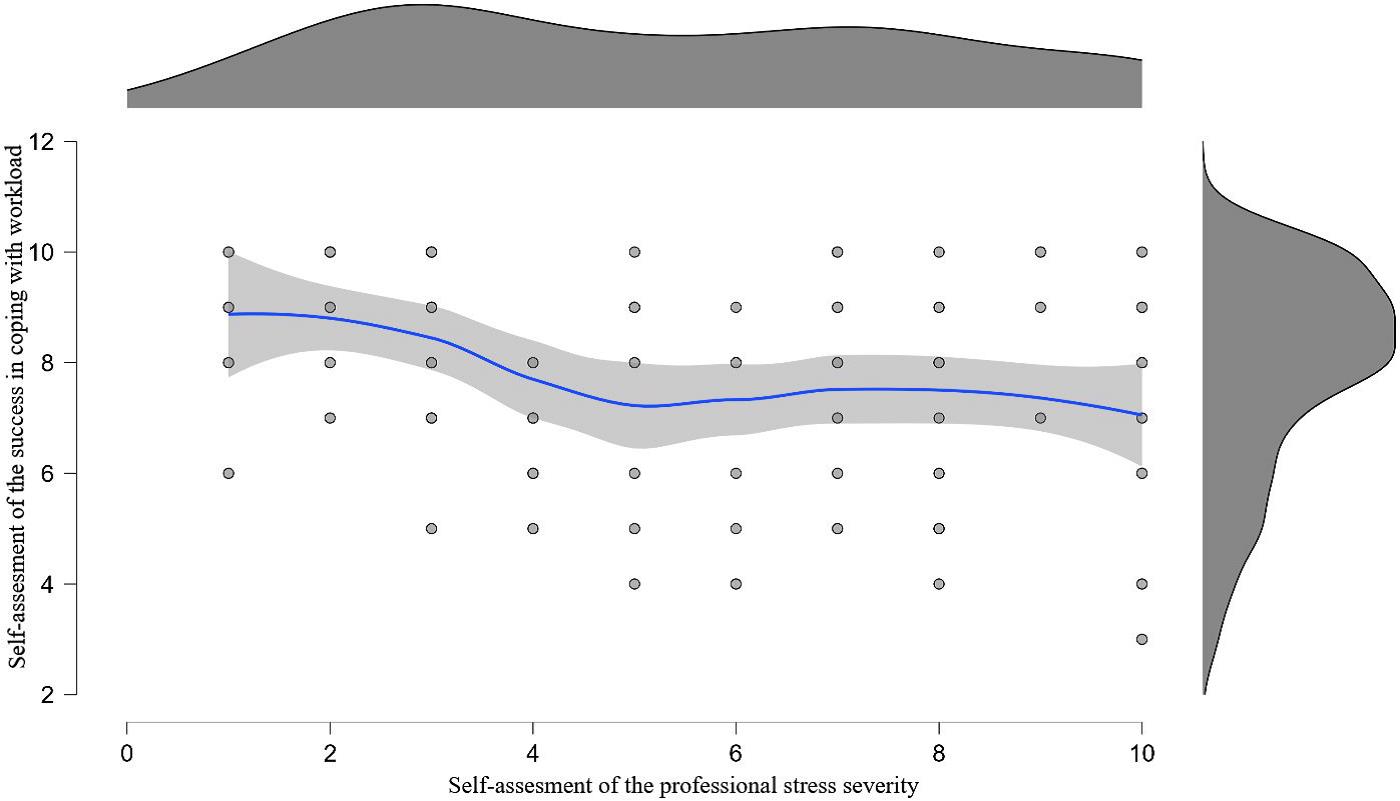
Figure 1. Analysis of the survey results on the severity of professional stress and success in coping with workload.
Examining the key indicators of subjective well-being (see Table 1), the highest scores were observed on the social-normative well-being scale, with an average value of 4.11 points. This value corresponds to a high level on the scale, suggesting that respondents generally perceive their lives as aligning with social norms and moral values. The lowest scores were on the hedonic well-being scale (3.43); however, these values fall within the normative range for well-being components. The empirical averages on the scales of emotional well-being (3.76), ego-well-being (3.62), and existential-activity well-being (3.68) also align with normative ranges. The overall indicator of subjective well-being is at an average level, portraying the sample positively.
Table 1. Main indicators of subjective well-being (N=106)
|
|
Means |
Standard Deviation |
Shapiro-Wilk Test |
p-value of Shapiro-Wilk |
|
Emotional well-being |
3,76 |
0,63 |
0,98 |
0,059 |
|
Existential-activity well-being |
3,68 |
0,60 |
0,98 |
0,229 |
|
Ego-well-being |
3,62 |
0,64 |
0,98 |
0,056 |
|
Hedonic well-being |
3,43 |
0,76 |
0,98 |
0,142 |
|
Social-normative well-being |
4,11 |
0,51 |
0,95 |
< 0,001 |
|
Subjective well-being |
3,72 |
0,55 |
0,98 |
0,074 |
Testing for the normality of the distribution using the Shapiro-Wilk test indicated that, for the sample as a whole, most indicators of subjective well-being follow a normal distribution. A similar pattern was observed for the aggregated characteristics of metacognition (metacognitive involvement and the level of development of metacognitive skills). However, for most indicators of the emotional sphere, the distribution in the sample deviates from normal (Shapiro-Wilk p < 0.05). It is important to note that there were no extremely high or low values in the sample, and all average values fall within the normative range according to the methods employed. Therefore, further parametric methods will be employed for the analysis of differences.
To investigate the assumption that metacognitive components of teachers' activities may act as supporting factors for teachers' subjective well-being, a comparative analysis of well-being levels in subgroups of teachers with different levels of metacognitive skills development, metacognitive involvement, and systemic reflection was conducted. The results suggest that the highest level of subjective well-being in the teacher sample is associated with elevated levels of metacognitive skills, metacognitive involvement, and systemic reflection (Fig. 2). The distribution of comparison groups is outlined below:
- According to the level of development of metacognitive skills: group 2 (reduced level) – 2 people, women; group 3 (intermediate level) – 18 people, of which 50% are women; group 3 (increased level) – 59 people, of which 72% were women; group 5 (high level) – 27 people, 85% of them are women. No low level was detected in the sample.
- According to the level of systemic reflection: group 2 (average level) – 25 people, of which 64% are women; group 3 (high level) – 81 people, of which 75% were women. No low level was detected in the sample.
- According to the level of metacognitive involvement: group 4 (increased level) – 50 people, 66% of them are women; group 5 (high level) – 56 people, of which 78% are women. Low, reduced and average levels were not identified in the sample.
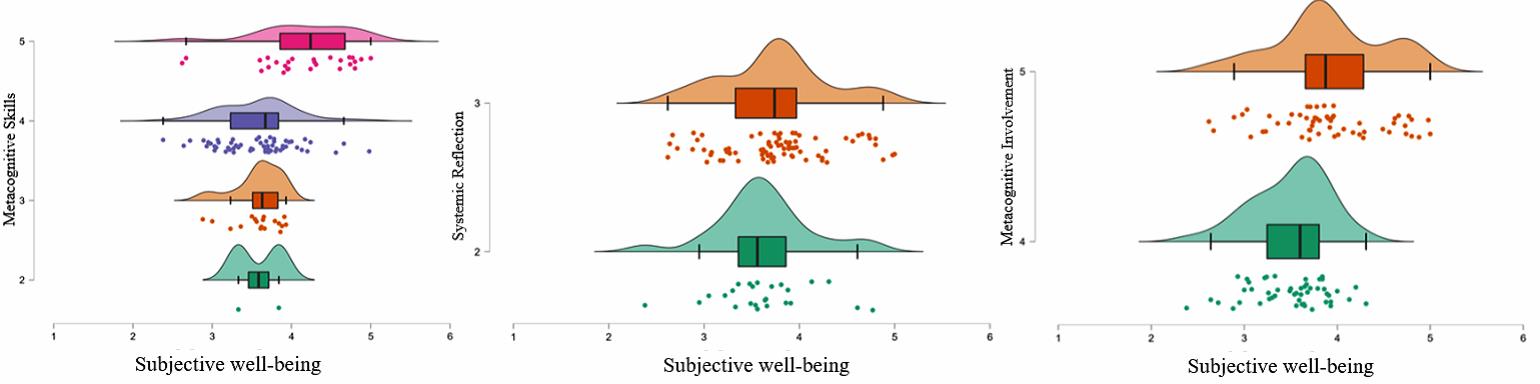
Fig. 2. Analysis of the impact of metacognitive skills, systemic reflection, and metacognitive involvement on subjective well-being
Given the uneven distribution of respondents across groups based on the level of metacognitive skills and the results of the normality test (Shapiro-Wilk p = 0.149), we opted for a one-way analysis of variance without excluding of the smaller groups, but with conducting a post hoc analysis using Dunn's method for pairwise comparisons. Significant differences were observed only when comparing the high level (level 5 in the figure) with other groups (ANOVA and Dunn's post-hoc test, p<0.001). No significant differences were found in the level of systemic reflection (Student's t-test at p=0.338). However, significant differences were noted based on the level of metacognitive involvement (Student's t-test at p<0.001). Since these differences highlight variations in well-being between individuals with high and elevated levels of metacognitive involvement, we hypothesized that this indicator was the most effective in discriminating the sample as the primary factor. Notably, in our previous study using a similar protocol on a student sample, which identified three levels (medium, increased, and high), metacognitive involvement was also a significant factor [Denisova, 2022a].
To examine the predictors of teachers' subjective well-being, we employed analysis of covariance (ANCOVA). The level of metacognitive involvement served as the primary factor, while the awareness of metacognitive skills and emotional and personal characteristics were considered as covariates (Table 2).
Table 2. Results of ANCOVA covariance analysis of predictors of teachers' subjective well-being
|
|
Sum of squares |
Mean square |
η² |
F |
p |
|
|
Level of metacognitive involvement |
0,09 |
0,09 |
0,01 |
0,69 |
0,410 |
|
|
Extraversion |
0,02 |
0,02 |
<0,01 |
0,14 |
0,709 |
|
|
Benevolence |
0,09 |
0,08 |
<0,01 |
0,66 |
0,420 |
|
|
Consciousness |
0,58 |
0,58 |
0,03 |
4,71 |
0,033 |
|
|
Neuroticism |
0,10 |
0,01 |
0,01 |
0,80 |
0,375 |
|
|
Openness to experience |
0,37 |
0,37 |
0,02 |
3,01 |
0,086 |
|
|
Index of Positive Emotions |
2,11 |
2,11 |
0,12 |
17,05 |
< ,001 |
|
|
Index of Anxious-Depressive Emotions |
0,47 |
0,47 |
0,08 |
3,80 |
0,055 |
|
|
Index of acute negative emotions |
1,50 |
1,50 |
0,03 |
12,17 |
< ,001 |
|
|
Decreased reflection on cognitive operations |
0,01 |
0,01 |
<0,01 |
0,07 |
0,788 |
|
|
Degree of awareness of using metacognitive skills |
0,64 |
0,64 |
0,04 |
5,15 |
0,026 |
|
|
Self-accusation |
0,03 |
0,03 |
<0,01 |
0,20 |
0,656 |
|
|
Acceptance |
0,78 |
0,78 |
0,04 |
6,32 |
0,014 |
|
|
Concentration |
0,05 |
0,05 |
<0,01 |
0,41 |
0,524 |
|
|
Positive refocus |
0,03 |
0,03 |
<0,01 |
0,25 |
0,620 |
|
|
Refocus on planning |
0,01 |
0,01 |
<0,01 |
0,07 |
0,794 |
|
|
Positive revision |
0,52 |
0,52 |
0,03 |
4,17 |
0,044 |
|
|
Placement in perspective |
0,002 |
0,002 |
<0,01 |
0,02 |
0,888 |
|
|
Catastrophization |
0,003 |
0,003 |
<0,01 |
0,03 |
0,868 |
|
|
Accusation |
0,31 |
0,31 |
0,02 |
2,54 |
0,115 |
|
|
Residuals |
10,49 |
0,12 |
|
|
|
|
|
F-statistic: 4,17, df2=105,00; p-value: 0,044 (III type of sum of squares) |
||||||
The analysis revealed significant effects from the consciousness index (F=4.71, p<0.033), index of positive emotions (F=17.05, p<0.001), index of acute negative emotions (F=12.17, p<0.001), degree of awareness of using metacognitive skills (F=5.15, p<0.026), adoption strategy (F=6.32, p=0.014), and positive revision (F=4.17, p<0.044). Trends toward a significant effect were observed for openness to experience (F=3.01, p=0.086) and the index of anxious-depressive emotions (F=3.80, p=0.055). It's noteworthy that the effect size indicates a small effect for all significant effects, except for the index of positive emotions (medium effect, η²=0.12).
When scrutinizing the influence of personal characteristics, emotional sphere traits, and awareness of metacognitive skills, higher subjective well-being rates were observed among teachers with high levels of consciousness, positive emotions, and low values of acute negative emotions. Well-being was also associated with coping strategies such as acceptance and positive revision (Fig. 3).
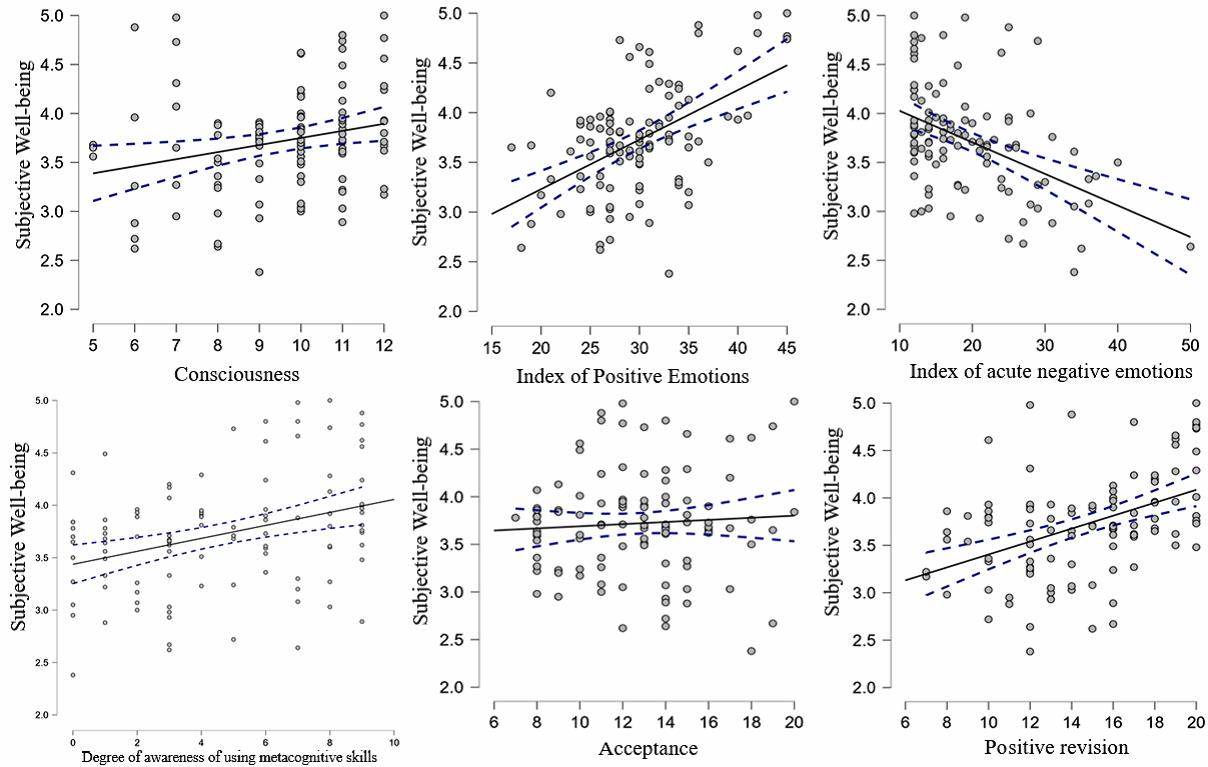 Fig. 3. Analysis of the influence of personal characteristics, characteristics of the emotional sphere and awareness of the use of metacognitive skills
Discussion
The presented research highlights the substantial role of personal traits, emotional states, and metacognitive skills in sustaining a heightened level of subjective well-being among teachers. Consistent with previous studies, the positive influence of conscientiousness aligns with the supporting impact of positive personality traits on well-being and professional success [Rean, 2022; Klusmann, 2008; Tarrasch, 2020; Viac, 2020]. The finding related to the positive effect of conscientiousness, along with the identified trend in openness to experience, is in harmony with modern research conducted on samples not exclusive to teachers and students but also encompassing professionals from diverse fields [Zhang, 2021]. However, the anticipated significant effects of extraversion and neuroticism on well-being were not established. This might be attributed to the unique nature of covariance analysis construction, which allows for the measurement of each variable's distinctive contribution after accounting for the influence of correlations between predictor variables. Despite the possibility of correlations between covariates and the dependent variable, we consider this method the most precise and essential, given the frequent correlation between personality traits and emotional sphere characteristics.
Previous theoretical and empirical studies on teacher samples have extensively explored the connection between subjective well-being and emotions, including emotional and professional burnout [Rean, 2022; Harmsen, 2018; Zhang, 2021]. Our results regarding emotional regulation, specifically the positive impact of positive and acute negative emotions and the identified trend in the index of anxious-depressive emotions, also align with existing literature [Manina, 2023; Casale, 2021; Zhang, 2021]. And while the subjective assessment of experienced emotions does not equate to the well-being construct, it likely stands as one of the most significant factors, providing individuals with information about their condition when evaluating their well-being level.
The presented model is likely specific to the teacher sample, differing from the model derived from a student sample in our previous work [Denisova, 2022a]. Despite apparent similarities, especially in the direction of effects, it is noteworthy that the awareness of using metacognitive skills becomes particularly crucial for teachers. This outcome is unsurprising, considering that both the level of development and awareness of metacognitive skills may be associated with respondents' age (the average age of teachers in the sample is 20 years higher). Moreover, these distinctions could arise from professional activity characteristics and other factors, such as length of service.
In conclusion, the results align with existing well-being concepts and empirical research across various samples. The intrinsic value and scientific novelty of these findings lie in their ability to elucidate how the metacognitive component integrates into the known structure of personal factors and which cognitive emotion regulation strategies most effectively contribute to teachers' subjective well-being. A notable limitation of this work is the lack of consideration for job satisfaction and burnout indicators, as well as the absence of a comparative analysis based on gender, age, and length of professional activity. Addressing and analyzing these factors constitute promising avenues for further exploration of the discussed topic.
Conclusions
The study aimed to comprehensively investigate emotional, personal, and metacognitive predictors of teachers' subjective well-being. The findings generally affirm the initial hypothesis, underscoring that personality traits, emotional parameters, and metacognition can serve as predictors of well-being. The highest level of subjective well-being among teachers is associated with elevated levels of metacognitive skills, metacognitive involvement, and systemic reflection.
Covariance analysis results, considering variable interactions, lead to the conclusion that teachers experience significantly higher subjective well-being when they possess a high index of positive emotions. Additionally, a substantial impact is observed with a heightened sense of responsibility and organization (consciousness), increased awareness of metacognitive skills, a prevalence of positive emotions, and the ability to constructively engage with one's emotions—finding gratitude in challenging situations and utilizing it for developmental purposes (acceptance and positive revision). A high index of acute negative emotions exhibits destructive potential.
The study's outcomes can address burnout prevention, enhance well-being, and support the professional development of teachers in secondary education and higher education. Raising awareness about the use of metacognitive skills and fostering constructive strategies for cognitive emotion regulation will contribute to sustaining subjective satisfaction amid changing socio-political and economic conditions.