Introduction
The educational process is a fundamental aspect of academic development (Mallarangan et al., 2024). Important components, such as individual behavior and academic achievement, play a crucial role in shaping future opportunities for individuals (Arumugam et al., 2021; Russell et al., 2020). Within the realm of education, English learning achievement (ELA) and mathematics achievement are two key domains that have garnered significant attention. Proficiency in English has become increasingly important in our globalized world, enabling individuals to communicate effectively and access a wide range of academic and professional opportunities. Mathematics, on the other hand, provides a foundation for logical reasoning (Graafsma et al., 2023), problem-solving (Supriadi et al., 2024), creative thinking skills (Suherman & Vidákovich, 2024), and critical thinking skills (Hwang et al., 2023) that are essential in various fields, including science, technology, engineering, and finance.
Previous research has explored the individual relationships between ELA, attitude toward mathematics (ATM), and mathematics academic performance (MAP). Several studies have demonstrated a positive correlation between ELA and mathematics achievement. For example, a study by Stoffelsma & Spooren (2019) found that a significant positive relationship between English reading proficiency and academic achievement in science and mathematics. Students with higher English reading proficiency demonstrated higher academic achievement in these subjects compared to those with lower English reading proficiency. This finding suggests that proficiency in the English language, which is often the medium of instruction in science and mathematics courses, plays a crucial role in students' academic success. Empirical studies, such as those by Thompson et al. (2022) Cuevas (2019) and Beal et al. (2010), have demonstrated that students with strong English skills are better equipped to grasp complex scientific and mathematical concepts, leading to higher achievement. Additionally, English proficiency was found to significantly predict math achievement among Latino and Asian immigrant students (Barrett et al., 2012). Students with higher English proficiency demonstrated better math performance compared to those with lower proficiency levels.
Moreover, the role of ATM has been extensively studied in relation to mathematics achievement. Research by Hwang & Son (2021) found a positive relationship between students' ATM and their mathematics achievement. Students who reported higher levels of interest, enjoyment, and perceived value of mathematics tended to have higher academic performance in the subject. Conversely, students with negative attitudes may experience difficulties in understanding mathematical concepts and lack the motivation to succeed in the subject (Peteros et al., 2019).
While there is a substantial body of literature examining the relationships between English learning achievement, attitude toward mathematics, and mathematics achievement, limited research has explored the interplay between these factors. Understanding the combined effects and potential mediating role of attitude toward mathematics in the relationship between ELA and mathematics achievement is crucial for a comprehensive understanding of students' academic performance.
Therefore, this study aims to bridge this research gap by investigating the relationship between English learning achievement, attitude toward mathematics, and mathematics achievement. By examining the mediating role of attitude toward mathematics, we can gain insights into the mechanisms through which English learning achievement influences mathematics achievement. Additionally, exploring any reciprocal relationship between attitude toward mathematics and English learning achievement can provide a more comprehensive understanding of the dynamics between these variables.
The findings of this study will contribute to the existing body of knowledge on the relationship between English learning achievement, attitude toward mathematics, and mathematics achievement. The results can inform educators and policymakers in developing effective strategies to promote students' success in both English and mathematics. By understanding the role of attitude toward mathematics as a potential mediator, interventions can be designed to enhance students' attitudes and motivation, thereby positively impacting their mathematics achievement. Furthermore, the reciprocal relationship between attitude toward mathematics and English learning achievement can shed light on the bidirectional influences between these variables and inform educational practices aimed at optimizing.
Literature review
Mathematics academic performance and attitude towards mathematics
Mathematics achievement in term of mathematics academic performance and ATM have been extensively studied in the field of education, as they play crucial roles in students' learning and performance in mathematics. Previous research has extensively examined the relationship between mathematics achievement and ATM, shedding light on their interplay and significance in the field of education. Recber et al. (2018) reported that self-efficacy, ATM, and mathematics achievement were positively correlated, indicating that students who had higher levels of self-efficacy and positive attitudes toward mathematics tended to achieve better in the subject. Similarly, a study conducted by Kiwanuka et al. (2022) indicated a bidirectional relationship between attitude toward mathematics and mathematics achievement over time. On one hand, positive attitudes toward mathematics were found to be a significant predictor of higher mathematics achievement in the future. Positive attitudes, encompassing various dimensions, contribute to students' motivation, engagement, and success in the subject (Everingham et al., 2017; Singh et al., 2002). These findings underscore the importance of promoting positive attitudes toward mathematics through effective instructional strategies, engaging learning environments, and supportive teacher-student interactions.
MAP and ELA
The relationship between mathematics achievement and English academic performance has been the focus of several studies aiming to understand the interplay between these two domains of learning. Previous research has shown a significant correlation between mother tongue proficiency and mathematics achievement (Perez & Alieto, 2018). The researchers observed that students who had a higher level of proficiency in their mother tongue performed better in mathematics. This suggests that a strong foundation in the mother tongue language positively influences students' mathematics skills and academic performance. At the same time, Trakulphadetkrai et al. (2020) study indicated that general language ability, specifically oral language proficiency, played a significant role in mathematics achievement. Additionally, English proficiency was found to be a significant predictor of math achievement among Latino and Asian students (Barrett et al., 2012). Students with higher levels of English proficiency demonstrated better math performance compared to those with lower proficiency.
ELA as a mediator of relationship between ATM and MAP
The relationship between attitude towards mathematics and mathematics achievement can be influenced by various factors. Previous research has examined the mediating role of English academic performance in the relationship between ATM and mathematics achievement. Students who held positive ATM demonstrated higher levels of achievement in the subject compared to those with negative or indifferent attitudes (Dan’inna, 2017). Similarly, the study conducted by Rivera & Waxman (2011) examined the attitudes of resilient and nonresilient Hispanic English language learners (ELLs) towards their classroom learning environment in mathematics. The study found that resilient ELLs, who exhibited positive adaptation and academic success despite facing adversity, generally had more positive attitudes towards their classroom learning environment in mathematics compared to nonresilient ELLs. These studies suggest that ELA can mediate the relationship between attitude towards mathematics and mathematics achievement, indicating the importance of considering students' language skills and performance in understanding their overall academic success in mathematics.
Research aims and hypothesis
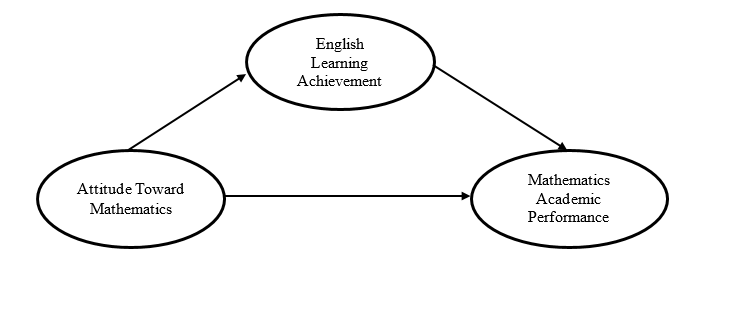
The aim of this study is to examine the relationship between ELA, ATM, and MAP among Indonesian students. The following hypotheses are followed:
H1: There will be a positive relationship between english learning achievement and mathematics academic performance among Indonesian students.
H2: There will be a positive relationship between attitude towards mathematics and mathematics academic performance among Indonesian students.
H3: English learning achievement will mediate the relationship between attitude towards mathematics and mathematics academic performance among Indonesian students (Figure 1).
Material and methods
Participants
This cross-sectional study was conducted at four universities in Indonesia with 381 mathematics students (mean age 19,82 years, SD = 0,55). Participants were randomly selected to reduce bias, with 56,4% female. All students had completed real analysis courses, studying about 2,5 hours weekly, and had taken a basic English course. Demographic details are presented in Table 1.
Table 1
Summarized of the participants
|
Demographic сharacteristics |
Frequency |
Percent |
|
Gender |
|
|
|
Female |
215 |
56,4 |
|
Male |
166 |
43,6 |
|
Age |
|
|
|
19 years |
98 |
25,7 |
|
20 years |
253 |
66,4 |
|
21 years |
30 |
7,9 |
|
Students Place |
|
|
|
City |
287 |
75,3 |
|
Urban |
94 |
24,7 |
|
Mother education |
|
|
|
Elementary education |
124 |
32,5 |
|
Secondary education |
50 |
13,1 |
|
High school education |
142 |
37,3 |
|
Higher education |
65 |
17,1 |
|
Father education |
|
|
|
Elementary education |
84 |
22,0 |
|
Secondary education |
74 |
19,4 |
|
High school education |
185 |
48,6 |
|
Higher education |
38 |
10,0 |
Instruments
Attitude towards mathematics. The instrument used to measure ATM in this study was developed by Suherman & Vidákovich (2022). The instrument was expanded to capture a comprehensive assessment of ATM among the participants. Consisting of four subscales, such as Self-Perception of Mathematics (i.e., “I can tell if my answers in math make sense”), Value of Mathematics (i.e., “I feel confident in my ability to solve mathematics problems”), Enjoyment of Mathematics (i.e., When I have to do math homework), and Perceived Mathematics Achievement (i.e., “My friends think that I am successful at Math”). The total items, was 26 items with each statement requiring participants to select from the following response choices for positive items: 1 = Strongly Disagree, to 5 = Strongly Agree. Conversely, for negative items, the response choices were reversed, with 1 = Strongly Agree, to 5 = Strongly Disagree. The validity of the four-factor structure of the original items was assessed using confirmatory factor analysis (CFA). The results indicated a good model fit (χ^2 = 853,768, df = 291, p < 0,000), with acceptable fit indices including CFI = 0,918, TLI = 0,908, RMSEA = 0,062, and SRMR = 0,056. Reliability and validty values were also calculated for the four subscales of the instrument using the Cronbach's alpha coefficient (Crbα) and the composite reliability (ω), ranged between 0,79 and 0,89.
We also conducted a pilot study of the instrument, which showed factor loadings ranging from 0,34 to 0,91. Discriminant validity, assessed using the Heterotrait-Monotrait (HTMT.85) criterion, ranged from 0,24 to 0,61, below the recommended threshold of 0,90, confirming validity (Hair et al., 2010; Henseler et al., 2015). Cronbach’s alpha values were 0,67 for Self-Perception of Mathematics, 0,71 for Value of Mathematics, 0,71 for Enjoyment of Mathematics, and 0,86 for Perceived Mathematics Achievement. Composite reliability (rho_c) ranged from 0,65 to 0,87 across scales. Although AVE values (0,32 to 0,53) were slightly below the standard cutoff, composite reliability above 0,60 supports construct validity (Fornell & Larcker, 1981). Overall, these results confirm the instrument’s reliability and validity for further analysis.
In this study, students self-reported their performance in English (ELA) and Mathematics (MAP) courses, including English for Academic Purposes, Basic English, Introduction to Real Analysis, and Advanced Real Analysis. Scores were reported on a 1 to 7 scale and verified against university records. Official grading categories ranged from 0 to 100 across seven levels (80–100, 73–79,99, 65–72,99, 60–64,99, 55–59,99, 49–54,99, and 0–48,99), serving as benchmarks for academic achievement in both subjects.
Design and data analysis
The study was conducted in four phases. In the first phase, researchers developed a questionnaire to assess psychological and pedagogical factors influencing students’ learning. Participants were enrolled in an advanced Real Analysis course taught entirely in English, having completed prerequisite courses in basic English and English for Academic Purposes to ensure effective engagement with the material and reliable data collection at semester’s end.
The second phase involved administering the questionnaire at the conclusion of the semester to gather data on students’ attitudes toward mathematics (ATM), English language ability (ELA), and mathematical academic performance (MAP). This yielded a comprehensive dataset for examining relationships among these variables.
In the third phase, the questionnaire data underwent initial analysis. Validity and reliability were assessed using SPSS Version 29 and SmartPLS 4, with Confirmatory Factor Analysis (CFA) establishing construct validity. Model fit was evaluated using indices such as the Tucker-Lewis Index (TLI), Comparative Fit Index (CFI), and Root Mean Square Error of Approximation (RMSEA). Internal consistency confirmed the reliability of subscales, while descriptive statistics summarized data distributions.
The final phase focused on testing the hypothesized relationships among ATM, ELA, and MAP. Descriptive and correlation analyses explored general trends, and Partial Least Squares Structural Equation Modeling (PLS-SEM) evaluated the model’s fit and relationships. The R statistical package was also used to analyze students’ self-reported English and mathematics performance.
Results
Statistic descriptive and correlations among variables
The descriptive statistics for the study variables are shown in Table 2. The mean attitude toward mathematics score was 3,94 (SD = 0,30), mathematics achievement averaged 6,07 (SD = 0,79), and English learning achievement had a mean of 5,37 (SD = 0,58). Table 3 presents the correlations among these variables. Data normality was confirmed, with skewness ranging from -0,23 to -1,24 and kurtosis between -0,33 and 1,45. Multicollinearity was also not a concern, as variance inflation factor (VIF) values ranged from 1,012 to 1,967, well below the critical value of 10 (Bell et al., 2004).
Table 2
Statistical descriptive of the data and normality data
|
Variables |
M |
SD |
Skewness |
Kurtosis |
|
Attitude towards mathematics |
3,94 |
0,30 |
-0,23 |
0,68 |
|
Mathematics academic performance |
6,07 |
0,79 |
-0,51 |
-0,33 |
|
English learning achievement |
5,37 |
0,58 |
-1,24 |
1,45 |
Table 3 shows the relationships between study variables. Value of Mathematics had a weak positive correlation with Self-Perception of Mathematics (r = 0,193**) and Perceived Mathematics Achievement (r = 0,024). Enjoyment of Mathematics correlated more strongly with Self-Perception (r = 0,390**) and slightly with Perceived Achievement (r = 0,106**). Academic performance in introductory and advanced Real Analysis courses was strongly correlated (r = 0,701**). Moderate positive correlations were found between English Academic Purposes and both advanced Real Analysis performance (r = 0,295**) and English Basic and introductory Real Analysis performance (r = 0,309**), linking enjoyment of mathematics with English academic achievement. Correlations were considered significant at p < 0,01 and marginally significant at p < 0,05.
Table 3
Statistics, descriptive, and correlations among variables
|
SPM |
VOM |
EOM |
PMA |
MAP1 |
MAP2 |
ELA1 |
ELA2 |
|
|
SPM |
||||||||
|
VOM |
0,193** |
|
||||||
|
EOM |
0,390** |
0,219** |
|
|||||
|
PMA |
0,024 |
0,018 |
0,106* |
|
||||
|
MAP1 |
0,098 |
-0,059 |
-0,038 |
-0,031 |
|
|||
|
MAP2 |
0,049 |
-0,060 |
-0,024 |
-0,071 |
0,701** |
|
||
|
ELA1 |
0,096 |
0,046 |
0,011 |
0,059 |
0,254** |
0,295** |
|
|
|
ELA2 |
0,284** |
0,108* |
-0,026 |
-0,044 |
0,309** |
0,209** |
0,249** |
|
Note: SPM: Self-Perceptions of Mathematics; VOM: Value of Mathematics; EOM: Enjoyment of Mathematics; PMA: Perceived Mathematics Achievement; MAP1: Mathematics Academic Performance in Introduction to Real Analysis course; MAP2: Mathematics Academic Performance in Real Analysis Advance course; ELA1: English Learning Academic course of English Academic Purposes; ELA2: : English Learning Academic course of English Basic. **. Correlation is significant at the 0,01 level (2-tailed); *. Correlation is significant at the 0,05 level (2-tailed).
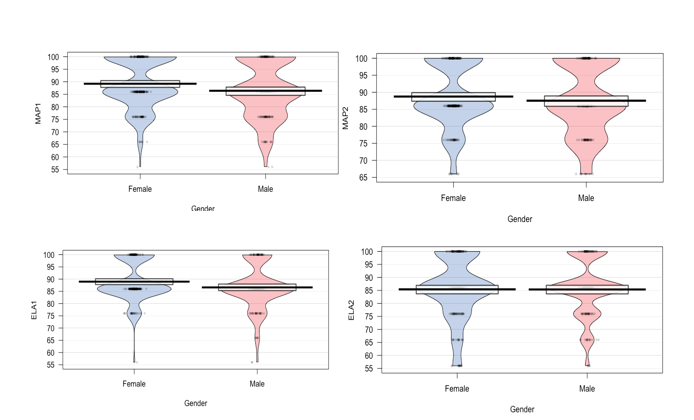
Figure 2 illustrates student performance in English and Mathematics by gender. In Mathematics (MAP1 and MAP2), mean scores are similar for females (M ≈ 85,3–86,1) and males (M ≈ 84,8–85,5), but males show greater score variability and a bimodal distribution, indicating distinct performance clusters. In English assessments (ELA1 and ELA2), females have slightly higher and more consistent mean scores (M ≈ 87,4–88,0) with lower variability, while males exhibit a wider score range. Violin and boxplots confirm that females’ performance is more uniform compared to males.
SEM performance
In our study, the model was analyzed using PLS-SEM to test our hypothesis, as illustrated in Figure 3. Initially, we assessed the model fit of the hypothesis, and the results indicated a good fit: Chi-Square = 739,664, df = 28, p < 0,001, RMSEA = 0,07, CFI = 0,98, TLI = 0,98, SRMR = 0,03. These findings suggest that the proposed model effectively explains students' achievement.
Regarding the influence of MAP on ELA, we found a significant positive association (β = 0,374, p < 0,001). This suggests that higher levels of measured achievement in mathematics analysis tasks are associated with increased ELA among participants. However, the relationship between ATM and MAP was not statistically significant (β = -0,041, p > 0,05). Thus, there is no strong evidence to support a direct influence of measured achievement in mathematics tasks on analytical thinking measures. Additionally, we examined the influence of ELA on ATM. The results indicated that the association between ATM and ELA was statistically significant (β = 0,271, p < 0,05).
Moreover, we controlled the variables with socioeconomic status (SES) variables, including the education levels of mothers and fathers. The results showed that SES had a significantly positive influence on ATM (β = 0,021, p > 0,05). While, the SES to MAP was (β = 0,001, p > 0,05).
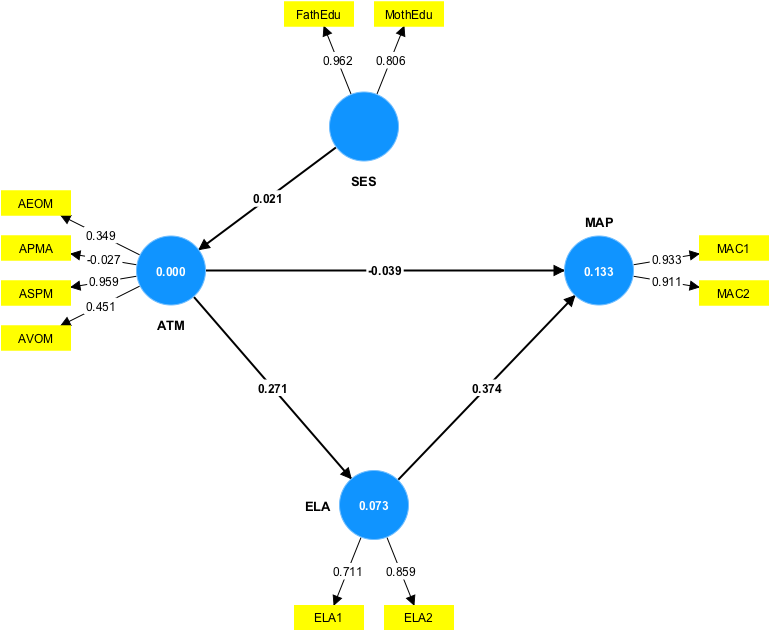
Fig. 3. Model SEM among variables with control variable
Furthermore, the study explored whether the impact of attitude on mathematics performance is completely mediated by English performance, utilizing bootstrapping with 5000 iterations (see Table 4). The results revealed that the influence of attitude towards mathematics on mathematics performance was indirectly mediated by English performance (β = 0,102, p < 0,001). ATM has a significant positive effect on ELA (p < 0,05). Additionally, ELA strongly predicts MAP (p < 0,001). The indirect effect of ATM on MAP through ELA is also significant (p < 0,05), indicating that English achievement mediates the relationship between attitude toward mathematics and mathematics performance. The effect size for ELA, ATM, and MAP were d = -0,18, d = -0,09, and d = 0,79, respectively. These results emphasize the crucial role of language proficiency in mathematics success.
Table 4
Total indirect and direct effect among variables
|
Path |
Original sample (O) |
Sample mean (M) |
Standard deviation (STDEV) |
T statistics (|O/STDEV|) |
P |
|
ATM -> ELA |
0,271 |
0,250 |
0,132 |
2,058 |
< 0,05 |
|
ATM -> MAP |
-0,039 |
0,056 |
0,091 |
0,683 |
> 0,05 |
|
ELA -> MAP |
0,374 |
0,373 |
0,064 |
5,808 |
< 0,001 |
|
SES -> ATM |
0,021 |
0,005 |
0,081 |
0,255 |
> 0,05 |
|
SES -> ELA |
0,006 |
0,004 |
0,022 |
0,253 |
> 0,05 |
|
SES -> MAP |
0,001 |
0,001 |
0,009 |
0,144 |
> 0,05 |
|
ATM -> ELA -> MAP |
0,101 |
0,095 |
0,050 |
2,019 |
< 0,05 |
|
SES -> ATM -> ELA |
0,006 |
0,004 |
0,022 |
0,253 |
> 0,05 |
|
SES -> ATM -> MAP |
-0,001 |
0,000 |
0,007 |
0,123 |
> 0,05 |
|
SES -> ATM -> ELA -> MAP |
0,002 |
0,001 |
0,008 |
0,250 |
> 0,05 |
Discussion
In our study, hypothesis testing and model fit assessment showed that the proposed model fits the data well, effectively explaining students’ achievement. Consistent with Barrett et al. (2012), we found a significant positive relationship between MAP and ELA. This suggests that success in mathematics is linked to better performance in English, supporting the idea that achievement in one subject can enhance performance in another. Additionally, our results revealed a positive impact of English learning achievement on mathematics performance, aligning with Sandilos et al. (2020). This relationship may be due to language proficiency enabling better access to educational resources such as textbooks, online materials, and academic journals. Students with stronger English skills can therefore more effectively engage with mathematical content, improving their understanding and problem-solving abilities.
Students with positive attitudes toward mathematics generally achieve higher scores, and higher achievement often fosters more positive attitudes. However, this study found that anxiety and lack of confidence can negatively impact performance by reducing engagement. Mathematics anxiety impairs cognitive processing and problem-solving, leading to avoidance and lower achievement. Socioeconomic status (SES) also negatively affects attitudes and performance, as students from lower-income backgrounds face limited resources and increased stress. To address these issues, interventions should focus on reducing math anxiety through growth mindset promotion, personalized learning, mindfulness, and cognitive reframing. Targeted support for low-SES students and teacher training to recognize anxiety are also vital. These findings align with prior research showing how negative attitudes and anxiety hinder math performance (Ashcraft & Kirk, 2001; Nardi & Steward, 2003; Skagerlund et al., 2019).
Although our study found a negative impact of attitude on mathematics achievement, the reciprocal relationship observed in Kiwanuka et al. (2022) suggests that attitude and achievement can influence each other over time. Additionally, this finding aligns with another meta-analysis on the relationship between attitude toward mathematics and academic performance, which also reported a negative correlation (Ma & Kishor, 1997). This suggests that students' attitudes toward mathematics tend to decline as they grow older, often becoming negative by high school. Furthermore, previous research found no significant correlation between attitude toward mathematics and mathematics achievement (Phonguttha et al., 2009). However, negative attitudes toward mathematics may still contribute to reduced motivation and engagement, ultimately leading to lower performance. Research suggests that addressing negative attitudes early is essential to prevent students from developing poor problem-solving skills in the future (Shah et al., 2023). Since attitudes are crucial, mathematics educators can implement strategies to shift negative perceptions and reinforce positive ones to improve students' performance (Kiwanuka et al., 2022). Given that problem-solving skills are crucial for handling everyday challenges, fostering a positive mindset is vital for academic success. Students who maintain a positive attitude toward mathematics are more likely to excel in their studies (Papanastasiou, 2000).
This study found that socioeconomic status (SES) significantly affects students’ attitudes toward mathematics and their academic performance, consistent with prior research showing that higher SES is linked to more positive attitudes and better outcomes (Papanastasiou, 2002). Students from lower SES backgrounds often face resource barriers that hinder motivation and engagement (Jury et al., 2017). Importantly, the impact of attitudes toward mathematics on math performance was fully mediated by ELA, highlighting that attitude influences math success through English proficiency (Dan’inna, 2017; Trakulphadetkrai et al., 2020). This underscores the need for integrated educational strategies that improve both language skills and mathematical understanding to support students’ academic achievement (Suherman & Vidákovich, 2024).
Limitations and future research
While this study offers valuable insights, several limitations should be noted. The sample was limited to college students from four Indonesian universities, which may restrict the generalizability of the findings. Including more diverse populations across different educational contexts would improve external validity. The study focused on ATM, ELA, and MAP while controlling for socio-economic status, but omitted factors such as cultural background, language proficiency, mother tongue, and prior education. Future research should examine these variables and their interactions. The cross-sectional design also limits causal interpretations, highlighting the need for longitudinal studies to track changes over time. Intellectual and cognitive development, key to academic success, were not assessed, potentially overlooking important influences on learning. Including these measures and exploring students’ course preferences could provide deeper insights. Additionally, teacher practices and classroom environments may significantly affect attitudes and performance, warranting further investigation. The unexpected negative impact of attitudes toward mathematics on performance calls for more research with larger, diverse samples, considering factors like grade level, age, subject knowledge, and teaching quality. Addressing these limitations will enhance understanding of the complex links between attitudes and achievement, guiding effective strategies to support student success in mathematics and English.
Conclusions
In conclusion, the results found significant associations between ELA, ATM, and MAP among Indonesian college students. The findings highlight the important role of language proficiency in supporting mathematical understanding and problem-solving skills, as students with higher English proficiency tended to perform better in mathematics. Conversely, attitudes toward mathematics showed a negative impact on mathematics achievement, suggesting that emotional and psychological factors beyond academic ability influence student performance. Additionally, socioeconomic status (SES) was negatively correlated with both attitudes and achievement, indicating that external factors may also affect students’ academic outcomes. Importantly, English learning achievement served as a mediator between attitudes toward mathematics and mathematics performance, underscoring the interconnectedness of these variables.
These findings highlight the important link between language proficiency, attitudes toward mathematics, and academic achievement. They suggest that educators should integrate language and math teaching, promote positive attitudes toward math, and address language barriers. Targeted interventions can support students’ overall success, providing useful guidance for improving education and student outcomes.