Introduction
In today's world, increasing professional development requirements have fueled a growing interest in higher education among applicants and their parents (Varlamova et al., 2024). However, many first-year students fail to complete their degrees; non-completion rates range from 15% to 54% globally (Gorbunova, 2018). Furthermore, variations in the mastery of professional competencies among graduates can negatively impact both individual performance and the broader economy. Consequently, there is a critical need to investigate the predictors of academic success and performance in higher education.
Research on predictors of academic performance has a long history in psychology. Studies have primarily focused on cognitive factors, such as general abilities, individual cognitive functions, and cognitive styles, alongside contextual and environmental factors that mediate these relationships (Dvoynin et al., 2020). Recent reviews indicate that psychometric intelligence remains the most reliable predictor of academic performance, exerting both direct and mediating influences. Moreover, the significance of variables such as creativity, motivation, and personality appears to increase with age (Dvoynin, Trotskaya, 2022).
Research in academic motivation suggests that performance depends on both the intensity and the quality of motivation (Nikitskaya, Tolstykh, 2018). Drawing on PISA 2018 data, Gordeeva and Sychev (2024) noted that intrinsic motivation and self-efficacy demonstrate the most consistent and robust correlations with academic achievement. While links between reading comprehension and literacy have been observed in schoolchildren (ibid.), studies on university students show that intrinsic motivation positively correlates with academic performance and serves as a key predictor of degree completion (Meens et al., 2019). Overall, these findings suggest that higher levels of autonomous engagement in learning activities lead to superior academic outcomes.
Recently, increasing attention has been directed toward the role of regulatory processes in learning. Evidence suggests that students possessing effective self-regulation strategies demonstrate superior academic performance, higher motivation, and greater satisfaction with the learning process. Internationally, this phenomenon has been extensively examined within the Self-Regulated Learning (SRL) framework (Fomina, 2022).
In Russian psychology, the relationship between regulatory processes and academic achievement has been thoroughly explored by V.I. Morosanova and colleagues. This school of thought views conscious self-regulation as a critical resource for establishing and attaining personally significant goals. Studies have identified significant positive correlations between conscious self-regulation, academic engagement, subjective well-being, and performance among middle and high school students (Fomina et al., 2021; Fomina et al., 2024). Furthermore, Bondarenko and Fomina (2023) developed a structural model of academic success for young adolescents that integrates conscious self-regulation with motivation and the Big Five personality traits. Their findings indicate that conscious self-regulation provides the most substantial contribution among these variables, while also functioning as a mediator for other factors.
Beyond metacognitive processes, researchers emphasize that metamotivational or volitional processes—responsible for sustaining motivation despite obstacles—play a vital role in learning (Ivannikov et al., 2014; Duckworth et al., 2019).
Currently, psychology lacks a unified definition of volition. Most researchers, however, conceptualize it as the process of managing motivation or the impulse to act. This perspective, first proposed by K. Lewin in the 20th century, was later refined by German psychologists H. Heckhausen and J. Kuhl, who defined volition as a function that maintains a working intention in an active state. Similarly, self-regulated learning models treat volition as a set of conscious strategies for managing learning motivation. Other scholars, including R. Baumeister, J. Ainslie, and A.L. Duckworth, view volition primarily as impulse control (for a review, see Shlyapnikov, 2022). In Russian psychology, this tradition is rooted in the work of L.S. Vygotsky and his successors.
This study adopts V.A. Ivannikov’s approach, which defines volitional regulation as a personal form of voluntary regulation involved in managing impulses during conflicts between different levels of activity regulation (Ivannikov et al., 2014). Given that educational activities are prolonged, students inevitably encounter internal and external distractors. Consequently, volitional regulation is expected to play a critical role in the learning process. Although empirical evidence remains limited, existing research indicates a link between volitional self-control and academic outcomes, including grades, standardized test scores, and graduation rates (Duckworth et al., 2019). Among Russian students, academic performance has been positively associated with scores on J. Kuhl’s Action Control Scale, behavioral self-control, and volitional self-esteem, though these relationships vary by field and year of study (Shlyapnikov, 2021).
Most researchers agree that volition and motivation are inextricably linked. According to Heckhausen and Kuhl, motivation determines the direction of activity by influencing goal formation, whereas volition ensures the realization of these intentions by protecting them over time (Shlyapnikov, 2022). Ivannikov further posits that during volitional regulation, individuals create additional incentives through various social and personal means (Ivannikov et al., 2014). Despite these theoretical frameworks, the combined contribution of academic motivation and volitional regulation to academic performance remains under-researched.
Conclusion of the Literature Review. In summary, existing research highlights significant links between motivational and volitional (meta-motivational) processes and academic performance. However, most studies have focused on secondary education, leaving higher education relatively under-examined. University education possesses unique characteristics that likely influence these psychological processes. Unlike compulsory schooling, university attendance is a voluntary choice. Upon completing high school, individuals face diverse life paths, including entering the workforce, starting a family, or pursuing higher education—each requiring substantial time and effort. In the university setting, students must navigate their academic journey with increased autonomy, relying less on the direct support of parents and teachers. Under these conditions, the role of internal regulators, specifically motivation and volition, becomes increasingly critical.
Study objective. This study aims to examine the motivational and volitional predictors of academic performance among university students.
Hypotheses. Based on the literature review, we hypothesize that:
Academic performance in university students is positively associated with academic motivation (primarily intrinsic motivation).
Academic performance is significantly linked to characteristics of volitional regulation, specifically volitional dispositions (as defined by J. Kuhl) and volitional self-control
Our second hypothesis posits that academic motivation and volitional regulation exert a joint influence on academic performance, as suggested by various scholars (e.g., K. Lewin, L.S. Vygotsky, H. Heckhausen, J. Kuhl, L. Corno, M. Boekaerts, and V.A. Ivannikov) (Ivannikov et al., 2014). However, the underlying mechanisms of this interaction remain poorly understood, leading to two alternative models:
Model A ("Volition mediates Motivation"): Based on the frameworks of Heckhausen and Kuhl, motivation is responsible for intention formation, while volition ensures its protection and implementation. From this perspective, motivation alone is insufficient for goal attainment; volitional regulation is required (Koole, Baumann, 2018). Here, academic motivation serves as a predictor, and volitional regulation acts as a mediator of academic performance.
Model B ("Motivation mediates Volition"): In Russian psychological tradition (e.g., L.S. Vygotsky, D.N. Uznadze, V.A. Ivannikov), volition is conceptualized as impulse mastery or "artificial motivation" (Ivannikov et al., 2014). This suggests that volition exerts an indirect influence by maintaining an optimal level of motivation. In this model, volitional regulation acts as a predictor, while academic motivation serves as the mediator for academic performance.
Materials and methods
Sample characteristics. To test the hypotheses, a correlational study was conducted among first- and second-year students at the Moscow Institute of Psychoanalysis. The sample included individuals enrolled in full-time and part-time Bachelor's, Specialist, and Master's programs in Psychology and Clinical Psychology. A total of 641 participants took part (N = 641), comprising 75 men and 566 women. The mean age was 27.9 years (SD = 9.4), which reflects the specific demographic profile of the university’s student body. Bachelor's students constituted 35.6% of the sample, Master's students 39.1%, and Specialist students 25.3%. Full-time and part-time students accounted for 57.5% and 42.5% of the sample, respectively.
Methods.
Motivational predictors: Academic motivation was assessed using the Brief Academic Motivation Scale (Gordeeva, Sychev, Osin, 2014).
Volitional predictors: These were measured using the "Action Control during Planning" subscale from J. Kuhl’s Action Control Scale (adapted by Shapkin, 1997) and the Self-Control Questionnaire for emotional, activity, and behavioral domains (Nikiforov, Vasilyeva, Firsova, as cited in Ilyin, 2000).
Academic performance: The performance indicator was calculated as the Grade Point Average (GPA) from the spring semester midterm assessments in general subjects (specialized subjects were excluded). Based on the university's 10-point grading system, both exams and tests were included in the calculation. Missing grades (absences) were excluded from the GPA computation. All performance data were provided by the university’s Academic and Methodological Department.
Procedure. The study was conducted during the spring semester of 2024. Participants completed either paper-based or electronic versions of the questionnaires. Faculty supervisors informed students about the study, which was voluntary, unpaid, and non-anonymous. Prior to participation, all students were briefed on the study’s goals and provided informed consent.
Statistical data analysis.
Parametric statistics were employed as all variables in the sample followed a normal distribution. To ensure comparability across different scales, all variables were converted into standardized z-scores. To test the first hypothesis, Pearson correlation coefficients were calculated between academic performance indicators and motivational and volitional variables. Subsequently, stepwise multiple linear regression was performed.
To test the second hypothesis, mediation analysis was conducted to compare two competing models. In Model A, motivation served as the predictor with volition as the mediator. Conversely, in Model B, volition acted as the predictor and motivation as the mediator. In both models, academic performance was the dependent variable.
Data processing was performed using IBM SPSS Statistics (v. 23). Mediation analysis was executed using the PROCESS macro (v. 3.3) developed by A. Hayes (Model 4). A bootstrapping procedure with 5000 resamples was utilized to estimate the significance of indirect effects. Mediation was considered significant if the indirect effect was statistically reliable and if its magnitude exceeded the direct effect.
To control for the influence of demographic and academic factors on performance, a univariate analysis of covariance (ANCOVA) was conducted. Academic performance served as the dependent variable, while gender, level of study, and year of study were treated as independent variables, with age included as a covariate.
Results
Table 1 presents the descriptive statistics and the results of the correlation analysis for academic performance, academic motivation, and volitional regulation..
Таблица 1 / Table 1
Relationship between the indicators of academic performance, academic motivation and features of volitional regulation among students (N = 641)
|
Переменные |
M (SD) |
a |
Пирсона |
|
Академическая успеваемость / Academic performance |
8,77 (1,06) |
- |
1 |
|
Шкала контроля за действием / Act control scale |
5,18 (2,83) |
0,745 |
0,10** |
|
Эмоциональный самоконтроль / Emotional Self-control |
13,24 (3,24) |
0,516 |
0,07 |
|
Поведенческий самоконтроль / Behavioral Self-control |
16,48 (3,75) |
0,670 |
0,14** |
|
Cоциальный самоконтроль / Social Self-control |
15,24 (3,77) |
0,574 |
0,07 |
|
Познавательная мотивация / Cognitive motivation |
17,53 (2,81) |
0,897 |
0,30** |
|
Мотивация достижения / Achievement motivation |
15,64 (3,49) |
0,886 |
0,31** |
|
Иинтроецированная мотивация / Introjected motivation |
9,74 (4,15) |
0,756 |
-0,14** |
|
Экстернальная мотивация / External motivation |
6,59 (2,92) |
0,678 |
-0,25** |
Note: «*» — correlation is significant at the 0,05 level (two-sided). «**» — correlation is significant at the 0,01 level (two-sided).
Таблица 1 / Table 1
Relationship between the indicators of academic performance, academic motivation and features of volitional regulation among students (N = 641) (continuation)
|
Переменные |
1 |
2 |
3 |
4 |
5 |
6 |
7 |
|
Шкала контроля за действием / Act control scale (1) |
|
|
|
|
|
|
|
|
Эмоциональный самоконтроль / Emotional Self-control (2) |
,088* |
|
|
|
|
|
|
|
Поведенческий самоконтроль / Behavioral Self-control (3) |
,215** |
,232** |
|
|
|
|
|
|
Cоциальный самоконтроль / Social Self-control (4) |
,121** |
,356** |
,486** |
|
|
|
|
|
Познавательная мотивация / Cognitive motivation (5) |
,234** |
,113** |
,283** |
,163** |
|
|
|
|
Мотивация достижения / Achievement motivation (6) |
,338** |
,189** |
,324** |
,169** |
,719** |
|
|
|
Иинтроецированная мотивация / Introjected motivation (7) |
-,149** |
-0,05 |
,101** |
,142** |
-,169** |
-,194** |
|
|
Экстернальная мотивация / External motivation (8) |
-,215** |
-,143** |
-,114** |
-0,028 |
-,423** |
-,392** |
,623** |
As shown in Table 1, academic performance correlates significantly with numerous indicators of academic motivation and volitional regulation. Positive correlations were observed with the Action Control Scale, behavioral self-control, and both cognitive and achievement motivation. Conversely, negative correlations were found for introjected and external motivation. Notably, the correlation coefficients between performance and motivation (r = 0,25–0,30) were substantially higher than those between performance and volitional regulation (r = 0,10–0,20). These results suggest that higher intrinsic motivation, greater behavioral self-control, and a stronger action orientation are associated with superior academic performance. In contrast, higher extrinsic motivation and a pronounced state orientation are linked to lower grades.
Table 1 further demonstrates that motivational and volitional indicators are interrelated. Cognitive and achievement motivation showed significant positive correlations with all volitional measures. External motivation was significantly and negatively correlated with the Action Control Scale and both emotional and behavioral self-control scores. Introjected motivation correlated positively with behavioral and social self-control but negatively with Action Control Scale scores. These interrelationships justify the subsequent use of mediation analysis.
The ANCOVA results revealed that academic performance was significantly influenced by age (F(1) = 29,02, p < 0,01), education level (F(2) = 12,44, p < 0.01), and year of study (F(1) = 9,01, p < 0.01), while the influence of gender was non-significant (F(1) = 2,27, p > 0,05). The regression analysis (Table 2) yielded a three-factor model (R2 = 0,111), identifying the following as significant predictors of academic performance: achievement motivation (0,176), external motivation (-0,127), and cognitive motivation (-0.110). Low Variance Inflation Factor (VIF) values confirmed the absence of multicollinearity among the predictors.
Таблица 2 / Table 2
Predictors of academic performance (N = 641)
|
Predictors |
β |
t |
р |
VIF |
|
Мотивация достижения / Achievement motivation |
0,176 |
3,183 |
0,002 |
2,173 |
|
Экстернальная мотивация / External motivation |
-0,127 |
-3,048 |
0,002 |
1,230 |
|
Познавательная мотивация / Cognitive motivation |
0,110 |
1,977 |
0,048 |
2,204 |
Note: β – standardized regression coefficient, t – T-statistic associated with the significance level, p – significance level, VIF – dispersion inflation factor.
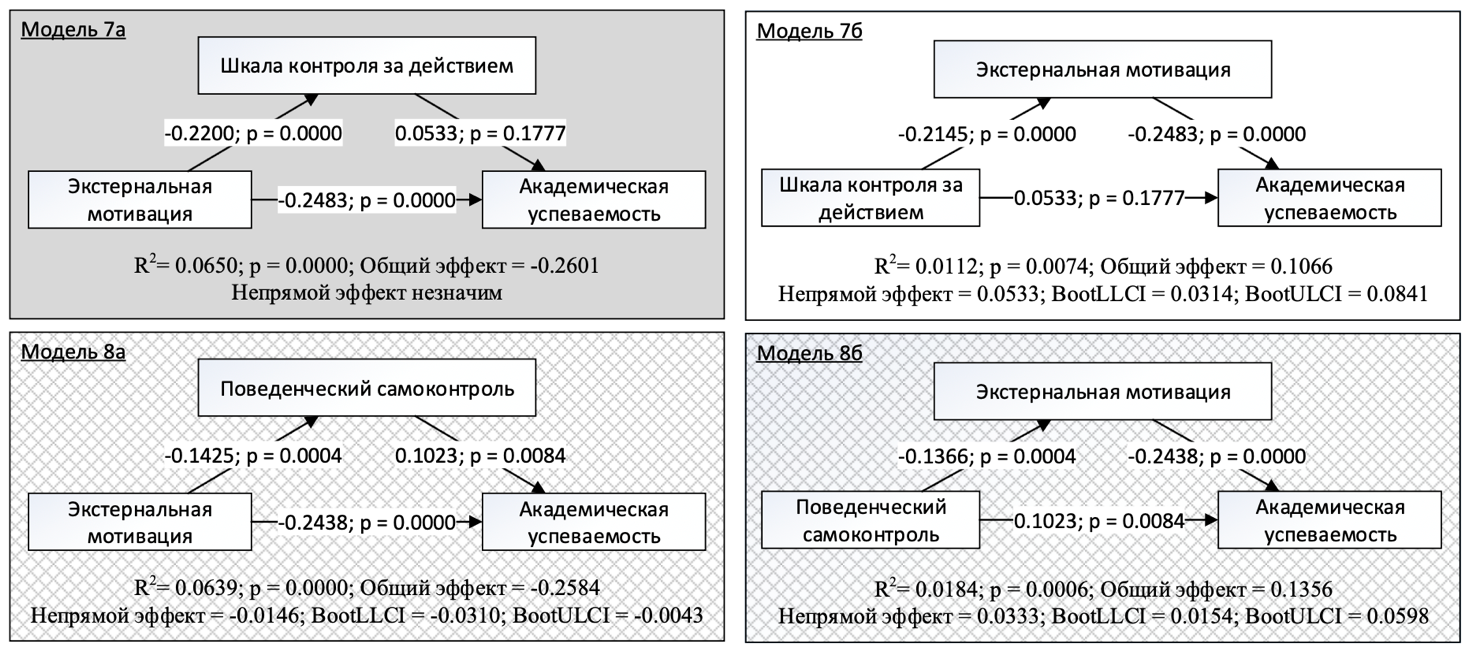
To test the second hypothesis, a mediation analysis was conducted using academic performance as the dependent variable, while volitional and motivational measures alternately served as predictors and mediators. Due to space constraints, only the Action Control Scale and behavioral self-control were included as volitional measures (Figures 1–4).
Figure 1 presents four models concerning cognitive motivation. In Models 1a and 2a, cognitive motivation serves as the predictor, whereas in Models 1b and 2b, it acts as the mediator. Results indicate that Models 1a and 2a demonstrate a significant positive direct effect of motivation on academic performance. However, the indirect effects mediated by the Action Control Scale and behavioral self-control were non-significant, indicating the absence of a mediation effect.
In contrast, Models 1b and 2b showed that the direct effects of the Action Control Scale and behavioral self-control on academic performance were non-significant, while the indirect effects mediated by cognitive motivation were significant. Notably, the effect of the Action Control Scale on academic motivation was higher (0,083) than that of behavioral self-control (0,069). However, these indirect effects were smaller than the direct effects of cognitive motivation (0,286 and 0,296, respectively). These findings suggest that cognitive motivation influences academic performance independently of volitional regulation, whereas volitional characteristics impact performance primarily indirectly through their influence on motivation
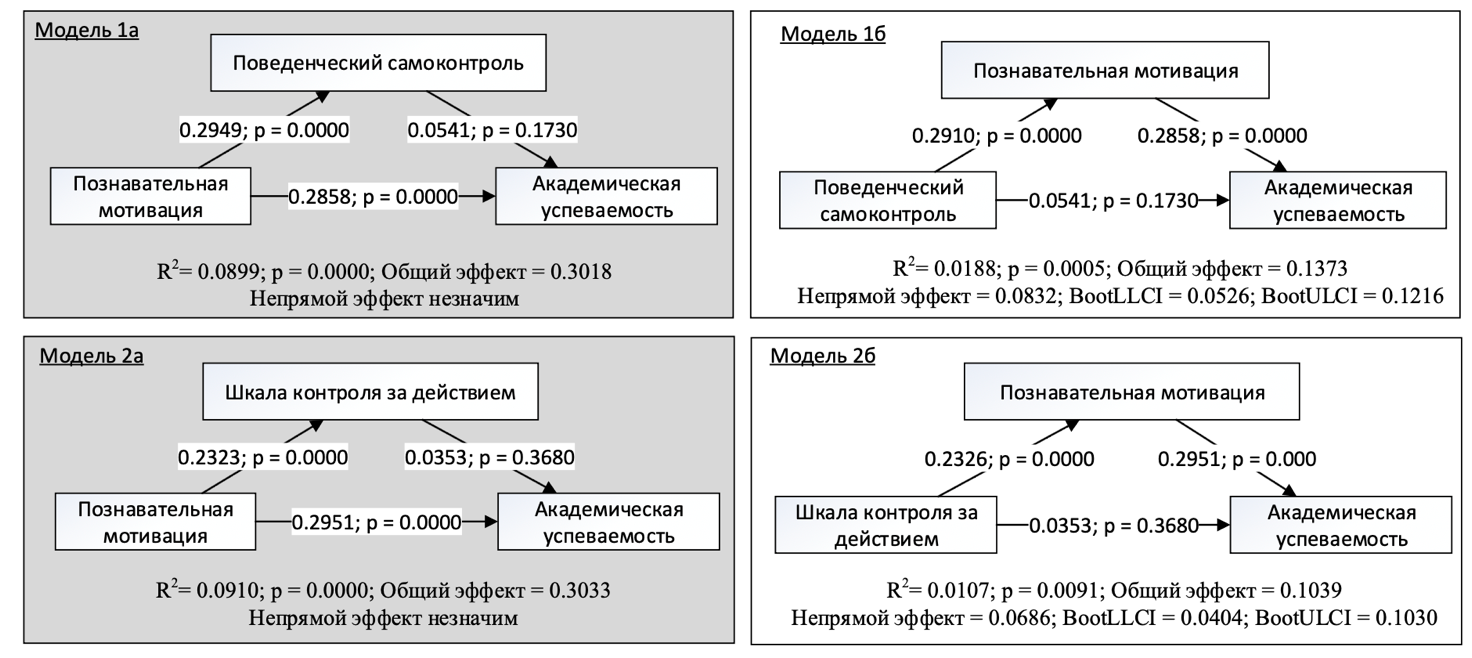
Fig. 1. Comparison of the suitability of models where the predictors are alternately indicators of cognitive motivation (model 1a and 2a) and volitional regulation (behavioral self-control and action control scale: models 1b and 2b) (N = 641)
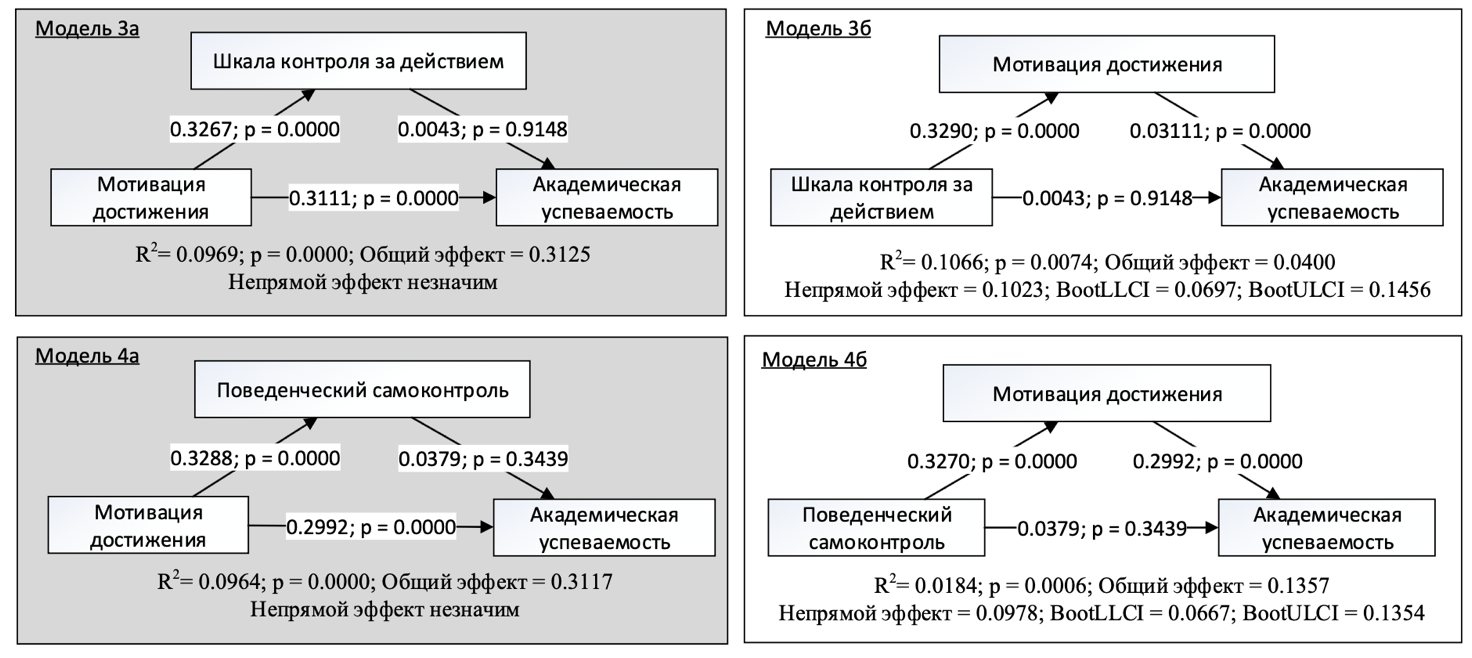
For Models 3a and 4a, a significant direct effect of achievement motivation on academic performance was observed, while the indirect effects mediated by the Action Control Scale and behavioral self-control were non-significant (Figure 2). Consequently, no mediation effects were present in these models. In contrast, for Models 3b and 4b, the direct effects of the Action Control Scale and behavioral self-control were non-significant, whereas the indirect effects mediated by achievement motivation were significant. These results indicate that achievement motivation follows a pattern similar to cognitive motivation, acting as a mediator for volitional variables. Notably, the direct effects of achievement motivation (0,311) and (0,299) were substantially higher than the mediated effects of the volitional measures, with the Action Control Scale exerting a stronger influence than behavioral self-control (0,102) vs. (0,098), respectively).
In Models 5a and 6a (Figure 3), introjected motivation was treated as the predictor, while in Models 5b and 6b, it served as the mediator. Significant direct and indirect effects were found across all four models; specifically, introjected motivation exhibited negative direct and total effects, whereas the Action Control Scale and behavioral self-control showed positive effects. However, the magnitude of the direct effects was approximately tenfold larger than the indirect effects, suggesting that any emergent mediation effects are marginal. These findings imply that introjected motivation and individual volitional characteristics are relatively independent and do not exert substantial reciprocal mediation effects on academic performance
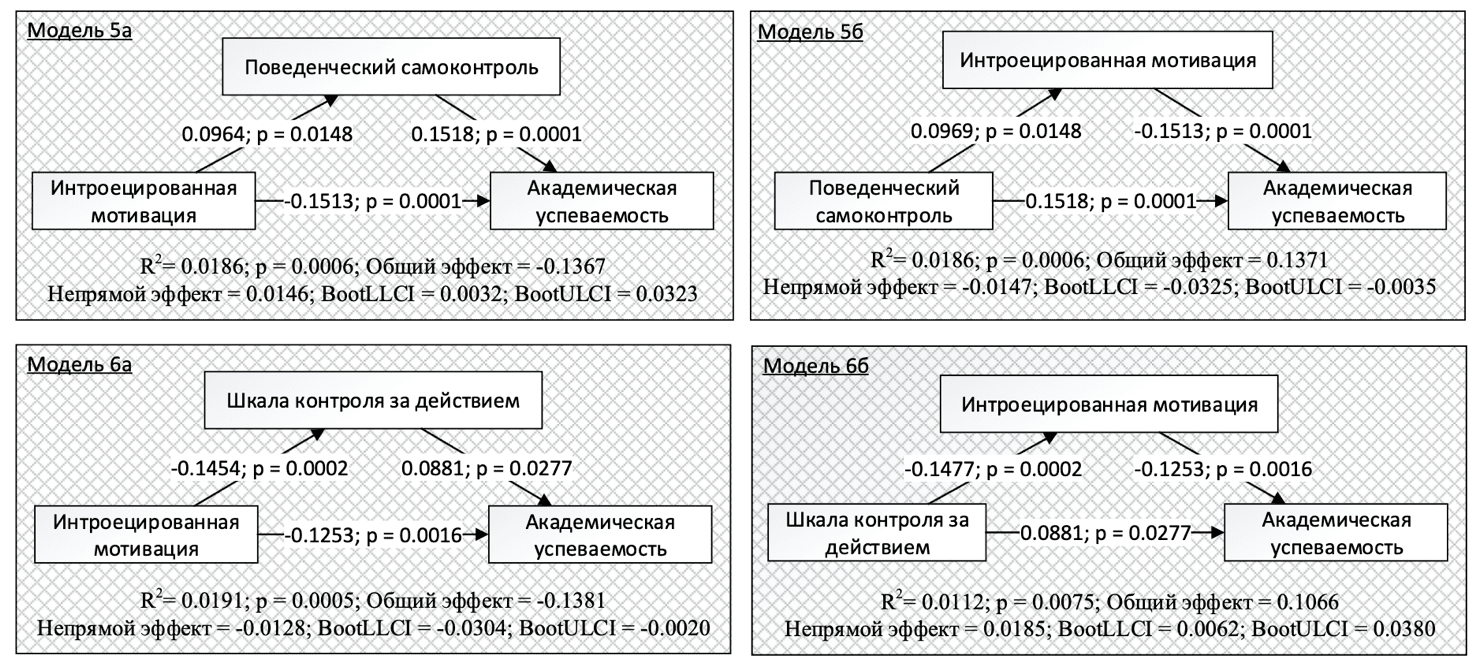
Figure 4 presents the models for external motivation, with Models 7a and 8a treating it as the predictor and Models 7b and 8b as the mediator. In Model 7a, a significant negative direct effect of external motivation on academic performance was observed, whereas the indirect effect mediated by the Action Control Scale was non-significant. Conversely, in Model 7b, the direct effect of the Action Control Scale on academic performance was non-significant, while the indirect effect mediated by external motivation was statistically significant. However, the identical magnitudes of the direct and indirect effects in this instance suggest that the practical significance of this mediation is inconclusive.
For Models 8a and 8b, both direct and indirect effects were significant. Nonetheless, the direct effects were substantially larger than the indirect effects. These findings indicate that in the case of behavioral self-control and external motivation, mediation effects do not exert a substantial impact on academic performance.
Discussion
The findings provide robust support for the first hypothesis. The primary result indicates that academic performance is significantly associated with both academic motivation and students' volitional regulation. Regression analysis further suggests that achievement, external, and cognitive motivation exert independent effects on academic achievement.
Regarding the second hypothesis, the empirical data support a model where individual volitional characteristics serve as predictors of academic performance, with academic motivation acting as a mediator. These mediation results indicate that the influence of volitional regulation on performance is primarily channeled through academic motivation. However, this effect is type-dependent: it is most pronounced for cognitive and achievement motivation, while remaining negligible for introjected motivation. For external motivation, the effect was only evident in relation to the Action Control Scale.
These results align with existing literature, confirming that academic success is linked to both motivational and volitional factors. The strong correlations observed for cognitive and achievement motivation are consistent with previous findings among schoolchildren (Gordeeva, Sychev, 2020). Conversely, the significant negative associations found for introjected and external motivation reinforce the premise that intrinsic motivation, rather than extrinsic drivers, is the primary determinant of success in higher education.
Notably, the correlations between volitional regulation and academic performance were significantly weaker than those between motivation and performance. Significant correlations were restricted to the Action Control Scale and behavioral self-control. These findings suggest that individuals with an action orientation tend to achieve higher academic performance than those with a state orientation, consistent with J. Kuhl’s theoretical framework (Koole, Baumann, 2018). Furthermore, the observed links between academic performance and self-control are congruent with both domestic and international research (Shlyapnikov, 2021; Duckworth et al., 2019).
The regression analysis indicates that motivational and volitional factors explain approximately 11,1% of the variance in academic performance (R^{2} = 0,111). This contribution is substantial, considering the model excludes cognitive factors and contextual variables, which are often cited as primary predictors of academic achievement (Dvoynin, Trotskaya, 2022). According to the final model, achievement, external, and cognitive motivation serve as the most robust predictors of performance. Notably, this study assessed only specific individual traits of volitional regulation, such as volitional dispositions and self-control. However, as previously noted, volitional regulation is conceptualized not as a stable trait, but as a dynamic process of actions or operations (volitional acts) aimed at compensating for motivational deficits (Ivannikov et al., 2014). Although standardized methods for assessing these specific actions are currently lacking, they likely make a significant contribution to learning success, highlighting the need for more sophisticated assessment tools.
While the correlation and regression analyses reproduce patterns previously observed in secondary school students, the mediation analysis reveals novel relationships between volitional regulation and student motivation. The results suggest that high academic motivation—primarily intrinsic—is an independent predictor of performance that does not necessarily require volitional regulation. Conversely, individual volitional characteristics influence academic performance only in the presence of high intrinsic motivation. A notable exception is Model 7b, where the Action Control Scale is associated with external motivation. However, all relationships in this model were negative, suggesting that individuals with a state-oriented approach may exhibit higher external motivation, which overall negatively impacts academic success.
In summary, these results indicate that the impact of volitional regulation emerges from a complex interaction between motivation and individual volitional traits. It appears that stable volitional characteristics, such as dispositions or self-control levels, are insufficient to exert a direct influence on academic performance; rather, their influence becomes most pronounced when mediated by intrinsic motivation. This finding is highly congruent with the theoretical frameworks of volitional regulation developed by V.A. Ivannikov and colleagues (Ivannikov et al., 2014).
The relationships between academic performance and factors such as age, education level, and year of study also merit consideration. These variables appear to be inherently interrelated and collectively exert a positive influence on academic success; specifically, older students tend to achieve higher performance levels. However, this relationship is multifaceted, as age and academic standing are often confounded by several difficult-to-control variables. These include the cumulative experience gained during residency, selective attrition rates (where lower-performing students are more likely to withdraw), and curriculum shifts toward more specialized courses in later years.
Critically, the life situations of the participants significantly influence these dynamics. The students in this sample were older than those typically found in traditional university settings, as most had pursued higher education after completing vocational college, serving in the military, or gaining work experience. Such non-traditional trajectories likely shape distinct motivational and volitional profiles. As the demographic of lifelong learners continues to expand within the global educational landscape, investigating these phenomena remains a priority for future research. Consequently, subsequent studies should focus on the specific mechanisms through which adult life experiences interact with academic self-regulation.
Conclusions
Overall, the findings support the proposed hypotheses and provide a deeper understanding of how motivational and volitional factors contribute to university student performance. Both academic motivation and volitional regulation serve as significant predictors of academic achievement. Notably, academic motivation exerts the most substantial influence: intrinsic and achievement motivations correlate positively with performance, whereas extrinsic and introjected motivations show negative associations. Regarding volitional regulation, academic performance is linked specifically to action control and behavioral self-control. However, mediation analysis suggests that the influence of volitional factors on performance is primarily indirect, with intrinsic and achievement motivation acting as key mediators. These results imply that individual volitional characteristics enhance academic success predominantly when high levels of intrinsic motivation are present.
Practical implications. These findings underscore the critical role of intrinsic motivation in higher education. As adult learners who have independently chosen their academic paths, students rely heavily on internal drivers and willpower. Educational institutions should consider these factors when designing curricula and pedagogical regulations. To enhance educational quality, universities should foster environments that cultivate intrinsic motivation by providing academic freedom, constructive feedback, and robust student support.
Limitations and future research. A limitation of this study is its cross-sectional design. According to H. Heckhausen, the significance of motivation and volition tends to increase over time. Therefore, future research will focus on the longitudinal dynamics of academic performance throughout the entire course of study. We also plan to integrate digital engagement metrics from the university’s online learning environment as additional success indicators. Furthermore, subsequent studies will investigate the nuanced relationships between motivation, age, and education level to identify age-specific predictors of academic achievement across diverse student populations.
Several limitations of this study warrant consideration. First, the data were obtained from a large but relatively specific sample consisting exclusively of psychology students. Previous research suggests that the relationship between volition and academic performance may vary significantly across different academic disciplines (Shlyapnikov, 2021). Second, the study was conducted at a private university where the majority of students are self-funded, a factor that could uniquely influence motivational profiles. Consequently, these patterns should be validated across more diverse institutional settings.
Third, the demographic composition, specifically the age and gender distribution, may limit the generalizability of the findings. Furthermore, the reliance on Grade Point Average (GPA) as the sole metric for academic performance raises questions regarding its comprehensiveness. Future research should incorporate supplementary success indicators—such as professional competency assessments or longitudinal engagement metrics—to provide a more nuanced understanding of student achievement.