Introduction
The question of the extent to which digital technologies facilitate human life and enhance individual happiness remains a subject of debate on the one hand, while being crucial for the development of society and the educational system on the other. Happiness is defined as a category associated with adaptive change and satisfaction in various domains (Bulkina, 2020). Furthermore, authors examine specific components of happiness. Scholars attribute to these components satisfaction with daily life, a psychological state associated with positive performance outcomes and relationships with others, emotional balance, and a state of joy. Happiness is also considered synonymous with subjective well-being (Singh, 2023). In this study, we focus on the manifestation of specific components of happiness.
Contemporary research indicates that the use of digital technologies yields both positive and negative effects. On the one hand, they facilitate communication, which may lead to feelings of satisfaction due to the ability to resolve various issues quickly, and a state of joy from interacting with loved ones. On the other hand, they generate new risks, including deviant forms of behavior. Such forms of cyberbehavior as cyberloafing and phubbing remain underexplored in the context of happiness. Therefore, the aim of this study is to examine the relationship between conceptions of personal happiness and academic cyberloafing and phubbing.
By academic cyberloafing, we refer to the practice of using digital devices during study time for personal purposes (distraction from academic tasks due to immersion in cyberspace). Although such behavior helps combat boredom and facilitates relaxation, its negative impact on academic performance suggests an inverse relationship with happiness. It is possible that this dependency is non-linear: moderate cyberloafing may enhance happiness, whereas excessive cyberloafing may diminish it.
Phubbing is defined as the habit of distracting oneself with a mobile device during face-to-face communication with an interlocutor (constant checking of notifications, scrolling through social media, messaging, etc.). It is also referred to as "digital snubbing": the person is physically present in the conversation but mentally immersed in their smartphone. Although such behavior may provide a short-term sense of engagement in online life, its negative impact on the quality of interpersonal relationships suggests an inverse relationship with happiness. Constant distraction by the screen undermines the depth of emotional contact, causes irritation in the interlocutor, and, in the long term, exacerbates feelings of loneliness.
This study focuses on academic cyberloafing and phubbing as destructive forms of smartphone use among students. However, the question remains open: how does the use of digital technologies affect the state of happiness?
Some scholars argue that human happiness “depends little, but does depend, on the use of digitalization” (Khlebnikov et al., 2023). Other studies have shown that across different age groups, communication on social networks is associated with a positive emotional background, life satisfaction, and an overall increase in happiness levels (Tammisalo, 2024; Kireeva, 2024). At the same time, the hypothesis is proposed regarding the existence of a phenomenon of “false happiness” in virtual reality. In academic work, happiness acts as a desired outcome and a subjective criterion of learning effectiveness. If digital technologies assist students in studying, communication, and problem-solving, making them happier, then their use in the educational process may be justified and desirable.
There is an insufficient number of works in the scientific literature reflecting the links between the use of digital technologies in the educational process and the state of happiness. In several studies, scientists identify a positive type of relationship between smartphone use and the manifestation of specific components of happiness. For instance, a positive relationship has been established between social cyberloafing and increased academic performance (Wu, 2020). Researchers have examined the relationship between smartphone addiction and academic procrastination. While this link was established, the author argues that due to student self-regulation, academic work was performed at a sufficient level. In this case, no significant negative impact of the smartphone on the study process was found (Sudjadi, 2025).
The majority of studies consider a negative type of relationship between the use of digital technologies and the state of happiness in specific aspects of its manifestation. For example, a study was conducted revealing a link between the subjective well-being of adolescents and features of interaction on the Internet. Adolescents showed a direct relationship between the fear of missing out, feeling unnecessary in online space (leading to constant engagement with it), and maladjustment in real life (Li, 2024). A direct relationship has also been established between Internet addiction and social fears, anxiety during real interaction with other people (Hernández, 2024). According to scholars, the negative impact of the online environment leads to the following consequences as well. A child may become a victim of the online space, falling under the negative influence of individuals exhibiting deviant behavior, which subsequently forms difficulties in communication with friends and increased anxiety (Ding, 2024; Garthe, 2023). A sufficient number of studies note the negative impact of digital technologies on the psychological state of the individual (Zhang, 2024), while improper use disrupts social relationships and contacts with others (Kurmanova, 2022).
Studies have begun to reflect a negative type of relationship between smartphone use and cognitive activity. It has been established that depression, anxiety, and stress act as mediators in the relationship between Internet addiction and cognitive activity (Öztekin, 2024). It has been revealed that multicommunication negatively affects the learning process (Jiang, 2023). We found a study in which students noted that the online learning environment is not favorable for achieving success and happiness (Shabden, 2022), while scientists in China established that academic cyberloafing only partially leads to a state of happiness (Liu, 2022).
According to other scholars, a significant percentage of students are engaged in various types of social cyberloafing (distraction by shopping, watching online videos, and listening to music during classes). This revealed a negative relationship between cyberloafing and academic procrastination (Beri, 2021). Researchers note that behavior associated with cyberloafing negatively affects students' psychological well-being and the study process itself (Lu, 2024; Sarker, 2026).
Thus, the scientific literature reveals an insufficient number of studies reflecting the relationship between academic cyberloafing, phubbing, and the state of happiness. The results of studies examining the link between the experience of happiness and digital technologies are partially contradictory. In the reviewed works, both positive and negative types of relationships between smartphone use and the state of happiness are identified. Existing theoretical and empirical studies suggest that there is a relationship between the experience of happiness and destructive forms of smartphone use. However, this hypothesis required empirical validation, for which the study presented below was conducted.
Materials and methods
Research procedure
Students and schoolchildren were invited to voluntarily and anonymously participate in a study on media consumption patterns, conducted online via the Yandex Forms platform. Data collection took place in February–March 2025 at the South Ural State University of Humanities and Pedagogy.
Sample
A total of 248 participants completed the survey. Of these: 117 were schoolchildren aged 14 to 17 years (64% female, 36% male); 131 were university students aged 17 to 25 years (62% female, 38% male).
Research instruments
To collect empirical data on the level and structure of cyberloafing, we used the Cyberloafing Scale proposed by Y. Akbulut et al., adapted by N.V. Sivrikova. The instrument comprises 29 items reflecting various ways of using smartphones during academic sessions for personal (non-academic) purposes. Each item is rated on a 5-point Likert scale (1 = never, 2 = rarely, 3 = sometimes, 4 = often, 5 = constantly). The Cyberloafing Scale includes five subscales: SA – Communication, So – Online Shopping, Aoc – Content Use, Gg – Gaming Cyberloafing, and Rtu – Social Networks. The overall cyberloafing level is calculated as the arithmetic mean across all subscales. Results of the scale adaptation for the Russian sample, along with reliability data, are presented in the monograph Deviant Behavior in the Modern World: Media Consumption in Focus (Sivrikova, 2024).
To assess participants' phubbing levels, we used the scale proposed by E. E. Karadağ (Blanca, 2018), adapted by D.S. Sivrikova and N.V. Sivrikova (Sivrikova, 2024). The scale contains 12 items rated on a 5-point Likert scale (1 = never, 2 = rarely, 3 = sometimes, 4 = often, 5 = constantly). The Phubbing Scale includes two subscales: Communication Disruption and Phone Obsession. The reliability of the Russian-language version was assessed using Cronbach's alpha criterion and yielded a value of 0,7.
To assess conceptions of happiness, participants were asked two questions:
Would you describe yourself as a happy person? (response options: 1 = no; 2 = rather no than yes; 3 = cannot answer; 4 = rather yes than no; 5 = yes).
What, in your opinion, is happiness? (response options: Family and close ones nearby; Being well-fed, healthy, and energetic; Financial security and sufficiency; Balance and harmony in life; Life and freedom; Positive emotions; Achievement, self-respect, self-development; Safety and peace; Other). Participants could select multiple options for the second question. This question and its response options were formulated based on a preliminary pilot study in which schoolchildren were asked an open-ended question: “What does happiness mean to you?” Content analysis of responses from the pilot study enabled the formulation of response categories for the main study.
Demographic data on participants' gender, age, and educational level were also collected.
To identify relationships between the studied variables, non-parametric methods were employed (Spearman correlation analysis, CHAID analysis). Statistical computations were performed using SPSS software, version 23.0.
Results
The study yielded data reflecting the distribution of the examined characteristics within the student sample (Table 1).
Table 1
Distribution parameters of the studied characteristics
|
Studied parameters |
M |
SD |
Skewness |
Kurtosis |
|
Cyberloafing subscales |
||||
|
Communication |
2,31 |
0,91 |
0,36 |
-0,49 |
|
Online shopping |
2,19 |
0,98 |
0,53 |
-0,44 |
|
Content use |
2,28 |
0,94 |
0,48 |
-0,51 |
|
Gaming |
1,95 |
0,99 |
0,84 |
-0,06 |
|
Social networks |
2,11 |
0,94 |
0,69 |
-0,23 |
|
Cyberloafing |
2,17 |
0,85 |
0,51 |
-0,11 |
|
Phubbing subscales |
||||
|
Communication disruption |
2,55 |
0,71 |
0,49 |
0,72 |
|
Smartphone dependence |
2,71 |
0,86 |
0,28 |
-0,43 |
|
Phubbing |
2,63 |
0,74 |
0,39 |
0,20 |
|
Happiness conceptions |
||||
|
"I would describe myself as a happy person" |
4,13 |
1,02 |
-1,29 |
1,31 |
To achieve the study's objective, we examined students' conceptions of happiness: whether they consider themselves happy and what happiness means to them.
Analysis of responses revealed that 80% of respondents agreed or partially agreed to describe themselves as happy individuals. Eight percent did not consider themselves happy, and 12% found it difficult to answer. Thus, the participating students reported relatively high levels of happiness.
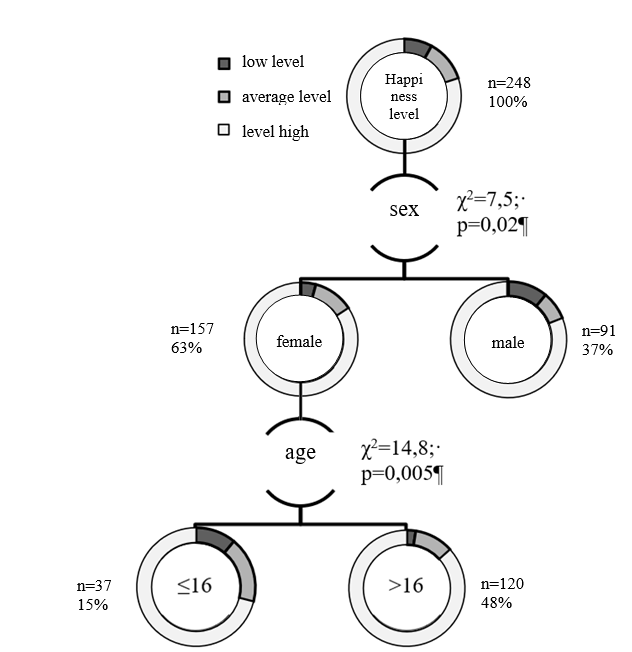
The study identified associations between respondents' happiness levels and demographic characteristics such as gender and age (Fig. 1). CHAID analysis indicated that the first-order factor influencing the ability to describe oneself as happy was respondent gender. The distribution of happy versus unhappy individuals differed significantly between female and male groups (p = 0,02). Among women, a higher proportion considered themselves happy (85% vs. 4% unhappy) compared to men (81% vs. 11% unhappy). For women, the second-order factor influencing self-perceived happiness was age. Significant differences in happiness were observed between women older and younger than 16 years (p = 0,005). Among girls aged 14–16, a higher proportion reported being unhappy and a lower proportion reported being happy (11% unhappy vs. 71% happy) compared to female participants over 16 (2% unhappy vs. 89% happy). Notably, when examined univariately, no age-related differences in happiness responses were detected.
It is worth noting separately that for the male subsample, the CHAID algorithm did not reveal statistically significant differences in the target variable based on age. Despite testing all possible split points, none met the significance criterion (p > 0,05); therefore, this branch of the decision tree remained terminal without further division by age. This suggests that, within the studied model, age does not act as a moderator of the examined effect for men.
In examining students' conceptions of what constitutes happiness, we found that for 83.5% of respondents, happiness is associated with family and close ones nearby; for 68,1%, with positive emotions; for 66,1%, with health; for 64,5%, with having friends and/or safety/peace; for 62,9%, with life and freedom; for 61,3%, with material sufficiency; for 60,5%, with achievement and self-development; for 55,6%, with safety and peace; and for 51,2%, happiness means achieving balance and harmony in life (Table 2). These results indicate that students' conceptions of happiness are multidimensional and may encompass diverse values.
Table 2
Students' ideas about happiness
|
Conception of happiness |
Count |
% |
|
Family and close ones nearby |
207 |
83,5 |
|
Positive emotions |
169 |
68,1 |
|
Being well-fed, healthy, and energetic |
164 |
66,1 |
|
Having many good friends |
160 |
64,5 |
|
Life and freedom |
156 |
62,9 |
|
Financial security and sufficiency |
152 |
61,3 |
|
Achievement, self-respect, self-development |
150 |
60,5 |
|
Safety and peace |
138 |
55,6 |
|
Balance and harmony in life |
127 |
51,2 |
|
Other |
38 |
15,3 |
The study also examined patterns of smartphone use among students: levels of academic cyberloafing and phubbing, assessed using specialized scales.
Figure 2 presents mean trends reflecting the cyberloafing profile of study participants.
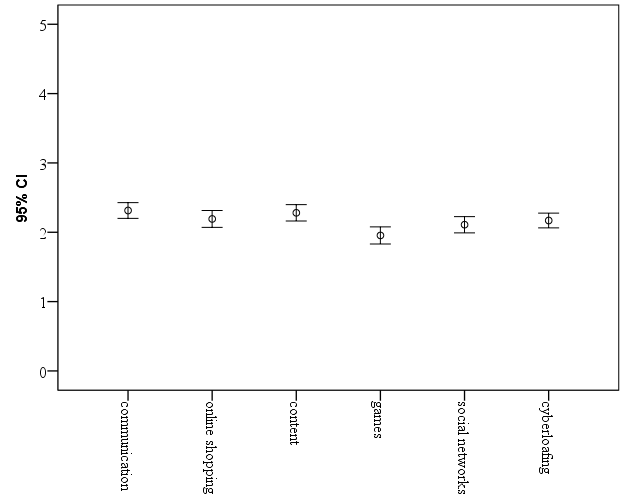
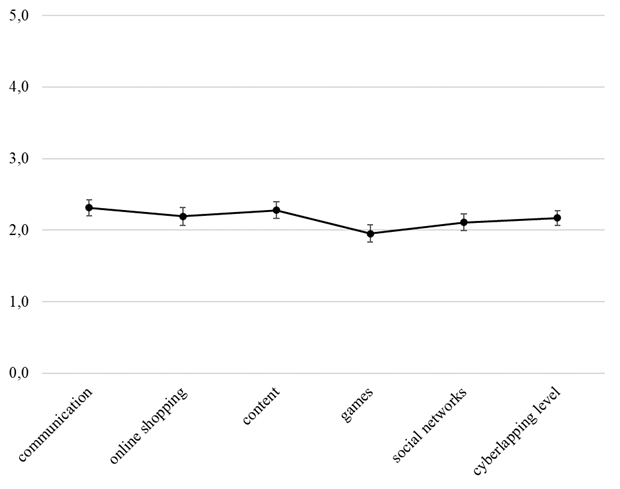
Analysis of responses indicated that academic cyberloafing is relatively uncommon among participants. They rarely use gadgets during academic sessions for communication, shopping, browsing websites, or using social networks.
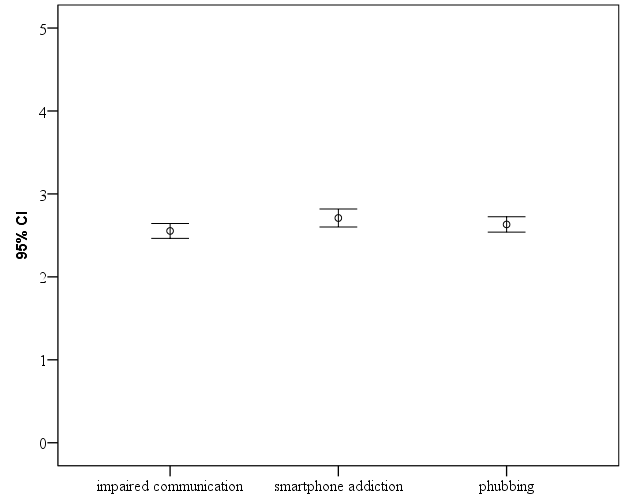
According to the results, the studied sample demonstrated low levels of phubbing. Schoolchildren and students participating in the study rarely distracted themselves with smartphones during interpersonal communication and seldom experienced discomfort due to the absence of their device (Fig. 3).
Correlation analysis revealed that happiness levels were associated with participants' phubbing levels (Table 3). All associations were inverse and weak. Overall, the data suggest a weak tendency for less happy students to engage in phubbing—both in the form of disrupting real-time communication by distracting themselves with smartphones and in the form of anxiety when the device is unavailable.
Table 3
The relationship between happiness and phubbing
|
Phubbing subscales |
Happiness level |
|
|
Communication disruption |
rs |
-0,161 |
|
p |
0,01 |
|
|
n |
248 |
|
|
Smartphone dependence |
rs |
-0,151 |
|
p |
0,02 |
|
|
n |
248 |
|
|
Overall phubbing |
rs |
-0,163 |
|
p |
0,01 |
|
|
n |
248 |
|
No significant association was found between happiness levels and overall cyberloafing levels. However, a negative correlation was detected between happiness levels and students' tendency to play digital games during academic sessions (r = -0,165; p = 0,01). This suggests that individuals who consider themselves happy are less inclined to engage in gaming via gadgets during study time compared to those who consider themselves unhappy.
These findings support the hypothesis that cyberloafing represents a form of psychological defense—specifically, escapism from negative experiences into the world of digital entertainment.
Thus, we partially confirmed the hypothesis regarding the relationship between conceptions of happiness and destructive forms of smartphone use. The study revealed an inverse relationship between self-perceived happiness and two behavioral patterns: phone use during face-to-face communication (phubbing) and gaming activity within the framework of cyberloafing. The happier individuals consider themselves, the less frequently these behaviors are observed.
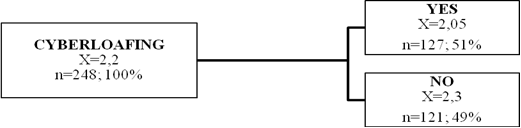
Of particular interest within this study is the association between cyberloafing, phubbing, and students' conceptions of happiness. CHAID analysis showed that individuals who conceptualize happiness as a state of balance and harmony engage in personal smartphone use during study less frequently compared to those holding other conceptions of happiness (Fig. 4). To assess effect size between the two groups, we calculated Cohen's d, which yielded a value of 0,34 (small effect size).

Phubbing levels were also associated with gender (Fig. 5): men demonstrated lower phubbing levels than women (p = 0,002). Effect size estimates between the two groups were calculated using Cohen's d, yielding a value of 0,41 (small effect size). Among women, the second-order factor influencing phubbing levels was the conception of happiness as safety and peace. Women endorsing this view were less prone to phubbing than those who did not (p = 0,05). Cohen's d for these differences was 0,27 (small effect size).
Discussion
Consistent with earlier research, our findings align with the happiness model proposed by positive psychology specialist M. Seligman (Levit, 2015). Respondents' answers suggest that happiness entails a balance of five components: positive emotions, relationships, engagement, meaning, and accomplishment. In our sample, the first two components were most frequently cited as defining happiness. Overall, participants' understanding of happiness indicates that it is shaped by positive conditions across social, spiritual, psychological, physiological, and economic domains of life. Based on these data, we may infer that respondents experience well-being in these areas, enabling them to identify as happy individuals.
Low levels of cyberloafing and phubbing align with results from prior studies (Sivrikova, 2024). This also points to a high level of mindful gadget use in academic and social contexts, strong self-regulation capacity, and established digital etiquette skills.
The results support the concept of the compensatory function of digital practices (Maksimenkov et al., 2025; Sivrikova, 2024; Sudjadi, 2025; Khlebnikov, 2023). In our study, less happy respondents were found to use smartphones to escape real-life relationships (phubbing) or immerse themselves in digital games to cope with academic stressors (gaming cyberloafing). This aligns with psychological defense theory, wherein activity in cyberspace serves as a means of escaping boredom, negative real-life experiences, or avoiding problem-solving (Sivrikova, 2024).
The identified associations suggest that understanding happiness as achieving inner balance and harmony, or as safety, may enhance resilience to academic cyberloafing and phubbing among some respondents. The latter association was observed exclusively among women.
The study confirmed a partial relationship between happiness levels and destructive forms of smartphone use. Key factors moderating this relationship include gender, age, and the content of happiness conceptions. These results underscore the necessity of accounting for psychological context when analyzing students' digital behavior.
Conclusions
This study identified associations between academic cyberloafing/phubbing and conceptions of personal happiness. The findings enrich scientific understanding of phubbing and academic cyberloafing, particularly regarding their prevalence among Russian schoolchildren and university students.
Between conceptions of personal happiness and academic cyberloafing with phubbing, a weak negative correlation was found between happiness levels and phubbing (rs ranging from −0,151 to −0,163; p < 0,05), as well as between happiness conceptions and gaming cyberloafing (rs = −0,165; p = 0,01). The hypothesis that cyberloafing and phubbing represent forms of psychological defense against negative experiences was supported. The former was less common among those who associate happiness with balance and harmony. The latter was associated with gender and happiness conceptions: men exhibited lower phubbing levels than women; among women, phubbing was more frequent among those who do not associate happiness with safety and peace (p = 0,05).
The data revealed the following:
The majority of participating students consider themselves happy. Happiness levels depend on gender: women report higher happiness than men. Among women, happiness levels also depend on age: women over 16 more frequently identify as happy compared to those under 16.
For students, happiness is multidimensional and encompasses a broad spectrum of values. Most frequently, participants associated happiness with having family (83,5%), positive emotions (68,1%), health (66,1%), and friends/safety (64,5%).
Students are not prone to destructive gadget use in academic or interpersonal contexts. Levels of cyberloafing (using gadgets for non-academic purposes during study time) and phubbing (the habit of distracting oneself with a smartphone during direct communication) are low.
Limitations
This study has several limitations that should be considered when applying the findings in practice. Methodological limitations include reliance on self-report measures, which are vulnerable to social desirability bias and may reduce the study's validity. Additionally, the instruments used to assess happiness conceptions were limited: single- or two-item scales in psychology often exhibit restricted reliability and validity, meaning results based on such scales may not always be robust. Future research should employ standardized, valid, and reliable happiness assessment tools. Furthermore, this study did not address the question of respondents' “fear of”, yet desire to engage in, academic cyberloafing.
Another limitation is the aggregation of respondents of different ages into a single group, which complicates result interpretation. However, at the pilot stage, combining respondents of different genders and ages increased variability in the studied characteristics so as to allow for the detection of associations between them.
The study analyzed only a limited set of factors (gender, age). The authors acknowledge that these are not the sole variables influencing the examined outcomes. Significant influences on students' happiness and phubbing/cyberloafing may include socioeconomic status, psychological state, parental and teacher monitoring, and other variables. Their analysis within the framework of the studied patterns represents a promising direction for future research by the author team.
When planning further research on this topic, qualitative strategies may be employed. The use of qualitative data collection methods would deepen understanding of the nature of the phenomena under study.
As recommendations for the application of the research findings, it is suggested that they be implemented in the development of programs for fostering digital literacy among students, tools for monitoring gadget use during classes, guidelines for the optimal use of smartphones in the educational process, and the organization of training sessions for developing self-regulation skills in students.