Introduction
A shift from being a master's student to becoming a research student presents a crucial and often challenging phase in a student's life. It is a time when students are not only adjusting to the demands of higher education but also navigating new personal responsibilities and expectations. Recent studies have revealed that university students report experiencing high levels of stress during their educational endeavours (Attala, 2022; Kohli et al., 2022). Thus, addressing these changes and potential stress-causing factors can help recognise the stance of students more holistically.
A PhD programme is a demanding endeavour that requires a diverse range of skills and abilities. During this period of demands and pressures, students face academic workloads, social adjustments, a need to seek independence, and establish a sense of self-identity, all of which can contribute to heightened stress and anxiety (Kumar et al., 2022). Additionally, significant changes in their environment, combined with the expectations placed upon them, can significantly affect their mental health. Given the profound impact of these challenges, addressing mental health concerns and promoting well-being amongst research students must be a primary focus. The task of performing research during the PhD programme offers students the opportunity to work towards their personal growth and contribute to meaningful research. However, along with these come challenges such as feelings of isolation, uncertain career prospects, lack of mentorship, and guidance may leave students confused and disoriented, and can have a detrimental impact on their performance, productivity, and mental health (Antfolk, 2025; Parveen et al., 2025).
Female doctoral students have reported financial strain, academic demands, lack of institutional support, and conflicts in balancing responsibilities between academic and familial domains (Wittenberg-Szekely et al., 2008; Bireda, 2015; Eran-Jona, Nir, 2020; Pinto da Costa et al., 2024). There are also potential structural biases in opportunities for collaboration, networking, and acknowledgement of women’s credibility (Khosla, 2018; Derosiers et al., 2025). Additionally, many women report gender-based discrimination, workplace harassment, and student-supervisor power imbalances (Women in Science Working Group of the Global Young Academy, 2024; Fathima et al., 2020; Wakdikar et al., 2024). Thus, it has become important for university officials to take the necessary steps to address these challenges and implement initiatives, such as providing flexible working environments and promoting guidance and training programs, and further, improving the conditions and experiences of female doctoral students (Jones et al., 2022; Khosla et al., 2025; Al-Johani, 2025; Warpade et al., 2024; Liu et al., 2024). For dealing effectively with these academic challenges, it is essential to find appropriate ways to enhance active coping amongst the students. As per this idea, this study aims to understand the link between human aspirations, flexibility in thinking, and self-regulation.
Human aspiration can be understood as the driving force behind present behaviour; it also plays a pivotal role in determining future behaviours. It provides a sense of purpose and motivates individuals to acquire new knowledge and skills. Miller and Brickman (2004) have emphasised the significance of personally valued future goals in academic excellence and have found that proximal subgoals derived from future aspirations enhance task engagement and perceived instrumentality. Aspiration is dynamic in its nature, as it is always influenced by a variety of contextual and experiential factors that determine its strength and the conviction to achieve goals. According to Quaglia and Cobb (1996), students’ aspirations encompass both present inspiration and future ambition, which in turn affect their engagement in learning and academic achievement.
There are two different kinds of aspirations. Intrinsic aspiration includes those life goals which help us satisfy our inner psychological needs, such as building meaningful and close connections, contributing to one’s society and, working towards one’s healthcare and personal growth (Kasser, Ryan, 1993; Kasser, Ryan, 1996). Extrinsic aspiration includes those life goals which are oriented towards obtaining material gains and rewards such as financial gains, social recognition, and attractive physical appearance (Deci, Ryan, 2000; Hope et al., 2019).
The concept of cognitive flexibility can be understood as the ability to swiftly switch between different cognitive tasks or perspectives (Shende, Mudar, 2023; Dağgöl et al., 2023). It is a key driver of more effective learning and better educational outcomes (Canas et al., 2003). This ability helps individuals work efficiently by switching between tasks, adjusting responses, and applying them to the current task (Dajani, Uddin, 2015).
Self-regulation is a fundamental ability that promotes effective human functioning and helps the individual to successfully achieve one’s personal goals (Zimmerman, 2000). In the field of education, it can be defined as students’ ability to manage and regulate their learning processes, which includes the mental, emotional, and behavioural aspects of academic performance (Zimmerman, Schunk, 2001; Vohs, Baumeister, 2004). Research indicates that students who are well-regulated are more likely to succeed academically (Sáez-Delgado et al., 2022).
The present study was designed to explore the relationship between aspiration, cognitive flexibility, and self-regulation amongst female research students. More specifically, it aimed to examine the roles of intrinsic and extrinsic aspirations in relation to these constructs. Based on these objectives, the study proposed that higher levels of intrinsic aspiration in female research students are expected to be positively correlated with cognitive flexibility and self-regulation. Furthermore, female research students with higher intrinsic aspiration are predicted to demonstrate greater cognitive flexibility and self-regulation than those with lower aspiration. Previous studies have examined these variables either independently or within a broader student population. This study specifically focused on Indian female research students to understand their nature of aspirations, quality of cognitive flexibility and tendency to self-regulate. By this, the study contributes to filling the research gap and developing deeper psychological understanding.
Material and methods
Sample
The study sample consisted of female research students aged 22 to 35 years who were enrolled in doctoral programs. The sample size for the study was calculated based on the Pearson’s product-moment correlation coefficient between self-regulation and cognitive flexibility (r = 0,59) and between cognitive self-regulation and the replacement of ineffective thoughts (r = 0,277), using values reported in previously published studies (Nakhostin-Khayyat, 2024; Ay, 2023). Participants who were male, outside the age range of 22–35 years, or enrolled in undergraduate or school programs were excluded from the study. The sample size formula for Pearson’s product-moment correlation coefficient was used, assuming a 5% level of significance and 80% power. The formula is as follows:
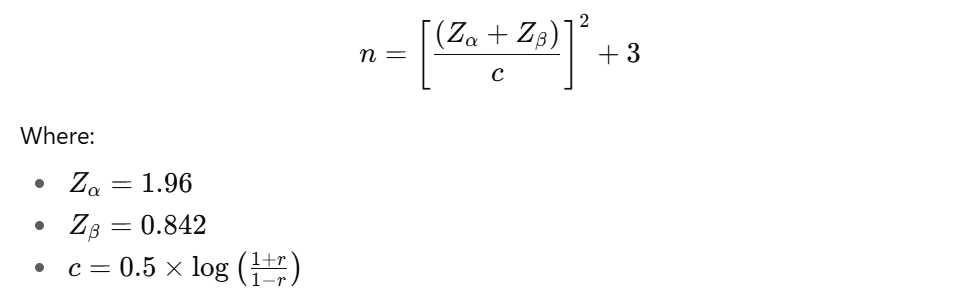
The sample size thus calculated was n = 98 (for r = 0,28). Further, assuming a 2% non-response, the required sample size for the present study was n = 100.
Measures
The study used the following three scales to record and assesses participants’ responses:
The Aspiration Index (Kasser, Ryan, 1993): This scale was used to assess participants’ aspirations in two domains of aspiration: intrinsic and extrinsic. There were seven categories of aspirations, with five specific items in each category. The extrinsic aspirations included wealth, fame, and image, while the intrinsic aspirations included health, meaningful relationships, personal growth, and community contributions. Cronbach’s alpha coefficients ranged from 0,70 to 0,80, which was considered “good” (Kasser, Ryan, 1993).
The Cognitive Flexibility Inventory (CFI) (Dennis, Vander Wal, 2010): The CFI, developed by Dennis and Vander Wal (2010), measures participants’ ability to adapt to changing situations through a 20-item self-report scale. It assesses two aspects of cognitive flexibility: the Alternatives subscale and the Control subscale. Cronbach’s alpha values indicated good to excellent reliability: .91 for the Alternatives subscale, 0,86 for the Control subscale, and 0,90 overall (Dennis, Vander Wal, 2010).
The Short Self-Regulation Questionnaire (SSRQ) (Carey, Neal, Collins, 2004): The SSRQ is a shortened version of the 63-item Self-Regulation Questionnaire (Brown et al., 1999). It assesses the ability to regulate behaviour to achieve future outcomes. The overall Cronbach’s alpha for the 31 items was 0,92. The 31 items were summed up to create the short SRQ, which showed a strong correlation with the full SRQ (r = 0,96; Carey, Neal, Collins, 2004).
Procedure
The questionnaires were prepared, and participants were approached after obtaining written informed consent. Data collection was carried out using a survey method with three tools: the Aspiration Index (Kasser, Ryan, 1993), the Cognitive Flexibility Inventory (Dennis, Vander Wal, 2010), and the Short Self-Regulation Questionnaire (Carey, Neal, Collins, 2004). These were administered to female research students aged 22–35 years, based on the inclusion and exclusion criteria. Once data collection was completed, responses were scored, and the data was organised according to the study requirements. Mean, standard deviation, and Pearson’s Product-moment correlation coefficient were calculated using SPSS version 26 (Statistical Package for the Social Sciences).
Results
Descriptive analysis
As shown in Table 1, the mean, standard deviation, and sample size for the study variables: aspiration, cognitive flexibility, and self-regulation are presented. The total sample size was 100. The mean and standard deviation were as follows: aspiration (M = 507,8; SD = 71,3), cognitive flexibility (M = 95,58; SD = 14,2), and self-regulation (M = 103,3; SD = 8,5).
Table 1
Descriptive statistics for aspiration, cognitive flexibility, and self-regulation
|
Variables |
Mean |
Std. deviation |
N |
|
Aspiration |
507,83 |
71,39 |
100 |
|
Cognitive flexibility |
95,58 |
14,28 |
100 |
|
Self-regulation |
103,39 |
8,56 |
100 |
Correlation analysis
As shown in Table 2, the correlations between aspiration, cognitive flexibility, and self-regulation are presented. Aspiration was significantly positively correlated with both cognitive flexibility (r = 0,23; p < 0,05) and self-regulation (r = 0,46; p < 0,01). Cognitive flexibility and self-regulation were also positively correlated (r = 0,27; p < 0,01).
Table 2
Correlations between aspiration, cognitive flexibility, and self-regulation
|
Variables |
Aspiration |
Cognitive flexibility |
Self-regulation |
|
Aspiration |
1 |
_ |
_ |
|
Cognitive flexibility |
0,22* |
_ |
_ |
|
Self-regulation |
0,46** |
0,26** |
1 |
Note. * Indicates a correlation significant at the 0,01 level (two-tailed); ** indicates a correlation significant at the 0,05 level (two-tailed).
As shown in Table 3, the correlations between aspiration (intrinsic and extrinsic), cognitive flexibility (Alternatives [CFI] and Control [CFII]), and self-regulation are presented. Aspiration was positively correlated with the Alternatives (r = 0,35; p < 0,01) but showed no significant correlation with the Control (r = –0,10). Intrinsic aspiration was positively correlated with both cognitive flexibility (r = 0,37; p < 0,01) and self-regulation (r = 0,55; p < 0,01). Extrinsic aspiration was not significantly correlated with cognitive flexibility (r = –0,00) but was positively correlated with self-regulation (r = 0,22; p < 0,05). Amongst the sub-dimensions of extrinsic aspiration, wealth was negatively correlated with the Control (r = –0,23; p < 0,05) and positively correlated with self-regulation (r = 0,25; p < 0,05), whereas image and fame showed no significant correlations with either cognitive flexibility or self-regulation.
Table 3
Correlation matrix for extrinsic aspiration, intrinsic aspiration, cognitive flexibility, and self- regulation
|
|
1 |
2 |
3 |
4 |
5 |
6 |
7 |
8 |
9 |
10 |
11 |
12 |
13 |
14 |
|
Aspiration |
1 |
- |
- |
- |
- |
- |
- |
- |
- |
- |
- |
- |
- |
- |
|
Extrinsic |
0,83** |
1 |
- |
- |
- |
- |
- |
- |
- |
- |
- |
- |
- |
- |
|
Intrinsic |
0,87** |
0,46** |
1 |
- |
- |
- |
- |
- |
- |
- |
- |
- |
- |
- |
|
Wealth |
0,65** |
0,73** |
0,40** |
1 |
- |
- |
- |
- |
- |
- |
- |
- |
- |
- |
|
Fame |
0,68** |
0,88** |
0,33** |
0,48** |
1 |
- |
- |
- |
- |
- |
- |
- |
- |
- |
|
Image |
0,74** |
0,86** |
0,43** |
0,48** |
0,64** |
1 |
- |
- |
- |
- |
- |
- |
- |
- |
|
Personal growth |
0,73** |
0,41** |
0,81** |
0,38** |
0,31** |
0,35** |
1 |
- |
- |
- |
- |
- |
- |
- |
|
Relationships |
0,65** |
0,34** |
0,74** |
0,29** |
0,24* |
0,34** |
0,47** |
1 |
- |
- |
- |
- |
- |
- |
|
Community |
0,73** |
0,39** |
0,83** |
0,32** |
0,28** |
0,39** |
0,63** |
0,40** |
1 |
- |
- |
- |
- |
- |
|
Health |
0,68** |
0,33** |
0,81** |
0,31** |
0,21* |
0,31** |
0,56** |
0,40** |
0,68** |
1 |
- |
- |
- |
- |
|
Cognitive flexibility |
0,22* |
-0,00 |
0,36** |
-0,02 |
-0,07 |
0,09 |
0,17 |
0,31** |
0,33** |
0,34** |
1 |
- |
- |
- |
|
CFI-alternate |
0,34** |
0,08 |
0,48** |
0,10 |
-0,01 |
0,14 |
0,34** |
0,34** |
0,44** |
0,41** |
0,88** |
1 |
- |
- |
|
CFII-control |
-0,09 |
-0,15 |
-0,02 |
-0,22* |
-0,14 |
-0,02 |
-0,19 |
0,08 |
-0,03 |
0,03 |
0,63** |
0,20* |
1 |
- |
|
Self regulation |
0,46** |
0,22* |
0,54** |
0,24* |
0,18 |
0,15 |
0,49** |
0,36** |
0,49** |
0,40** |
0,26** |
0,43** |
-.0,16 |
1 |
Note. * Indicates a correlation significant at the 0,01 level (two-tailed); ** indicates a correlation significant at the 0,05 level (two-tailed).
As shown in Table 3, Intrinsic aspirations include four sub-dimensions: personal growth, relationships, community, and health. Personal growth was positively correlated with the Alternatives (r = 0,34; p < 0,01) and self-regulation (r = 0,49; p < 0,01). Relationships were positively correlated with cognitive flexibility (r = 0,31; p < 0,01), Alternatives (r = 0,35; p < 0,01), and self-regulation (r = 0,37; p < 0,01). Community was positively correlated with cognitive flexibility (r = 0,33; p < 0,01), Alternatives (r = 0,44; p < 0,01), and self-regulation (r = 0,50; p < 0,01). Health was positively correlated with cognitive flexibility (r = 0,34; p < 0,01), Alternatives (r = 0,41; p < 0,01), and self-regulation (r = 0,41; p < 0,01).
Discussion
The study explored the relationship between aspiration, cognitive flexibility, and self-regulation amongst female doctoral students. Aspiration was found to show significant positive correlations with both cognitive flexibility and self-regulation. The results revealed that individuals with higher levels of aspiration tended to exhibit greater cognitive flexibility and self-regulation. These findings aligned with previous studies, further highlighting the motivational power of aspiration in fostering adaptive behaviours (Emmons, 1996; Duckworth et al., 2007; Nurra, Oyserman, 2018).
The positive relationship found between intrinsic aspirations, cognitive flexibility, and self-regulation indicates that students with a clear vision for the future are more capable of adapting their strategies in response to challenges. This adaptability may be essential for research students who must continuously refine their approaches to meet the demands of their academic pursuits. Snyder et al. (2002) proposed a theory of hope, which is defined as a motivational state driven by agency and pathway thinking. According to hope theory, people who hold optimistic beliefs about their future are likely to overcome obstacles and achieve success.
A significant positive relationship between aspiration and self-regulation has also been reported in previous research. One study highlighted those students who viewed academic tasks as instrumental steps toward their future accomplishments showed higher levels of motivation, task engagement, persistence, and self-regulatory behaviours. The study supports the idea of implementing educational interventions to promote proximal goal setting for long-term aspirations, which can enhance self-regulatory behavior (Miller, Brickman, 2004). Napolitano et al. (2020) investigated adolescents’ career aspirations and expectations is shaped by intentional self-regulation (ISR) which suggests that adolescents with higher ISR skills engage in structured, goal-oriented career planning.
Intrinsic aspirations are positively correlated with self-regulation. This finding is supported by Schmeichel and Vohs (2009), who examined the interaction of self-affirming beliefs and self-control behaviour. It was found that self-affirming beliefs in congruence with one’s core values can foster self-control and help individuals maintain focus while resisting distraction and temptation. Thus, self-affirmation techniques can be a valuable tool for strengthening and sustaining self-regulation. Intrinsic aspirations also encourage autonomous motivation, which means that individuals pursue goals because they find them personally meaningful rather than due to external pressure. These results align with prior studies emphasising the role of meaningful goals in enhancing adaptive thinking and self-regulatory behaviour (Snyder et al., 2002; Schmeichel, Vohs, 2009; Vohs et al., 2012; Nurra and Oyserman, 2018). Furthermore, Emmons (1996) suggests that intrinsically motivated goals lead to greater life satisfaction.
Intrinsic aspirations are positively correlated with cognitive flexibility and contribute to psychological well-being by satisfying psychological needs, promoting autonomous motivation and developing long-term goal orientation when aligned with internal values (Sheldon et al., 2004; Ryan, Deci, 2017; Hope et al., 2019). This form of motivation fosters persistence, self-regulation, and the internalisation of goals, which are essential for research students. Consistent with this evidence, students who prioritise intrinsic values at the start of the academic year demonstrate increased autonomy in goal pursuit over time (Hope et al., 2019). On the other hand, extrinsic aspirations have been found to have no significant correlation with cognitive flexibility. Kasser and Ryan (1993) observed that individuals who prioritise materialistic aspirations over intrinsically motivating goals tend to experience reduced well-being, increased anxiety, and diminished social relatedness.
Personal growth is positively correlated with Alternative Cognitive Flexibility and self-regulation. Nurra and Oyserman (2018) examined the influence of future self-concepts on one’s present actions. The study showed how identity-based motivation could help individuals believe in positive future selves. This belief, in turn, could influence their goal-setting behaviour and goal fulfilment. Similarly, Kiaei and Reio (2014) found that intrinsic aspirations were associated with personal expressiveness and creativity, enhancing authentic functioning directed toward self-discovery and personal development.
Relationships and community are both positively correlated with cognitive flexibility, alternative cognitive flexibility, and self-regulation. Intrinsic aspirations are considered satisfying in terms of building trusting relationships and contributing to one’s community. Intrinsic aspirations, such as those related to community, can increase the likelihood of helping others and promoting meaningful engagement (Hope et al., 2019). Health was also found to be positively correlated with cognitive flexibility, alternative cognitive flexibility, and self-regulation. With reference to previous studies, prioritising intrinsic aspirations over extrinsic aspirations is associated with fewer physical symptoms and greater psychological health (Kasser, Ryan, 1993).
From earlier research, it was noted that intrinsic aspiration moderates the relationship between goal striving and eudaemonic well-being. Metacognition can serve as an intrapersonal mediator in the relationship between goal striving and the enhancement of eudaemonic well-being (Kiaei and Reio, 2014). Thus, the results emphasise the importance of developing intrinsic aspiration and self-regulatory skills to support improved academic experiences. It suggests that female research students with intrinsic motivation can better manage challenges, plan work, select strategies, and maintain consistent efforts toward their goals.
Overall, this study contributes to the literature by highlighting how aspiration, cognitive flexibility, and self-regulation interact and can be beneficial for female research students in addressing challenges and conflicts. Future research could explore how these findings may be relevant for other age groups and genders. It could also examine the impact of these relationships on other areas of life, such as health and occupation, and extend the findings to a wider population.
Conclusions
The present study has noted the findings showing that aspiration, cognitive flexibility, and self-regulation are significantly interrelated amongst female research students, particularly regarding intrinsic aspiration. It can be understood that encouraging the development of intrinsic aspiration can foster adaptive thinking and self-regulatory skills, thereby promoting overall well-being and academic success. But the limitation here is that the correlation analysis alone is insufficient to draw causal inferences, and further experimental investigations are required to understand the causal interaction between these constructs. Rather, these findings can be useful in promoting awareness amongst mental health professionals, researchers, and educators
Limitations. As every study has some limitations, this study also has a few limitations. First, it focused only on female research students, and therefore the findings cannot be generalised to other populations. Second, the sample was relatively small, which limits the generalisability of the results. Third, the validation and standardisation of the instruments for the Indian samples was unavailable, which might have interfered with the study’s findings. Fourth, other intervening factors or potential sources of error were not entirely controlled and could have influenced the results of the study. Fifth, correlational findings are not explanatory of determining causal relationships between the variables. Thus, in future research, these limitations should be addressed by using a larger sample size, including a more diverse population, and employing an experimental design to improve the applicability of the findings.